
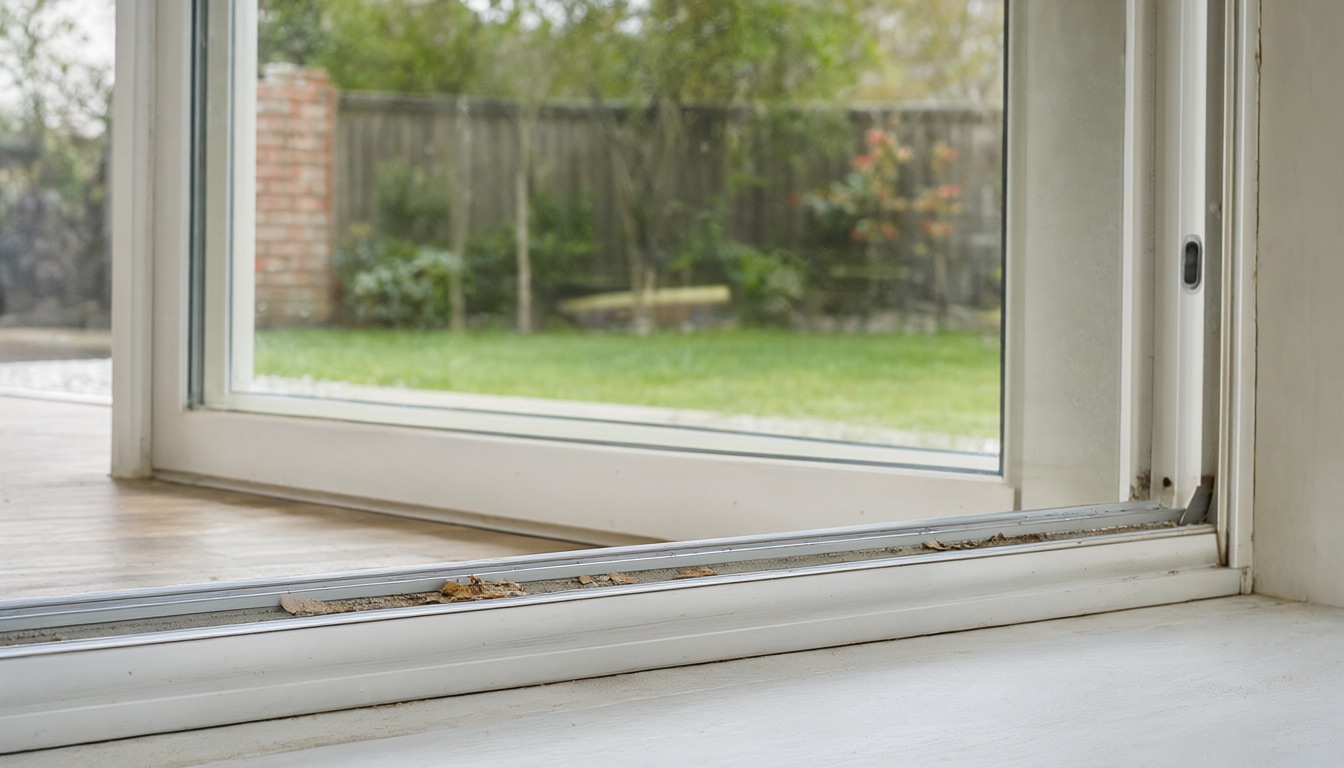
A sliding glass door sticks because dirt has packed into the track, the rollers are worn or set too low, or the track is bent. Most of the time you can fix it in under an hour: vacuum and scrub the track, wipe on a dry silicone lubricant, then turn the roller height screws until the door glides. If you came here about the stick in a sliding door (the wooden dowel people lay in the track), it gets its own section below. It helps security, but it can also cause binding when it’s the wrong size or sitting in a dirty track.
Why is my sliding patio door sticking?
A patio door panel rides on two small wheels (rollers) at the bottom, along a smooth raised rail. Anything that adds drag at that rail makes the door stick, skip or grind. Work down this table from the cheapest, fastest fix to the biggest job.
| What you notice | Likely cause | Fix |
|---|---|---|
| Gritty, rough feel; gets worse over weeks | Dirt, pet hair or debris in the track | Vacuum, scrub, dry, lubricate (steps 1 to 3) |
| Door scrapes the bottom or top, or drags in one spot | Rollers set too low or uneven | Adjust the roller height screws (step 4) |
| Grinding or wobbling; panel tilts | Worn, flat or broken rollers | Replace rollers (step 5) |
| Sticks at the same spot every time | Dented or bent track | Straighten a small dent, or call a pro (step 6) |
| Hard to start or close, worse after rain or in summer | Swollen or shifted frame, humidity, house settling | Check gaps and alignment, readjust rollers |
| Rubbing at the edge or latch side | Worn or flattened weatherstripping | Trim or replace the strips (step 7) |
| Door won’t slide fully closed | A security stick, debris or a bent lock hook in the way | See the security stick section |
What you need
- Vacuum with a crevice tool, stiff nylon brush (an old toothbrush for corners), rags, warm soapy water
- Silicone-based lubricant spray (a dry lubricant, not oily grease)
- Phillips and flat screwdrivers, plus an Allen (hex) key, since many doors use one of these for the roller screws
- Flat pry bar and a wood block, for lifting the door slightly and for straightening a small dent
- Replacement rollers that match your door brand and model (if needed) and a helper
- Work gloves and safety glasses
Safety first: heavy glass
A sliding glass door panel is heavy and can tip out of the frame. Plan to have a second person whenever you adjust the top track, lift the panel or take it out. Support the panel on sawhorses or a padded surface, never lean it on its edge against a wall. If glass is cracked or chipped, or the frame around it is damaged, stop and call a glass or door pro. Cracked glass can fail suddenly, and tempered glass can’t be repaired.
Wear gloves and eye protection, and never force a stuck door by pulling hard on the handle. That is how rollers pop off the track and panels come loose.
Step 1: Vacuum and scrub the track
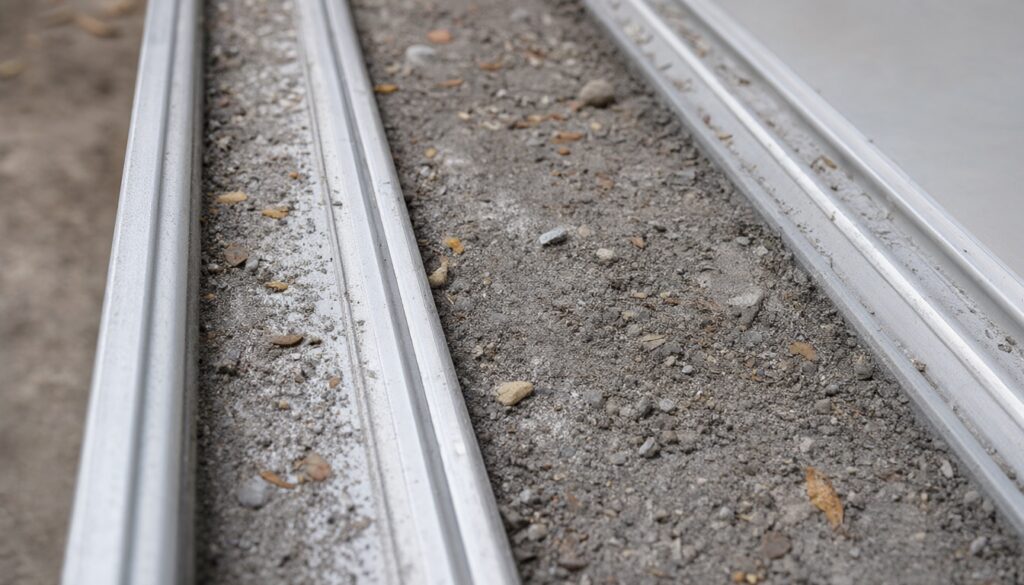
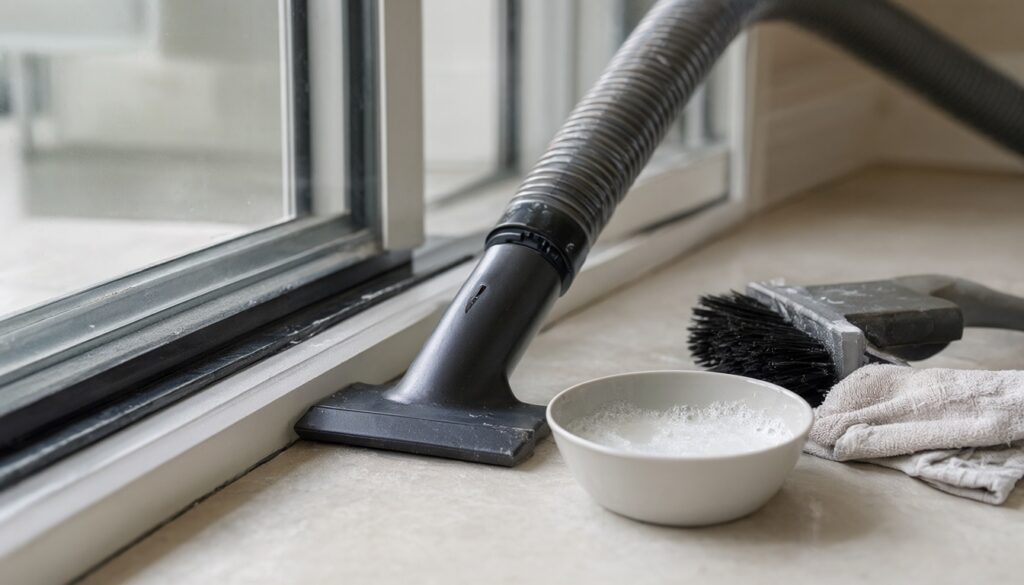
A dirty track is the most common reason a sliding door sticks, so start here. Open the door fully and vacuum the whole track with a crevice tool, including the corners and the weep holes (small drain slots) along the outside edge. Then scrub with a stiff brush and warm soapy water, and wipe dry. Pay attention to the raised rail where the rollers run, since even a thin film of grime changes how the door rolls.
The same black gunk problem hits shower doors, and our guide to cleaning shower door tracks and keeping the gunk from coming back has a few cleaning tricks that work on patio tracks too.
Step 2: Clean the rollers
Slide the door so you can see the rollers through the bottom of the frame, and wipe what you can reach with a rag. Hair and thread wrap around the axle and stop the wheel from turning. If you can’t reach, a thin screwdriver and a pair of tweezers will pull most of it out. Then wipe the door’s bottom edge and the track again.
Step 3: Lubricate the right way
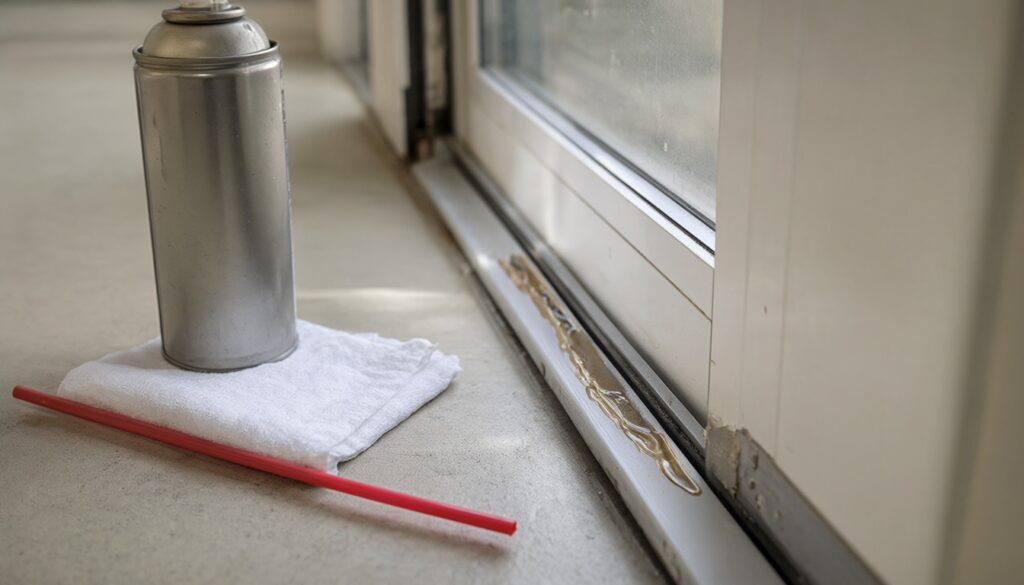
Use a silicone-based lubricant, sprayed sparingly on the clean rail and a little on the rollers. Skip oily products and thick grease (including common penetrating sprays): they stay wet, then grab dust and sand and turn into the paste that made the door stick to begin with. Silicone dries to a slick film that doesn’t hold grit the same way. Do not spray the lock or latch.
Slide the door back and forth five or six times to spread it, then wipe off any overspray on the glass or floor. Some pros prefer to skip lubricant altogether on a freshly cleaned track and go straight to roller adjustment, so if the door now glides, you can stop at this point.
Step 4: Adjust the roller height screws
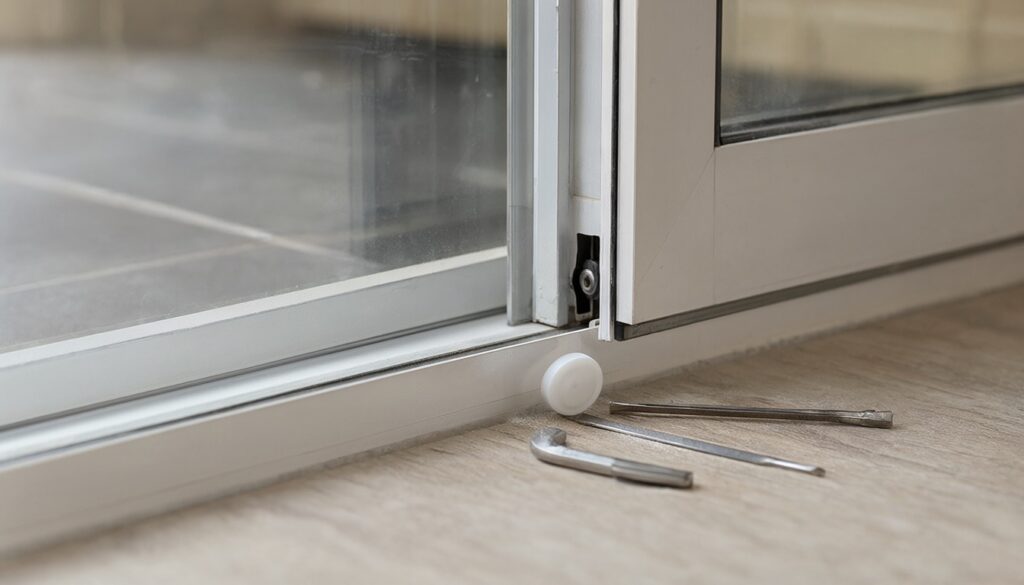
- Find the screws. Look at the bottom corners of the door panel, usually on the edge facing the frame. Many have a small plastic cap or a hole in the frame that hides a screw. Pry the cap off with a flat screwdriver.
- Get a helper to hold the door steady, especially if you have a big panel.
- Turn one screw a quarter turn. Turning one way raises that corner and the other way lowers it. If the door drags on the track, raise it; if it hangs high and rubs the top, lower it. Which direction raises it varies by door, so test and watch the gap.
- Test after every turn. Slide the door. Repeat on the other corner so the gap along the top and bottom looks even and the door closes square against the frame.
- Don’t over-raise it. A panel set too high can scrape the top track or come off the track, so go in small steps.
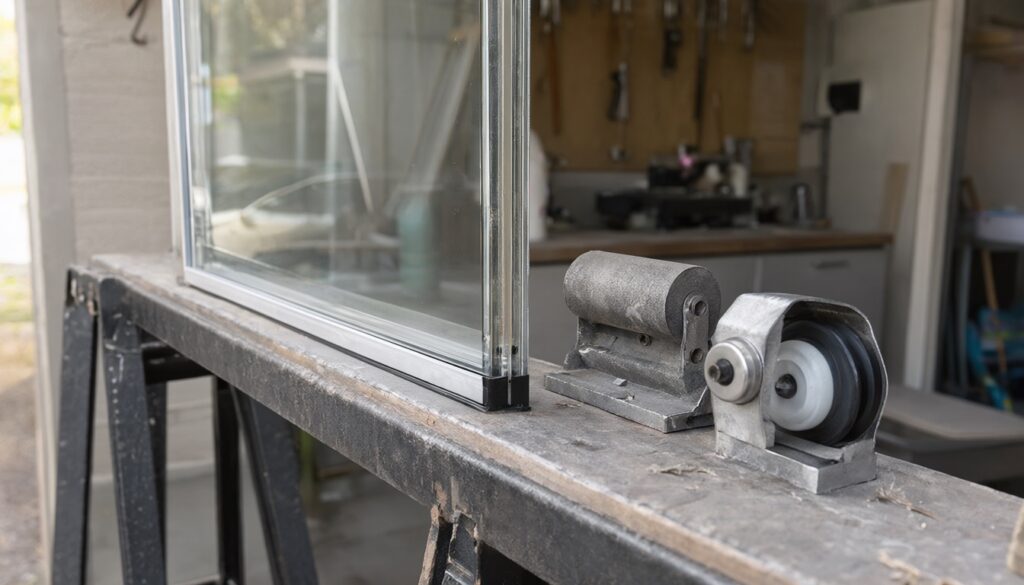
Step 5: Replace worn rollers
If the door grinds, wobbles or tilts even after cleaning and adjusting, the rollers are probably worn, cracked or flat-spotted. Replacing them means taking the panel out, which is a two-person job.
- Retract the roller screws so the panel sits as low as possible, and remove any stop or retaining trim or the screw that holds the panel in.
- With a helper, tilt the panel’s bottom toward the room, lift it up out of the bottom track, and set it on sawhorses with something soft under the edge.
- Unscrew the old rollers and note the brand and model, or take one with you. Rollers vary a lot and you need an exact match for the housing.
- Install the new rollers, lift the panel back into the top track first, then swing the bottom into the rail, and readjust the height.
Matching rollers can take a bit of hunting. If the brand isn’t marked on the door edge, measure the wheel and housing and photograph the old one before you shop.
Step 6: Fix a dented or bent track
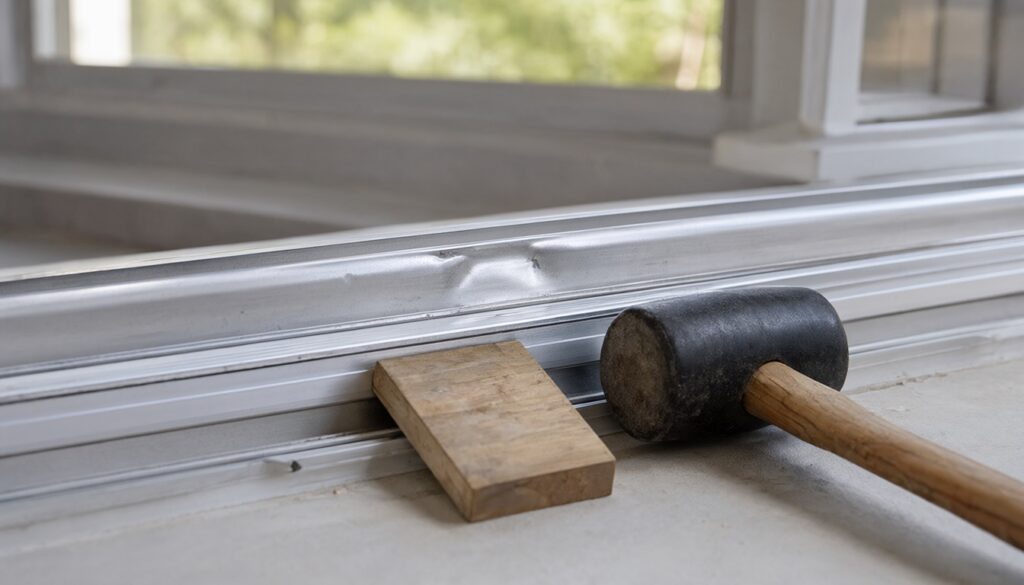
If the door catches at the same place every time and the track rail looks pinched or dented, a bent track is the problem. Small dents on an aluminum rail can sometimes be nudged back with a wood block and a light tap from a rubber mallet, working from the side. Go gently: the rail is thin, and cracking it makes things worse. A badly bent or sagging track, or one that has pulled from the sill, usually needs a replacement track and is better left to a pro.
Step 7: Check the weatherstripping and the frame
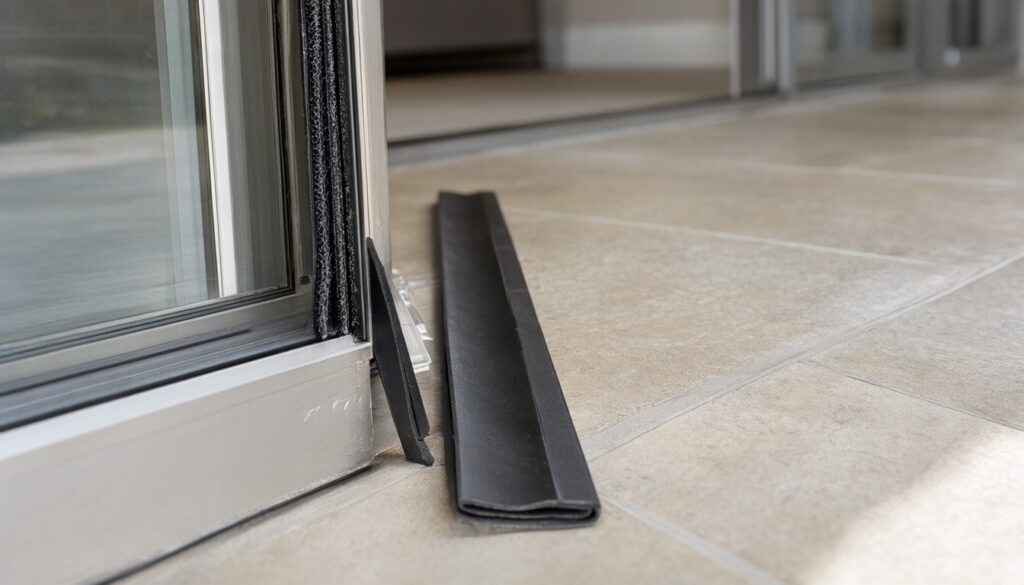
If the door rubs only near the edges or latch, the weatherstripping may be flattened, swollen or torn, and dragging on the frame. Replace worn strips with the same profile, or trim a loose strip back. Seasonal humidity can also make a wood or older frame swell slightly, and a house that has settled can leave the frame slightly out of square. If that’s your case, you’ll see uneven gaps, so go back to the roller screws and re-level the panel. Sealing gaps around the outside of the frame also keeps rain from running into the track, and our guide to the best exterior window caulk covers what to look for.
The wooden stick in your sliding door: length, problems and better options
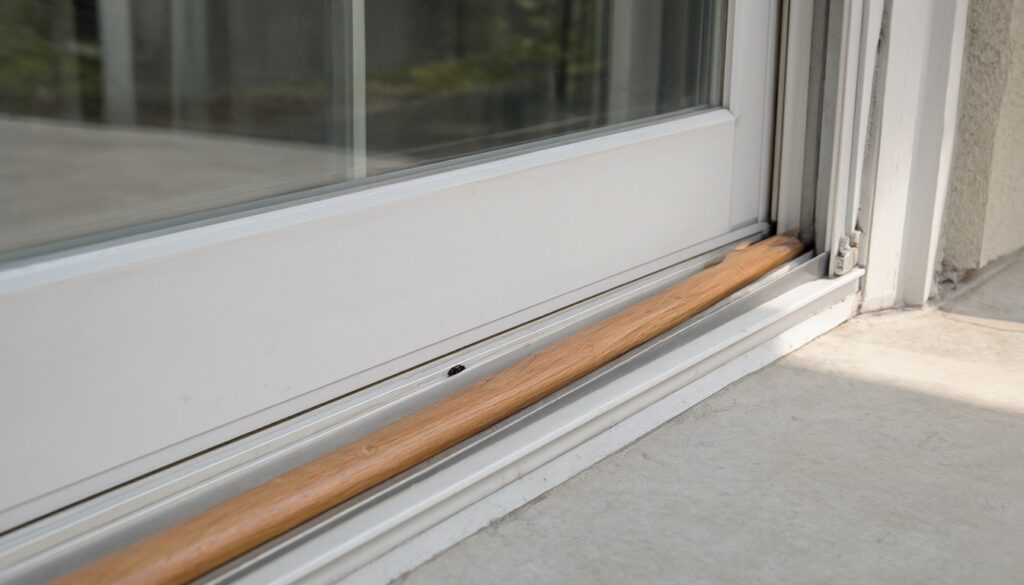
Many people searching for a “sliding glass door wooden stick” want the dowel or cut-down broom handle laid in the track as a backup lock. It is cheap, and it stops the door from sliding open even if the latch is forced. But it has limits, and it can cause sticking.
How long should the stick be?
Measure the track from the closed panel’s edge to the frame on the opening side, then cut the stick to fit snugly with only a little play, so it can’t rattle or build momentum. Sources describe the correct fit as snug with little room to wiggle. If the track is on the outside, set the stick higher so it can block the handle side. Sand the ends smooth.
How a stick can make the door bind
- Too long: a stick jammed in tight pushes on the panel and can bend the track or knock the roller off line.
- Dirty or rough: a splintered stick drops debris into the track and scratches the rail.
- Left in place for months: dust piles up beside it, and the door is harder to move when you remove it.
- Dropped or wedged: slamming the door into a stick or kicking it into place can dent the track.
If your door started sticking after you put a stick in, remove it, clean the track, and check for a new dent before you do anything else.
Better options than a loose stick
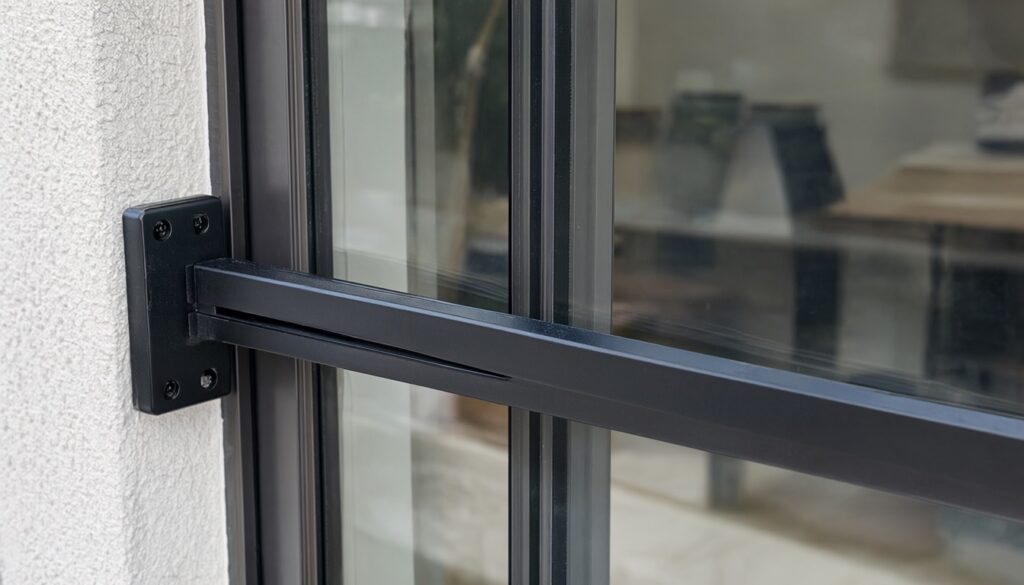
A stick only stops sliding. It doesn’t stop someone from lifting the panel or breaking the glass. Adjustable security bars mount to the frame and lock into a bracket on the panel, and some are made for the track. Anti-lift pins or screws in the top track keep the panel from being lifted out. A pin lock or a keyed secondary lock does the same for the latch. See our overview of the best home security systems if you want alarms and sensors on a sliding door as well.
When to call a pro (and what it costs)
Call a door or glass pro if any of these apply:
- The glass is cracked, chipped or the panel is loose in the frame.
- The track is badly bent, sagging or has come away from the sill.
- The frame is out of square or there are signs of water damage or rot.
- You can’t match the rollers, or the door still sticks after cleaning, adjusting and new rollers.
Typical US ranges vary by region and door type. Bob Vila lists roller repair at about $110 to $300, a single replacement panel at roughly $400 to $700, and a full sliding door replacement at about $1,000 to $7,500 with an average near $2,500. Homewyse estimates basic repair work, including taking the door out, cleaning the track and replacing two rollers, at around $134 to $160 per door, though it says that is a starting point only. Many repair companies also charge a minimum service fee, so ask for a quote that includes the door removal.
FAQ
Why is my sliding patio door sticking all of a sudden?
A sudden change usually means debris in the track, a roller that has come off its rail or a stick or object in the way. Check the track first. If it happened after a heavy rain or a hot spell, look at the frame and weatherstripping for swelling.
Can I use WD-40 on a sticking sliding door?
It is better not to. Oil-based sprays attract dirt and leave a sticky residue in the track. Use a silicone lubricant, sparingly, on a clean track.
How do I make a sliding glass door easier to open?
Clean the track, lubricate it with silicone, then adjust the roller height screws until the panel clears the rail evenly. Replace the rollers if they are worn.
How often should I clean the track?
A vacuum and wipe every few months keeps most doors moving well, and more often if you have pets or live by a sandy or dusty yard.