
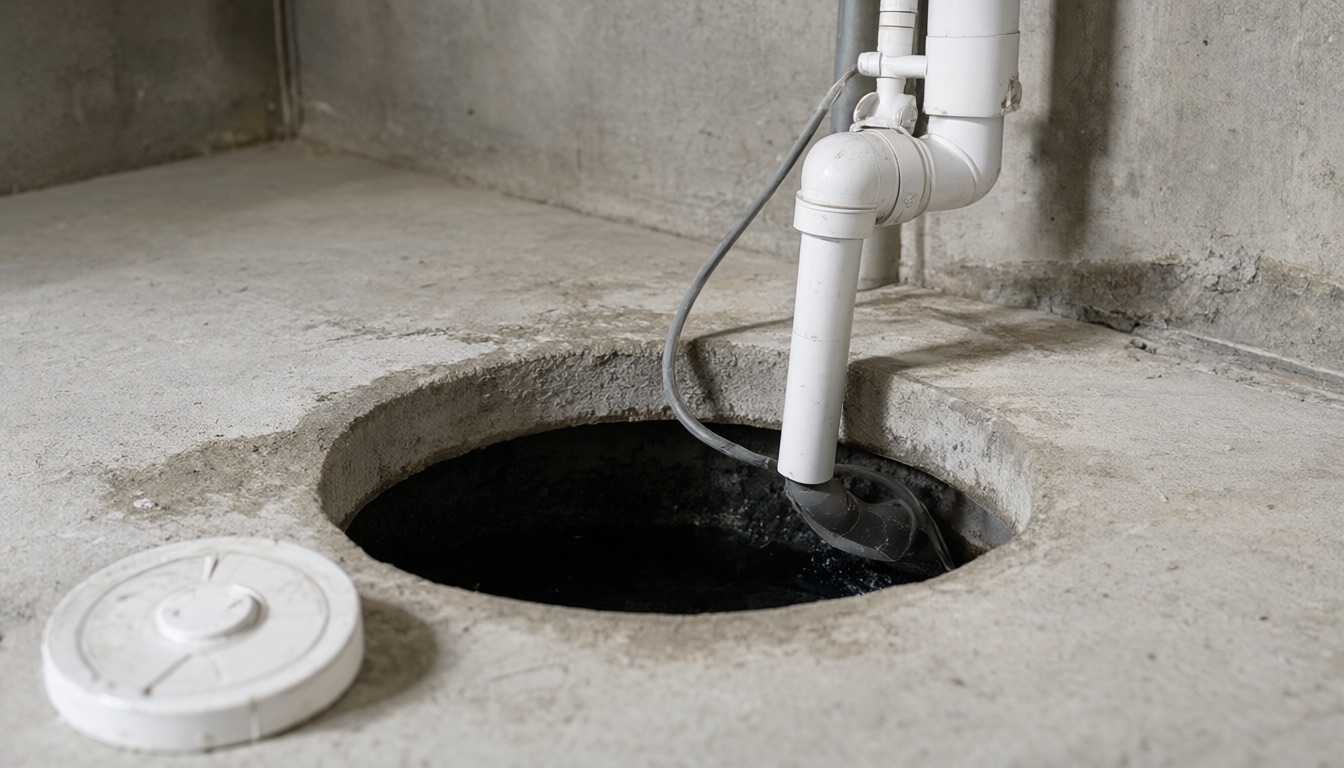
If your sump pump runs constantly, first work out whether it is moving real water or just cycling the same water. After days of heavy rain, a spring thaw or a high water table, a pump that runs every minute or two can be normal. If it runs nonstop in dry weather, or the water level in the pit never drops, something is wrong. The usual culprits are a stuck float switch, a failed check valve that lets water fall back into the pit, a blocked or frozen discharge line, or a pump too small for the inflow. Most of these are quick to test, and acting early matters because a pump that never rests can overheat and burn out.
Safety first: before you touch the pit
- Unplug the pump before you put a hand near the pit or the float. A sump pump is a mains-powered device sitting in water.
- Don’t touch outlets, cords or the panel while standing in water. The CDC says never to turn power on or off, or use an electric tool, while standing in water. If the breaker panel is only reachable through standing water, call an electrician.
- If water is already rising over the floor, stay out of the basement, shut off power from a dry spot if you can, and call a plumber or a water-damage pro.
- Steam, smoke, a burning smell or a hot, humming motor means the pump is overheating. Unplug it and don’t use it until it is checked.
Is it normal for a sump pump to run constantly after heavy rain?
Sometimes, yes. A sump pump runs because groundwater around your foundation rises and flows into the pit. After a long storm, rapid snowmelt, or in a season when the water table is high, water can flow in almost as fast as the pump removes it. In that case the pump runs often or even continuously for hours or a day or two, then slows down as the soil drains.
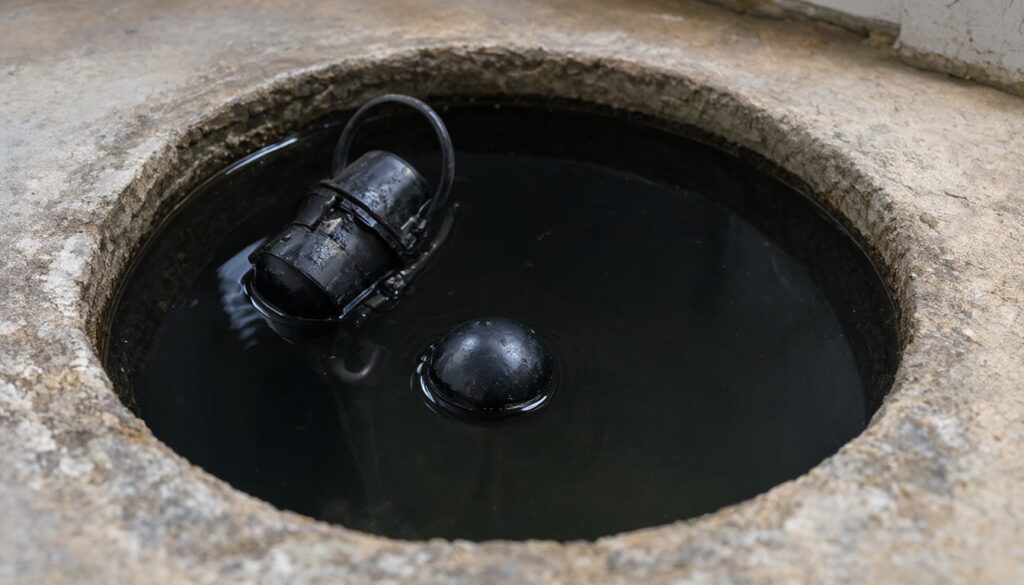
The key question is whether the pump is making progress. Watch the pit for a few cycles (with the lid on or from a safe distance, never reaching in):
- Normal wet-weather running: the water level drops when the pump runs, and the pump shuts off for at least a short time. Cycles get longer apart as the rain stops.
- A problem: the pump runs for a long time but the level barely drops, the pump never shuts off in dry weather, or it runs for days after the ground has dried out.
A pump that runs hard through a wet week deserves a check even when it is “normal.” It is working at the limit, and that is when a weak pump or stuck float shows up as a flooded basement.
Why does my sump pump keep running? Symptom, cause and fix
Match what you see to the table, then use the tests below to confirm before you spend money.
| What you see | Likely cause | What to do |
|---|---|---|
| Pump runs nonstop, water level is low, motor hums or runs with little water | Float switch stuck up, snagged on the cord, or failed | Unplug, free the float, clean the pit, test; replace the switch or pump if it still sticks |
| Pump shuts off, then starts again within seconds, and you hear a thud or gurgle | Check valve failed, missing or installed backward, so water falls back into the pit | Check the flow arrow and replace the valve |
| Pump runs, motor sounds normal, but little or no water leaves the outdoor pipe | Airlock, or a blocked discharge line | Add a small vent hole, clear the line, or call a pro |
| Pump runs nonstop only in freezing weather | Discharge pipe frozen or packed with ice | Thaw the outlet safely, keep the end clear, and ask a pro about a freeze-proof discharge |
| Runs all the time during storms and the pit refills as fast as it empties | High water table, heavy inflow, or a pump too small for the pit | Reduce roof water at the house; have a pro size a bigger pump or add a second one |
| Runs in dry weather, pit keeps refilling | Leaking pipe, sewer, or other water source nearby | Check for leaks and call a plumber |
| Old pump, loud grinding, hot motor, weak flow | Worn motor or impeller | Replace the pump |
Sump pump keeps running: 5 quick tests you can do
- Look at the water level. With the lid off and the pump unplugged, check that the pit is not full of silt, gravel or soap scum. Look at where the float sits relative to the water.
- Check the float is free. Make sure it swings or rises on its own and does not catch on the cord, the pit wall, or the discharge pipe. Pentair’s troubleshooting page says a tethered float needs enough slack between the ball and its bracket (at least 3 inches of cord) and that laundry soap scum can slow a float down.
- Test the pump without the float. Plug the pump straight into the outlet for a moment. Pentair notes that if it runs fine like this, the float is the likely failure. Unplug it again right away if there is little water in the pit.
- Watch where the water goes. When the pump runs, do you see or hear water at the outside discharge outlet? A pump that is running but moving no water points to a clog, a frozen pipe, or an airlock.
- Listen when it shuts off. A rush of water back down the pipe and an immediate restart means the check valve is failing.
Stuck or snagged float switch
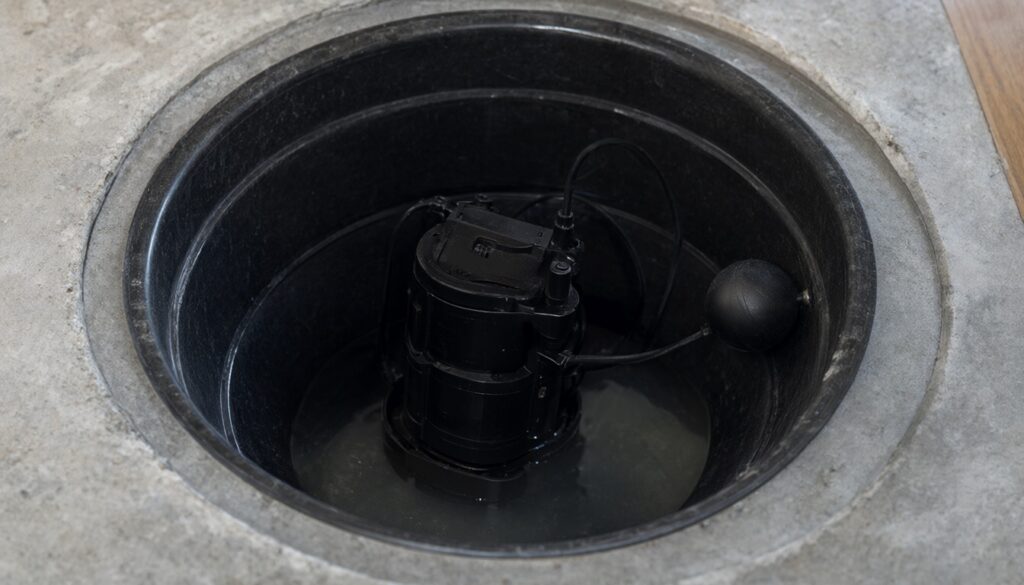
The float switch is the part that tells the pump to turn on and off. It is also the most common failure point, according to Pentair. If it sits on or sticks in the up position, the pump keeps running even after the pit is empty.
Unplug the pump, then clear anything that blocks the float’s path: the power cord, the discharge pipe, debris or the pit wall. Reposition the pump so the float has room to drop to its off position. If the float still sticks, or the pump runs when plugged directly in but not with the switch, replace the switch or the whole pump. Roto-Rooter notes that on an older pump, a new switch may not be cost-effective.
Failed check valve: water cycling back into the pit
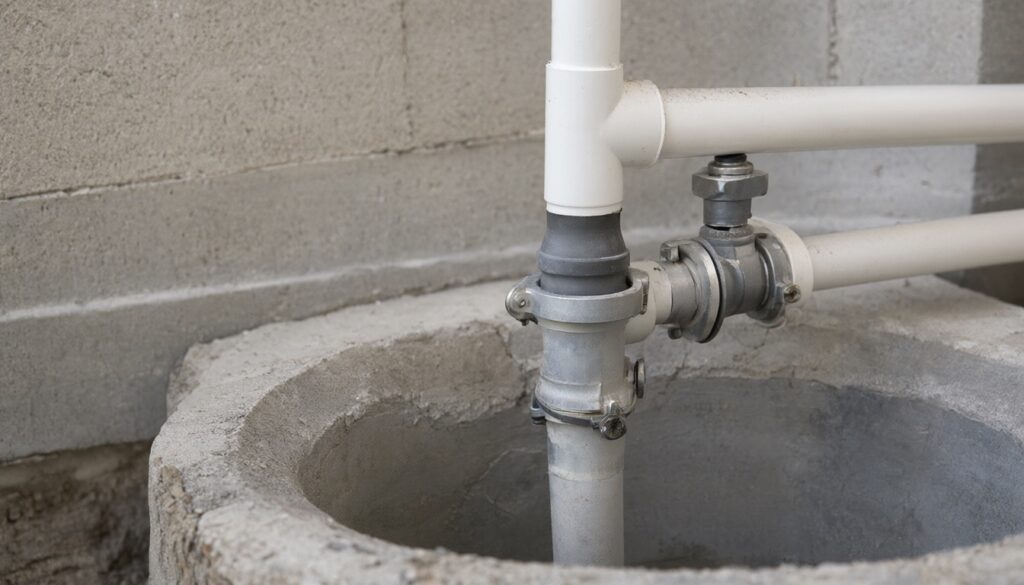
A check valve sits on the discharge pipe and stops water from falling back into the pit after the pump stops. If it is stuck, missing, installed backward or worn, the water you just pumped runs back down and starts the pump again, a loop that can look like a pump that never stops. The arrow on the valve should point away from the pump, toward the discharge. A valve that slams shut can also cause a loud bang, which a short piece of flexible coupling can soften.
Replacing a check valve is usually a small job for a DIYer who is comfortable cutting and clamping pipe. Turn off power first and be ready for water in the pipe to drain back into the pit.
Blocked, frozen or airlocked discharge line
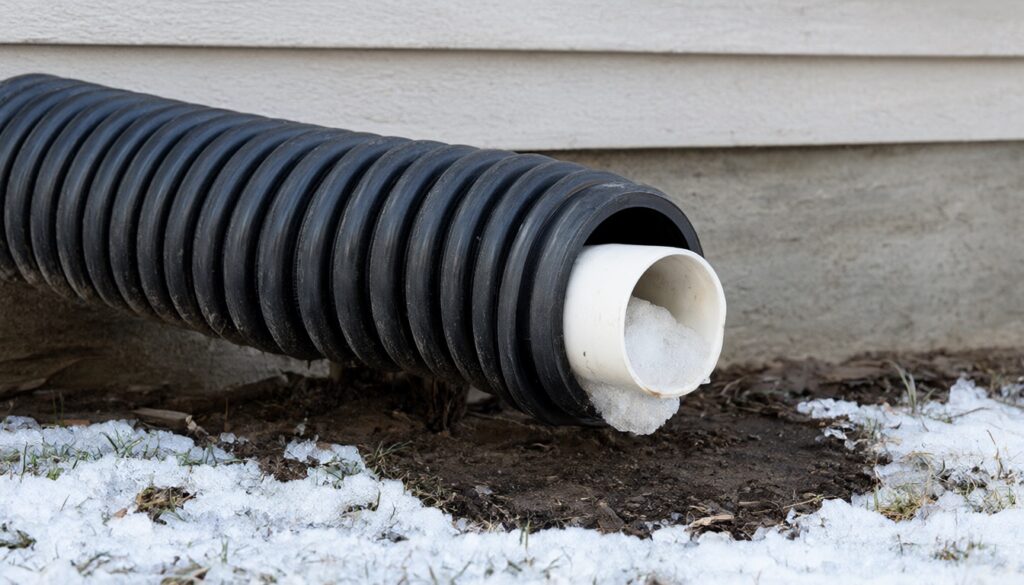
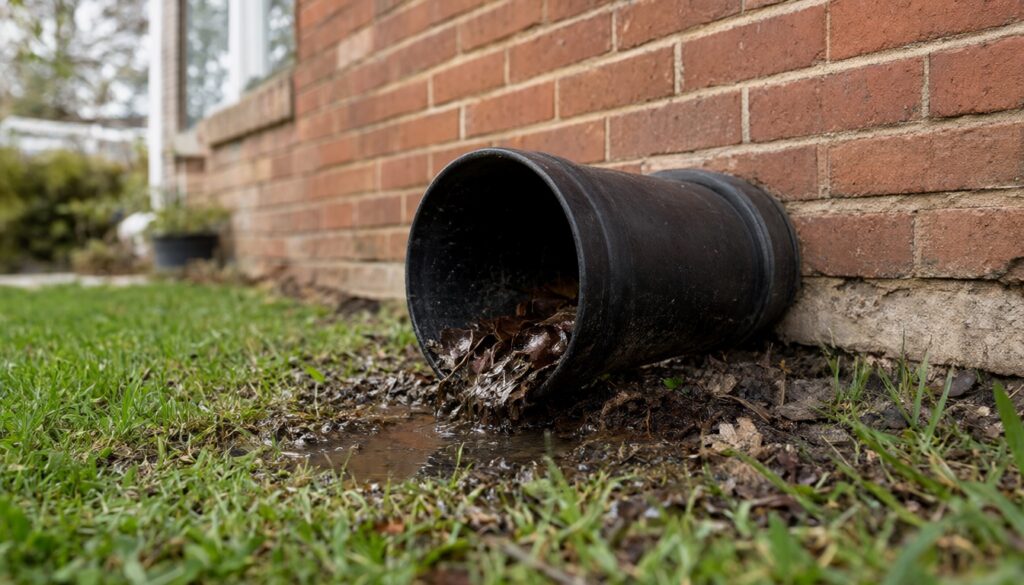
If water has nowhere to go, the pump just keeps running. Go outside to the end of the discharge pipe while the pump is running. If little or nothing comes out, check for these:
- Ice in winter. Water can freeze in the pipe or at its outlet. Clear the outlet and thaw it with warm (not boiling) water or by moving it somewhere that drains freely. Don’t use an open flame.
- Mud, leaves, or a crushed or kinked pipe. Clear the end, and check along the line for dips where it may be flattened or clogged.
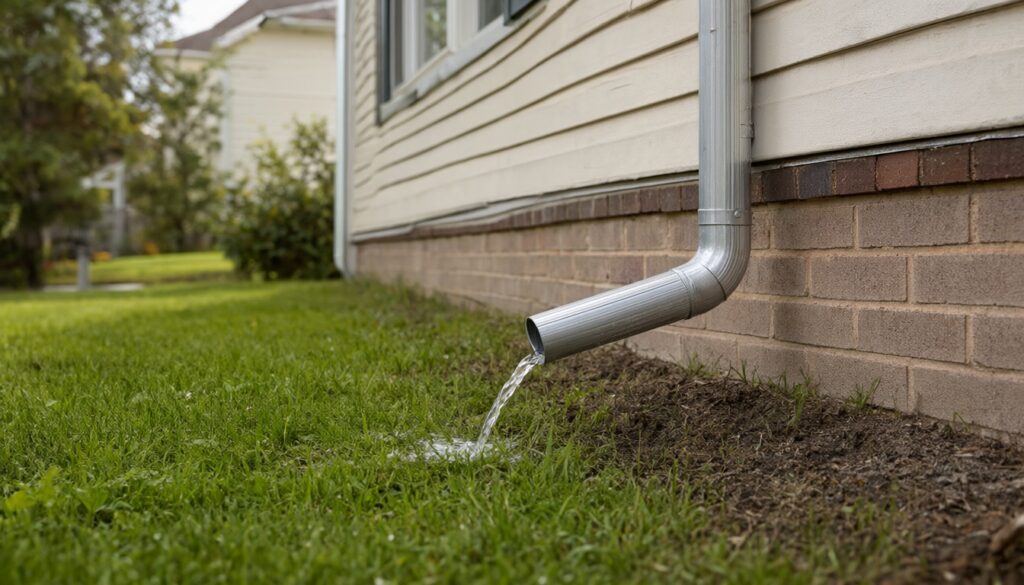
- A discharge too close to the house. If the water runs back to the foundation, it can return into the pit and the pump runs on a loop. Extend the outlet farther from the house.
Airlock. Sometimes the pump hums and spins but does not push water up because air is trapped in the pump housing. Pentair describes drilling a small vent hole, roughly 1/16 to 1/8 inch, in the discharge pipe just above the pump outlet and below the check valve. A small spray of water goes back into the pit each cycle, which is normal.
Sump pump running constantly after heavy rain: pump too small or water table too high
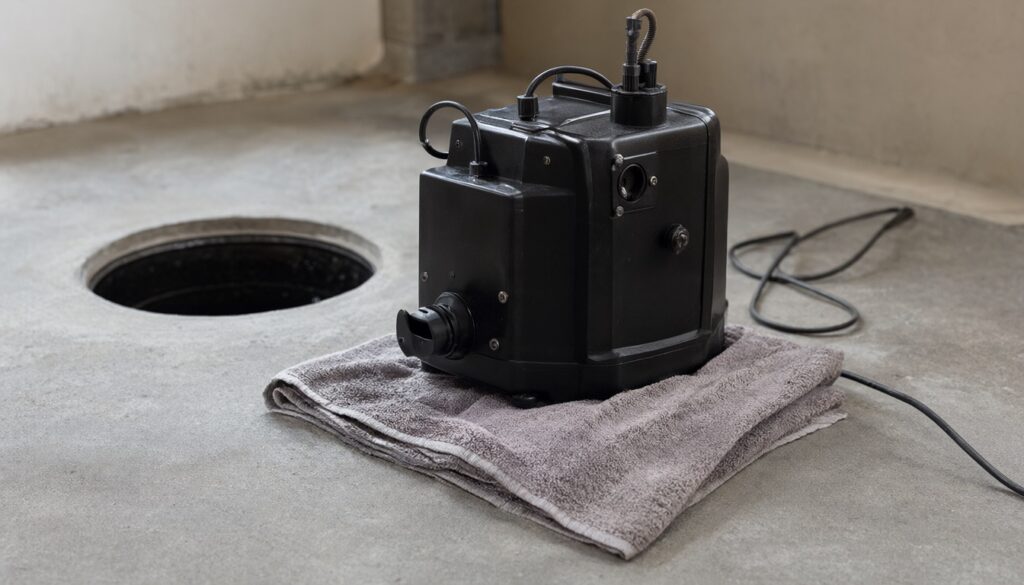
If every part works and the pump still cannot keep up, the pump may be undersized, or the amount of water reaching your foundation is more than one pump can handle. Signs include water leaving the pipe but the level in the pit hardly falling, and a pump that runs for hours every big storm. You can help in the meantime by keeping roof water away from the house: clean gutters, and run downspouts several feet out from the foundation. Check that the soil next to the house slopes away.
A plumber or basement-waterproofing contractor can check how much water you actually get, and whether a stronger pump, a second pump or exterior drainage makes sense. That is a design decision, not a guess, so get a pro’s opinion before you buy a bigger pump yourself.
What happens if a sump pump runs nonstop?
A pump that never rests is working hard and wearing out. Roto-Rooter warns that a pump that runs constantly is more likely to burn out its motor and fail early. A pump running without enough water to cool it can also overheat. Submersible pumps often last about 5 to 15 years, according to This Old House, and a pump that has run constantly may be near the end of that range, so it is worth planning for a replacement.
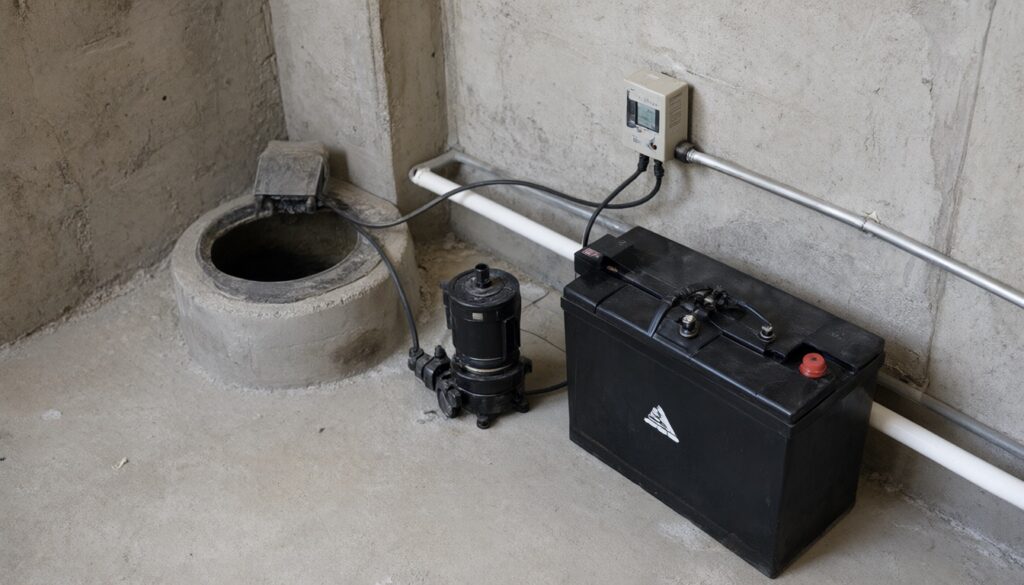
Because pumps tend to fail during the same storms that make them work hardest, consider a backup. A battery backup system sits beside the main pump and takes over during a power outage or a main-pump failure. This Old House puts the battery alone at roughly $150 to $250, with a primary pump and backup combined ranging much higher.
When to call a pro
- The pump still runs nonstop after you have freed the float, checked the valve and cleared the discharge.
- The pump runs in dry weather and the pit keeps refilling. A plumber can look for a leaking pipe or sewer problem.
- You smell burning or see steam or smoke, or the motor is too hot to touch.
- Water is coming up through the floor, or the basement has flooded. Don’t go in if power is on and water is standing.
- You need a new check valve plumbed into the line, a larger pump, a second pump or a battery system installed.
- You have problems every season and may need drainage work around the foundation.
Plumber labor is typically about $75 to $150 per hour, and a sump pump replacement runs roughly $350 to $1,000 including labor, according to This Old House. Costs vary by region, pump type and pit condition, so get two or three local quotes.
After a flood: dry it out and watch for mold
If water reached your floor or stored items, dry the area quickly. Damp materials left for days invite mildew. These guides cover preventing mold on wood and preventing mold in carpets.
FAQ
Why does my sump pump keep running when it’s not raining?
Common reasons are a stuck float switch, a check valve that lets water drain back, a clogged discharge, a high water table or snowmelt, or a leak feeding the pit. Check the float and the check valve first, since both are cheap to test.
How often should a sump pump run?
There is no single number. It depends on your soil, your water table and the weather. In dry weather it may rarely run, and in a wet spell it may run often. What matters is that it shuts off and the pit level drops each time. If it never shuts off in dry weather, investigate.
Can a sump pump run too much and burn out?
Yes. Constant running adds wear, and a pump without enough water around it can overheat. If your pump is running nonstop, unplug it and find the cause rather than leaving it.
Should I turn the sump pump off if it runs constantly?
Only if it is running dry or overheating, or you are working on it. Otherwise the pump may be protecting your basement from flooding. Find out whether it is moving water, and call a pro if you cannot fix it quickly.