
The best lubricant for squeaky floors is a dry powder. Use talcum powder or powdered graphite on wood floorboards, and a lubricant made for click joints on laminate. Both quiet the squeak by stopping two boards from rubbing at the seam. Neither one fixes a board that moves up and down, though, so check that first. This guide covers which floor lubricant suits each floor, how to apply it, and what to do when powder isn’t enough.

Which lubricant works best on your floor?
| Lubricant | Best for | How long it lasts | Mess | Watch out for |
|---|---|---|---|---|
| Talcum powder | Wood floorboards, hardwood, stair treads | Weeks to months, then reapply | Low, white and easy to vacuum | Slippery if you leave a film on the surface |
| Powdered graphite | Hardwood and old floorboards with dark or medium finishes | Usually longer than talc | High, black dust that tracks | Can mark light wood, grout, rugs and carpet |
| Paraffin wax (a plain candle) | A single tight seam or a stair tread edge | Varies | Low | Buff off any wax left on the finish |
| Click-floor lubricant | Floating laminate and engineered floors with visible joints | Varies by product | Low, applied into the joint with a straw | Doesn’t work on nailed or glued-down boards |
| Oil, silicone or aerosol sprays | Not recommended on the walking surface | – | – | Slippery, and solvents can stain or dull the finish |
First, find out what’s actually squeaking
A lubricant only helps when the noise comes from friction: one board rubbing against the next along a seam. Before you buy anything, walk the floor slowly and listen for the exact spot. Then kneel and press each board near it with your hand.
- The squeak sits on a seam and the boards don’t visibly dip. That’s friction. A powder or floor lubricant is the right first fix.
- The board flexes down when you step on it, or you hear a sharp tick. That’s movement. The board or subfloor has pulled away from the joist, or it’s rubbing on a loose nail. Powder may quiet it for a day or two, but you need to fasten it (see the fastening section below).
- The whole room creaks, especially in winter. Dry air shrinks wood and opens the seams. Check your humidity before anything else.
Talcum powder for squeaky floors

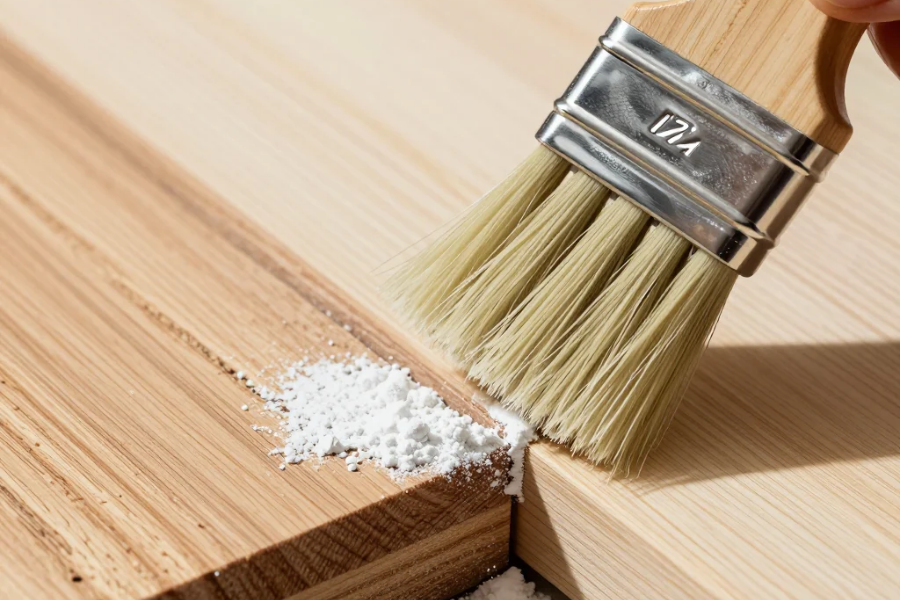
Talcum powder (plain baby powder) is the cleanest place to start. It’s cheap, it’s white, so it won’t show on most wood finishes, and the excess vacuums up easily. Talcum powder for squeaky floorboards works best on narrow seams in solid wood, engineered boards and stair treads.
How to apply it
- Vacuum the seams so the powder can get into the gap instead of sitting on dirt.
- Sprinkle a thin line of powder along the squeaky seam and about a foot either side of it.
- Work it in with a soft brush or an old paintbrush, pushing along the gap rather than across it.
- Lay a cloth or paper towel over the seam and walk back and forth on it a few times. The flexing helps draw the powder into the joint.
- Vacuum or dry-wipe every trace off the surface. Leftover talc makes a smooth floor slippery.
Does talcum powder stop squeaky floors for good?
No. Talcum powder stops squeaky floors for a while, usually until foot traffic or cleaning works it back out of the seam. That might be weeks or a few months. If the squeak returns quickly, the cause is probably movement rather than friction. Reapplying is fine, but it’s a sign the board needs fastening.
Powdered graphite for squeaky floors and hardwood

Powdered graphite for hardwood floors works the same way as talc, but it’s a slicker dry lubricant and tends to last longer in the joint. Graphite is a common dry lubricant for sticky drawers and locks, and it suits older plank floors with wider seams. It usually comes in a small squeeze tube with a nozzle, which makes it easier to aim into one seam.
The trade-off is mess. Graphite is black, it tracks on socks and pet paws, and it can mark light finishes, grout, rugs and carpet. Use powdered graphite lubricant for floors only where the finish is medium or dark, and keep it off anything you can’t easily wipe.
How to use graphite powder for squeaky floors
- Vacuum the seam and put on disposable gloves.
- Squeeze a small puff of graphite powder directly into the gap. Start with less than you think you need.
- Press it in with a cloth or by walking over a paper towel laid on the seam.
- Wipe the surface with a dry cloth, then vacuum. Don’t mop until the excess is gone, or you’ll smear it.
Stick with the plain powder. Aerosol “dry graphite” sprays carry solvents and propellants that can stain or soften a floor finish.
Paraffin wax for a single tight seam
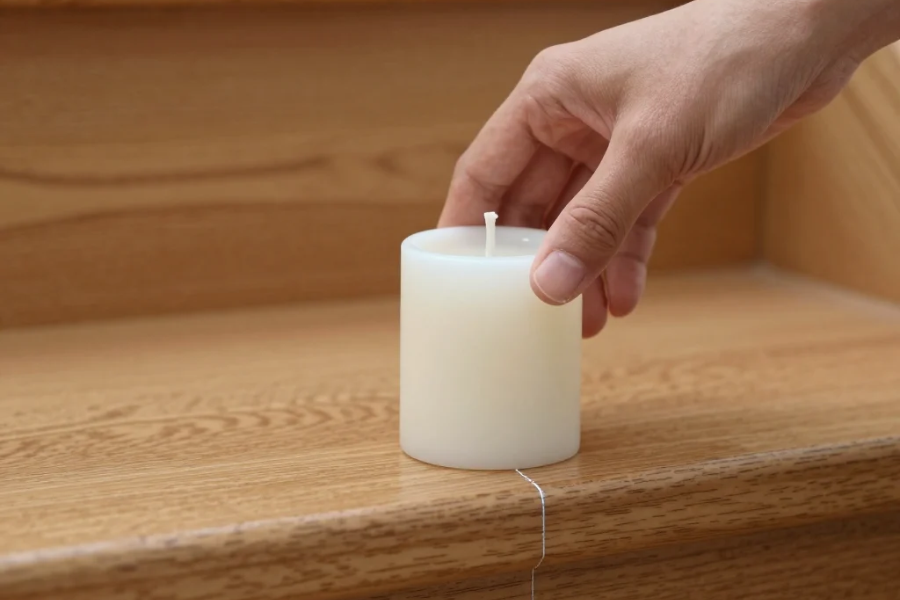
For one stubborn seam, or the edge of a stair tread rubbing against the riser, a plain paraffin candle works as a no-mess floor lubricant. Rub the candle firmly along the seam so a little wax catches in the gap, then buff the surface with a dry cloth. Use an unscented, uncolored candle. There’s no need to melt the wax: hot wax on a finished floor is harder to clean up and can leave a cloudy patch.
Laminate floor lubricant: what’s safe on click floors

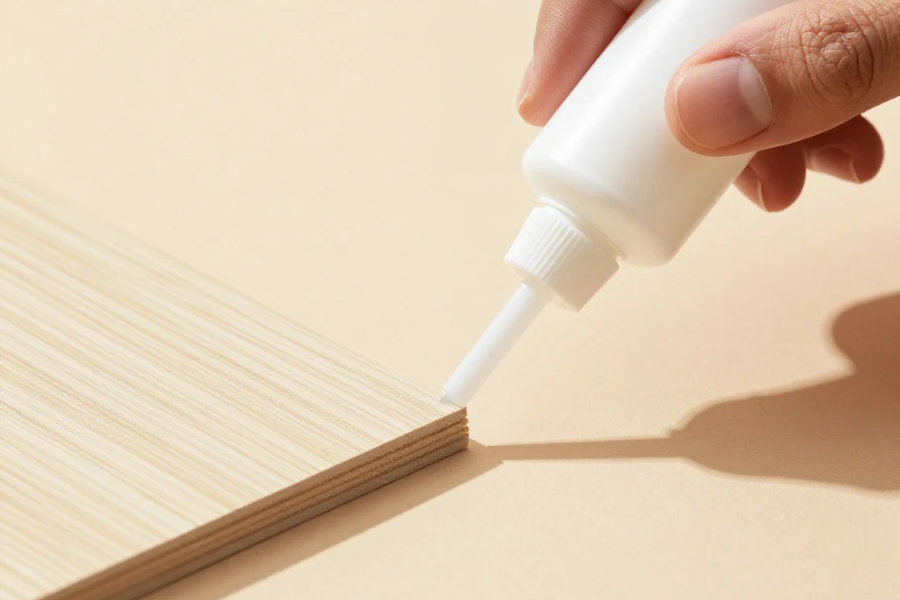
Laminate and most engineered floors are floating floors. The planks click together and rest on an underlay instead of being nailed down, so squeaks usually come from the click joints rubbing. A laminate floor lubricant is a thin liquid made for exactly this. You fit the thin straw to the bottle, aim it into the gap between the boards, and run a small bead along the joint. Products sold for this include Stop Creak and other “click lube” lubricants.
These products only work where you can see a joint to aim into. They aren’t meant for nailed or glued-down floorboards. Powder also works on laminate, but it rarely gets far into a tight click joint.
Skip silicone spray, oil and general-purpose sprays on the surface. They leave a slick film that’s a slip hazard, especially for kids, older relatives and pets, and they can dull the wear layer. If you use a spray as a stopgap, keep it inside the joint and wipe the surface completely dry.
When a laminate floor creaks all over, a lubricant is a short-term fix. Flooring maker EGGER points to the usual causes:
- An uneven subfloor, which lets planks rock.
- Thin or badly laid underlay.
- Missing expansion gaps at the walls (about 8–10 mm, or roughly ⅜ inch), so the floor presses against the skirting.
- Big swings in humidity.
Many of these are installation problems. Our guide to common mistakes when laying laminate flooring covers how to spot them.
How to make hardwood floors less squeaky when lubricant isn’t enough
If the board moves, the fix is to fasten it, not to make it slicker. Start with the easiest method that fits your floor.
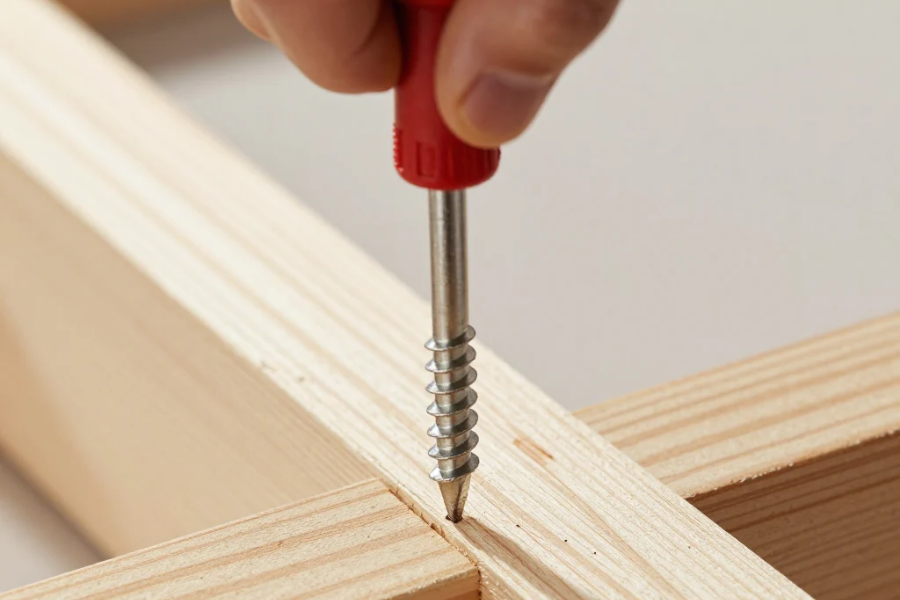
From above: squeak-repair screws
Squeak-repair kits use a special screw that you drive through the board (or through carpet) into the joist below. The head then snaps off below the surface. On hardwood, pre-drill, drive the screw, snap the head, and fill the hole with wood filler or a plug that matches the floor. Find the joist first with a stud finder. Joists usually run perpendicular to the boards and are often 16 inches apart, but check yours. Don’t overtighten into solid wood, because that can split the board.
From below: shims and construction adhesive
If you can reach the underside from a basement or crawlspace, have someone walk on the squeaky spot while you watch the joists with a flashlight. Look for a gap between the top of a joist and the subfloor.
- For a small gap, spread wood glue on a thin wood shim and tap it in gently until it’s snug. Don’t drive it hard, or you’ll push the subfloor up and widen the gap.
- For a longer, narrow gap, fill it with construction adhesive from a caulk gun.
- Let it cure for a full day before you walk on that spot.
Under carpet
Lubricant can’t reach carpeted floors. Kits made for carpet drive a screw through the pile into the joist and snap it off below the carpet backing, so the repair doesn’t show.
Keep the humidity steady
Wood shrinks in dry winter air, and the seams open and rub. Industry guidance for wood floors, discussed in Hardwood Floors magazine, typically puts normal indoor relative humidity at about 30–50%. A cheap hygrometer tells you where you are, and a humidifier in winter can quiet a whole floor without any powder.
Is there a squeaky wood floor cleaner that stops the noise?
No cleaner silences a squeak, because the noise comes from movement or friction inside the seam, not from the surface. Cleaning still matters in two ways:
- Before lubricating. Grit packed into a seam can grind and creak. Vacuum the seams with a crevice tool before you add powder, so it reaches the joint.
- Avoid wet mopping. Too much water swells wood and laminate, and swollen boards push against each other and creak more. Use a barely damp mop and a cleaner made for your floor type.
For floor-safe options, see how to clean laminate floors that aren’t waterproof and our pick of the best laminate floor cleaning solution. If cleaning shows up worn spots, here’s how to get scratches out of wood floors.
Safety tips
- Remove every bit of powder or lubricant from the walking surface. A slippery floor is a bigger problem than a squeak.
- Don’t breathe the dust. Pour powders gently, keep your face back, and wear a dust mask if you’re doing a large area.
- Keep kids and pets out of the room until you’ve vacuumed.
- Wear a respirator and open windows when using construction adhesive in a crawlspace.
- Check for pipes and wires under the floor before you drive screws from above.
FAQ
Is WD-40 good for squeaky floors?
Some flooring makers mention it as a temporary fix inside laminate joints. Don’t spray it on the surface of any floor: it’s oily and slippery, and it can damage some finishes. On wood floorboards, talc or graphite is the better choice.
What’s the best lubricant for squeaky wood floors?
Talcum powder for light finishes and a cleaner job. Powdered graphite for dark finishes, or where talc wears off too quickly. Both go into the seam, not on top of the boards. If you choose a graphite powder lubricant, wood floors with medium or dark finishes hide any stray dust best.
Are squeaky floors a structural problem?
Usually not. Most squeaks are boards rubbing or a subfloor that has pulled slightly off a joist. Have a pro look if the floor feels bouncy or sags, if there are new cracks in nearby walls, or if a squeak comes with water damage. That last one often means a leak, and moisture can also lead to mold on the wood.
How often do I need to reapply powder?
Whenever the squeak comes back. If you’re reapplying more often than every few weeks, the board is moving and needs a screw or shim instead.
Start with the cheapest fix that matches the cause: a dry powder for wood seams, a click-joint lubricant for laminate, and a screw or shim for any board that moves. That’s the best lubricant for squeaky floors in practice. Most squeaks need nothing more.