
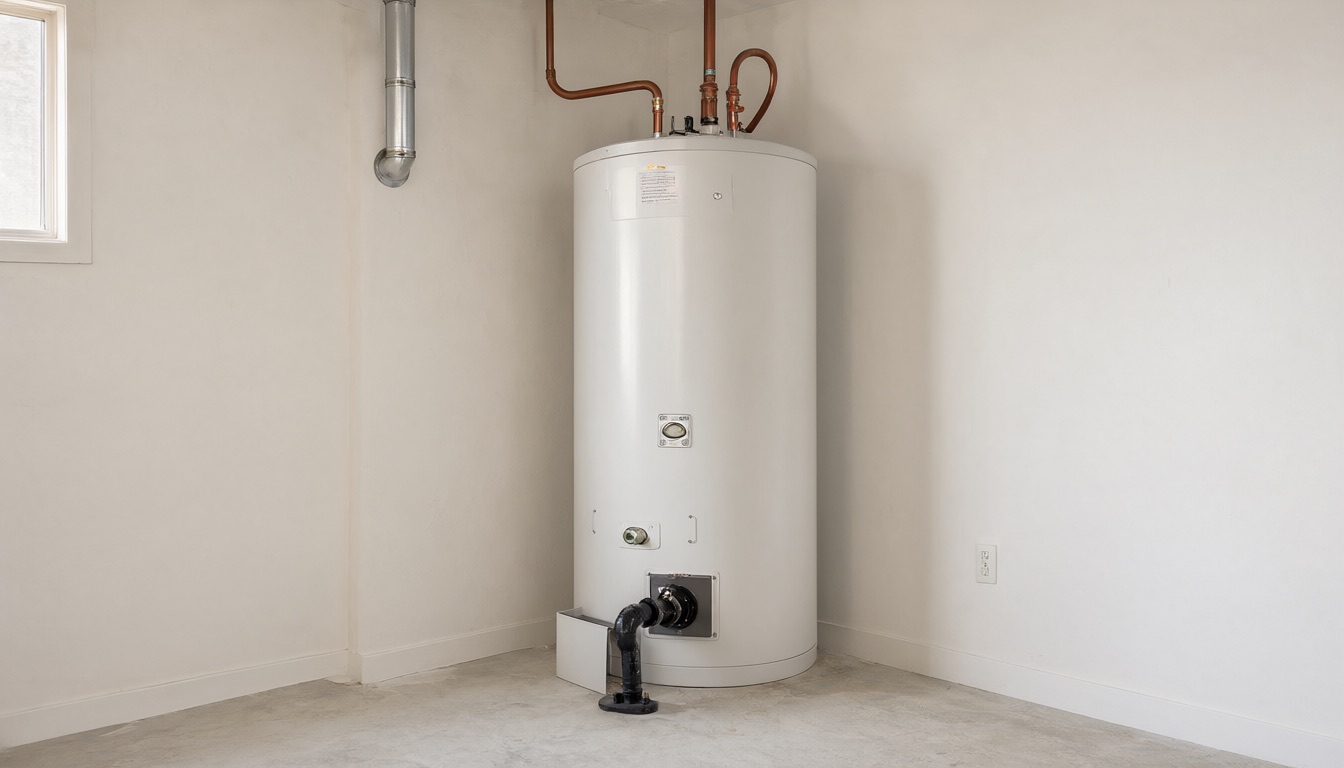
A water heater that isn’t heating enough usually has one of a few simple causes: the thermostat is set too low, sediment has built up in the tank, a dip tube has failed, or the tank is too small for how much hot water your household uses. On a gas heater, a weak burner or a failing thermocouple or flame sensor can also leave you with lukewarm water. Start with the safety checks below, then work through the causes from easiest to hardest. Most people with a gas water heater that isn’t getting hot enough can sort it out with a thermostat check and a tank flush, and the rest need a plumber.
Safety first: stop points for a gas water heater
Gas appliances are not the place to improvise. Read these before you touch anything.
- If you smell gas, leave. Don’t flip switches, light anything or hunt for the leak. Get everyone out, then call your gas utility’s emergency line or 911 from outside. Utilities such as National Grid give the same advice: leave first, call from a safe place.
- Have working carbon monoxide (CO) alarms. The U.S. Consumer Product Safety Commission (CPSC) has recalled gas water heaters over burner and CO problems (see one example) and recommends CO alarms outside sleeping areas and on every level of the home. If an alarm sounds, get outside and call for help.
- Don’t relight the pilot in any way other than the label says. The lighting instructions are printed on the heater. If they don’t match what you’re seeing, the pilot keeps going out, or you can’t follow them with confidence, stop and call a pro.
- Soot, a yellow or orange flame, scorch marks around the burner compartment, or a burning smell mean combustion isn’t clean. Turn the heater off and call a plumber or HVAC technician.
- Electric heaters: switch off the breaker (most have two) before opening any panel. The wiring is live even when the water is cold.
Why is my water heater not heating enough? Quick checks
- Is it every faucet or just one? If only the shower is lukewarm, the problem may be the shower valve, not the heater.
- Has it always been like this, or did it change? A heater that suddenly got worse often has a failed part. One that slowly got worse points to sediment.
- Does it run out fast or never get hot? Running out fast points to sediment, a broken dip tube or a small tank. Never hot points to the thermostat or the heat source.
- Is it winter? Colder water coming into the house takes more work to heat, so the same heater can feel weaker in cold months.
Symptom, cause and fix: what a gas or electric tank heater is telling you
| What you notice | Likely cause | What to do |
|---|---|---|
| Water never gets very hot, but doesn’t run out | Thermostat set too low; failing thermostat | Check the setting (aim for about 120°F), then the thermostat |
| Water got steadily weaker over months or years | Sediment on the bottom of the tank | Flush the tank |
| Hot water starts hot, then turns lukewarm quickly | Broken dip tube; small tank; sediment | Check the household demand; flush; ask a plumber to inspect the dip tube |
| Lukewarm in winter only | Colder incoming water | Raise the setting slightly (stay at or below 120°F if you can) or cut simultaneous use |
| Gas: pilot goes out or the burner won’t stay lit | Failing thermocouple or flame sensor, draft, gas supply problem | Call a pro; don’t keep relighting |
| Gas: weak, uneven or yellow flame; soot | Dirty or damaged burner; poor combustion | Turn off and call a pro (CO risk) |
| Electric: lukewarm, or hot water runs out almost at once | Failed upper or lower element, bad thermostat, tripped reset button | Breaker off, test or replace parts, or call an electrician or plumber |
| Hot at the kitchen sink but not the shower | Worn shower valve or mixing valve | Replace the valve cartridge |
| Hot and cold seem swapped or mixed at several fixtures | Crossed lines or a cross-connection | Plumber |
| Tank is 10+ years old, rumbling or leaking | Worn-out tank | Plan a replacement |
Gas hot water heater not getting hot enough: the gas-side causes
Gas heaters have the same tank problems as electric ones, plus the burner and pilot system that heat the water. When a gas hot water heater isn’t getting hot enough, these are the usual suspects.
Thermostat or gas control set too low
Gas heaters have a dial on the gas control valve at the bottom front. It may show letters or a range of marks instead of degrees, so check the owner’s manual to see which mark is 120°F. If someone turned it down to save energy or because of a child in the house, that alone can explain lukewarm water.
Failing thermocouple or flame sensor
These small safety parts tell the gas valve that the flame is lit. When they wear out or get dirty, the pilot or burner can drop out, and the heater can go cold with no warning. A pilot that won’t stay lit is a sign to stop, not to keep trying. On modern heaters with electronic ignition, the same job is done by a flame sensor. Swapping these parts is quick for a pro, but it involves the gas valve, so it isn’t a beginner DIY job.
Weak or dirty burner
A burner covered in dust, rust flakes or soot can’t heat the tank fully. Lint and dust that clog the air intake at the bottom of the heater are a common cause. A burner problem can also produce carbon monoxide, which is why a yellow flame or soot calls for a pro.
Venting and draft problems
If the flue is blocked or backdrafting, the burner can sputter or shut off. That is a CO hazard too, so don’t try to fix it yourself.
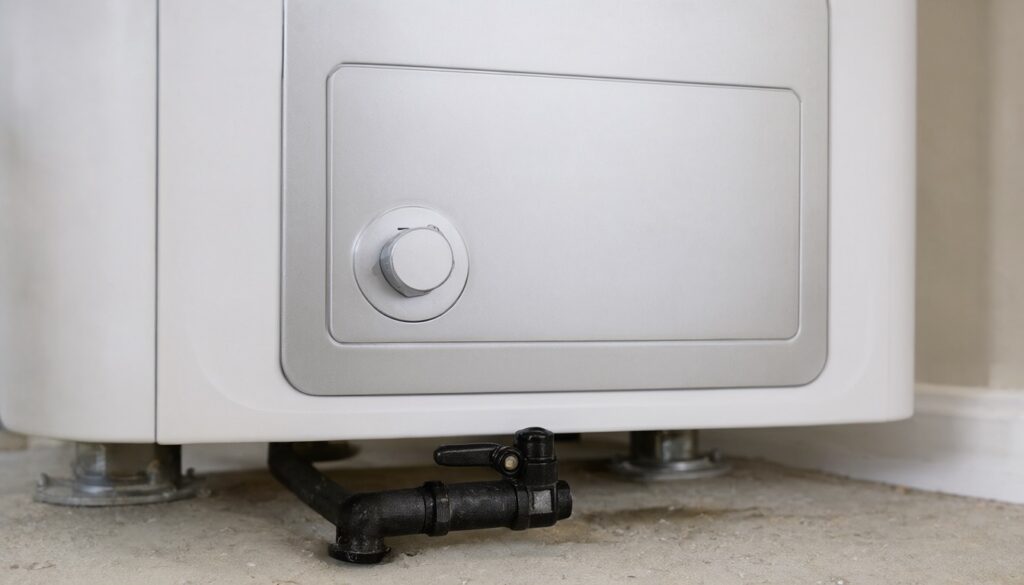
Water heater not heating enough water: sediment, dip tube or the wrong size
Sediment buildup
Minerals in water settle to the bottom of the tank. Over the years they form a layer that gets in the way of heat transfer. On a gas heater, the burner has to heat the water through that layer, and on an electric heater the lower element can get coated. The U.S. Department of Energy’s Building America program notes that sediment can coat the element and reduce heat transfer, and that flushing the tank helps performance and longevity. Popping or rumbling from the tank is a typical hint.
Broken dip tube
The dip tube carries incoming cold water to the bottom of the tank, so the cold water doesn’t mix with the hot water at the top. If it cracks or breaks, cold water mixes near the top, and you get lukewarm water or a short supply. Bits of broken plastic in faucet aerators or showerheads can be a clue. Replacing it means draining the tank and unscrewing the cold inlet fitting, so most homeowners leave it to a plumber.
An undersized tank, or more demand than before
A heater that worked fine can start to feel too small after the household grows, you add a soaking tub, or you run the dishwasher, washer and two showers together. Check the tank’s gallon capacity on the label. If it comes up short, spread out hot-water use, or ask a plumber about a larger tank or a different type of heater.
If low flow rather than low temperature is the problem, a clogged showerhead can be the culprit. Our guide to cleaning a brushed nickel shower head covers mineral buildup at the fixture.
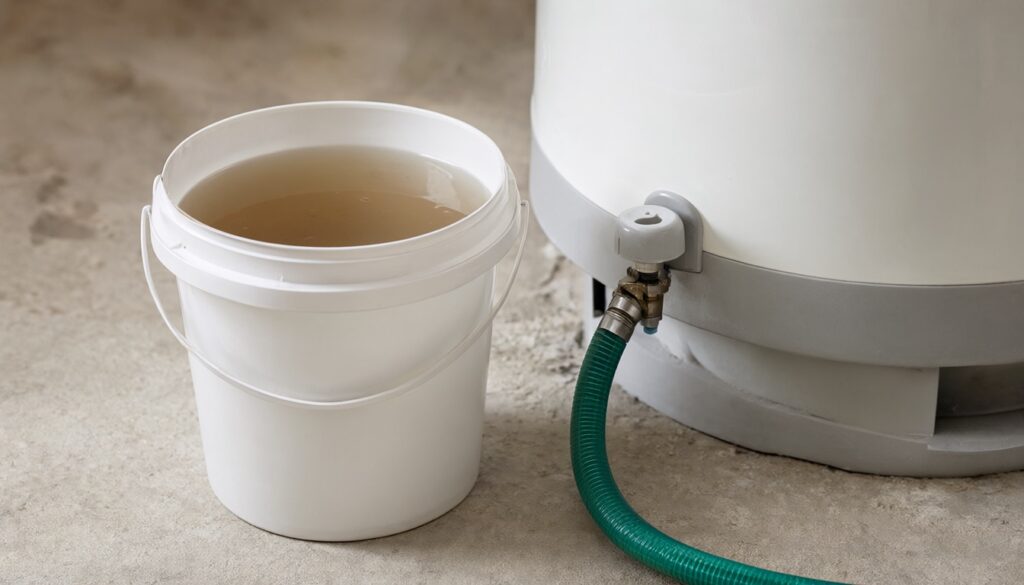
How to flush sediment from your water heater
Flushing is the most useful DIY fix for a heater that is losing heat over time. Plan on about an hour, plus time for the tank to reheat. Check your manual first, since the manufacturer’s steps and how often to flush come first. The steps below follow the DOE-supported Building America flushing guide.
What you need
- A standard garden hose long enough to reach a floor drain, a sink or the yard
- A bucket
- A flathead screwdriver or pliers, in case the drain valve is stiff
- Heat-safe gloves, since the water can be very hot
Steps
- Turn off the heat source. For electric, switch off the breakers. For gas, follow your manual: it may say to close the gas valve or turn the dial to “pilot.” Don’t turn off the pilot in a way that could let gas escape.
- Close the cold-water inlet valve on top of the tank. If there isn’t one, shut off the water to the house.
- Let the water cool a bit, or open a hot faucet nearby and wait. The water in the tank can be hot enough to scald.
- Open a hot tap somewhere in the house so air can get in as the tank drains.
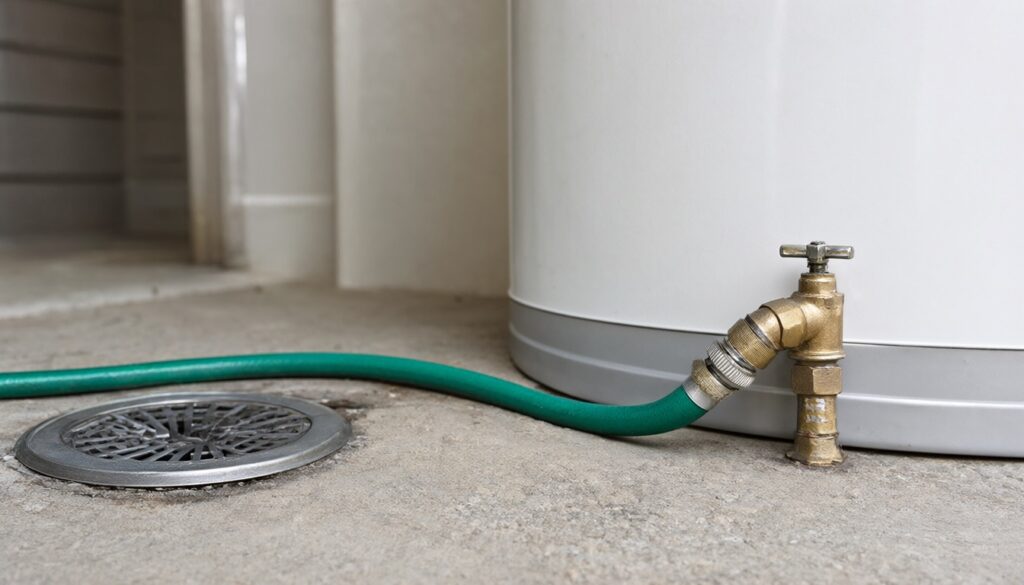
- Attach the hose to the drain valve near the bottom of the tank, and run it to a drain or outside. The end must be lower than the valve.
- Open the drain valve and let the tank empty. This can take 20 minutes or more.
- Stir up what’s left. Briefly open the cold inlet for about 10 seconds, then close it. Repeat until the water runs clear.
- Close the drain valve, remove the hose, and open the cold inlet to refill. Leave the hot tap open until water flows steadily, then close it.
- Restore power or gas only after the tank is full. An electric element that runs in an empty tank can burn out quickly. For gas, relight the pilot only as the label directs.
- Give it a few hours to reheat. The first hot water may look cloudy for a short time.
If the drain valve won’t open or stays open and drips afterward, stop. Older plastic drain valves can crack, and a plumber can replace the valve while the tank is empty. If the water coming out never clears, or the tank is more than about 10 years old, flushing may not be enough.
Electric water heater not heating enough: the quick version
Most electric tank heaters have two heating elements, an upper one and a lower one, each controlled by its own thermostat. The upper element works first, then hands off to the lower one. That means the symptom tells you which part to suspect.
- Lukewarm water that runs out quickly often means the lower element or its thermostat has failed.
- Little or no hot water at all can mean the upper element or thermostat has failed, or the high-limit reset button has tripped.
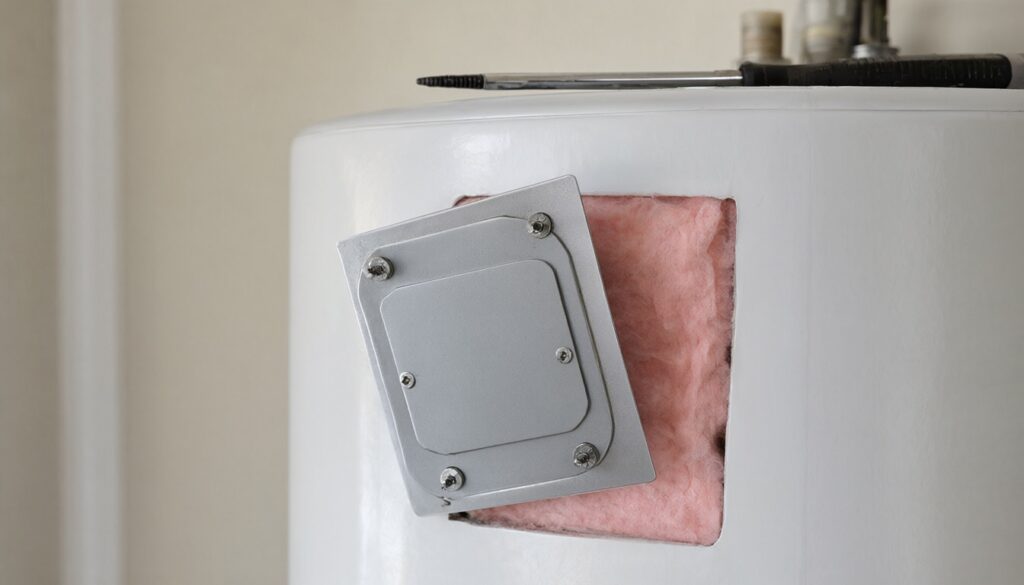
- The reset button is a red button under the upper access panel. If you press it and the heater works for a while and then trips again, something is wrong. Don’t keep pressing it.
Before opening any panel, switch off both breakers and confirm the power is off with a non-contact voltage tester. If you’re not comfortable testing elements and thermostats with a multimeter, an electrician or plumber can do it.
Is it the thermostat, the 120°F setting, or scald risk?
If you’ve turned the temperature down for safety, you may have gone a bit too far. The U.S. Environmental Protection Agency recommends setting water heaters to 120°F to prevent scalding, as noted in the Building America guide to checking your water heater temperature. That guide also says each 10-degree reduction saves about 5% in energy use, and that a lower setting means less mineral buildup and corrosion.
To check what you’re really getting:
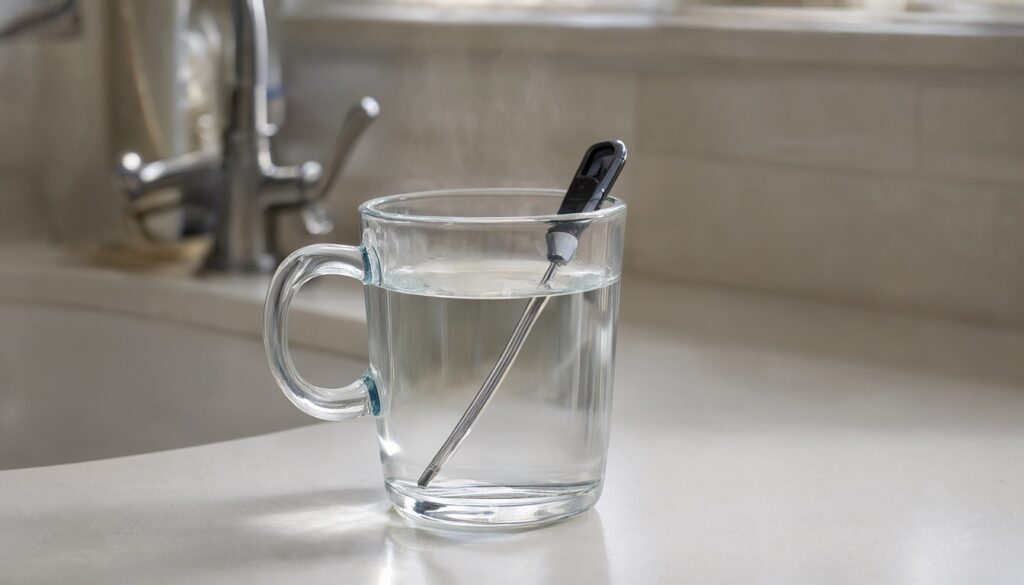
- Run only the hot tap closest to the heater for about three minutes, so the water is coming straight from the tank.
- Fill a mug and take its temperature right away with a cooking or meat thermometer. Don’t use a mercury fever thermometer.
- If it’s well under 120°F, adjust the thermostat up a little, wait a few hours and test again.
Don’t turn it up a lot to fix a short supply. Hotter water raises the scald risk, especially for young children and older adults, and it wears the tank faster. If you need more hot water, a better fix is to remove sediment, repair a part or change how you use it.
How long do tank water heaters last, and when should you replace one?
Most tank water heaters last roughly 8 to 10 years, according to Fixr’s cost guide, and Portland’s water utility puts a typical tank at about 10 years. The date is on the data plate: look for a serial number that encodes the month and year, or check the manufacturer’s website.
Think about replacing it rather than repairing when:
- The tank is at or past 10 years old and the problem keeps coming back.
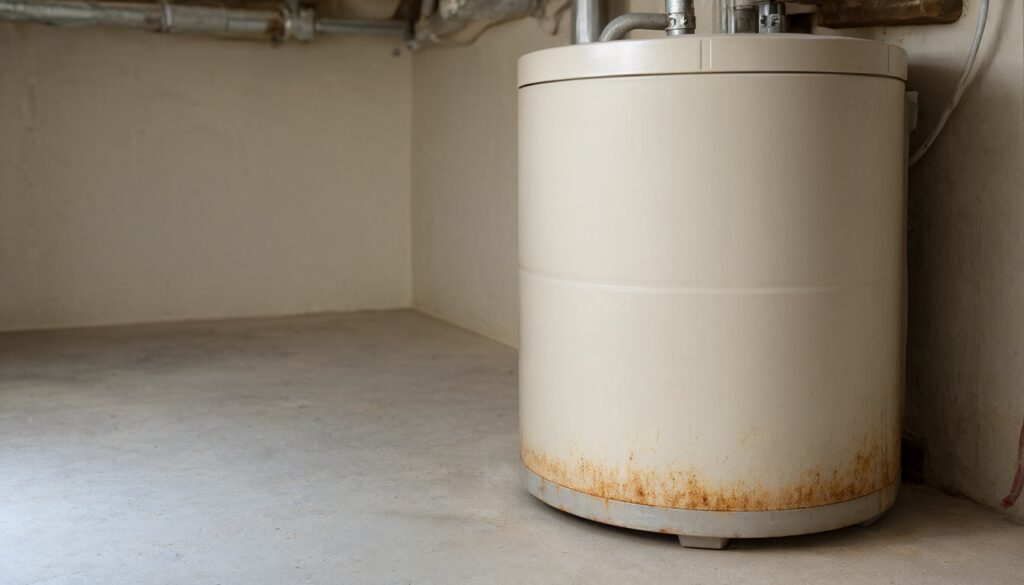
- You see rust-colored water, rust streaks on the tank, or any leak at the tank itself. A leaking tank can’t be repaired.
- The repair quote is a large share of the cost of a new heater. Fixr says that once a repair quote reaches about $1,000, a replacement may be the better value.
- The heater is too small for your household and a bigger one is worth it.
Fixr’s 2026 cost guide lists a 40- or 50-gallon tank heater at roughly $700 to $2,500 installed, depending on gas or electric and on what the install needs (venting, a new gas line or electrical work). Prices vary a lot by region.
When to call a pro and what it costs
Call a licensed plumber (or an HVAC technician or electrician, depending on the job) if:
- You smell gas, see soot, or a CO alarm has gone off. Leave first, then call.
- The pilot or burner won’t stay lit, or you suspect the thermocouple, flame sensor, gas valve or venting.
- The dip tube needs replacing, or the heater has several failing parts.
- Electric parts need testing and you aren’t comfortable working near live wiring.
- The drain valve won’t work, the tank leaks, or hot and cold seem crossed.
Typical U.S. cost ranges from Fixr’s water heater repair guide:
| Repair | Typical range |
|---|---|
| Thermocouple replacement | about $150 to $325 |
| Gas valve replacement | about $150 to $300 |
| Thermostat replacement | about $100 to $250 |
| Heating element replacement (electric) | about $200 to $750 |
| Dip tube replacement | about $100 to $250 |
| Overall repair, all types | about $150 to $750 (average about $450) |
| Labor | about $50 to $150 per hour; a call-out fee of around $50 may be waived if you book the repair |
These are national ranges, and your quote can be higher or lower. Ask for the quote in writing, with the parts and labor listed.
FAQ
Why is my gas water heater not getting hot enough all of a sudden?
A sudden change usually points to a part, not sediment. Check that the pilot or burner is lit and that nobody changed the dial. If it won’t stay lit, or the flame looks yellow or sooty, turn the heater off and call a pro.
Why does my hot water run out so fast?
The usual causes are sediment taking up room in the tank, a broken dip tube, a failed lower element on an electric heater, or a tank that’s too small for your household. A flush is the cheapest first step.
Will turning the water heater up fix lukewarm water?
Only if the dial was set too low. If the setting was already correct, a hotter setting just raises the scald risk and wears the tank faster while the real problem stays. Fix the cause instead.
How often should I flush a water heater?
Check your owner’s manual, because manufacturers differ and the DOE-supported guide doesn’t give one interval. Many homeowners do it about once a year, and harder water means more sediment.