
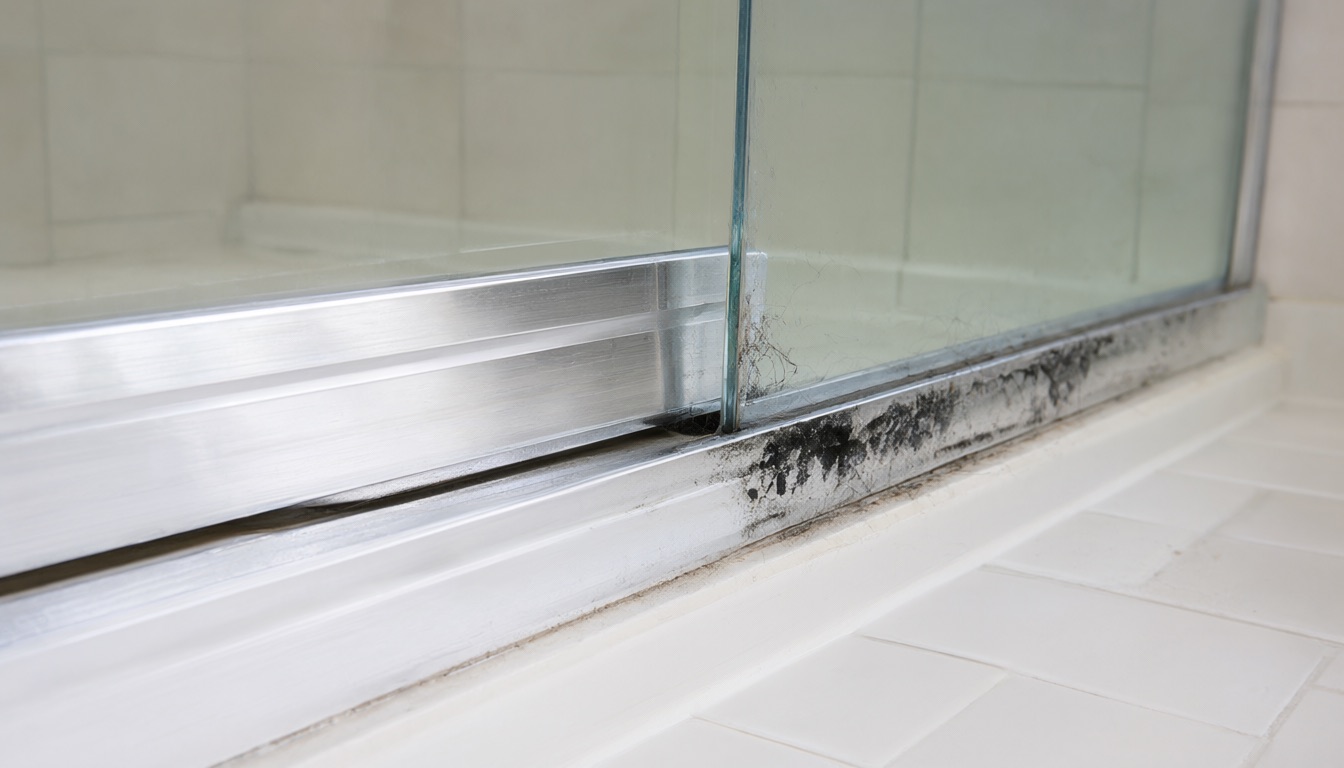
Black gunk in a shower door track keeps coming back because the track stays wet and dirty between cleanings. The bottom channel collects soap scum, body oil, hair and hard-water minerals, and when water sits on top of that film, mildew can start growing on it within days, since the claim isn’t sourced. Scrubbing removes what you can see. To stop the gunk returning, you also have to get rid of the standing water (clear drain holes, dry the track) and the food it grows on (soap residue), and check for mold growing where a brush can’t reach.
What is the black gunk in a shower door track?
It is usually a mix of two things. The first is a greasy film of soap scum, body oil, shampoo, skin cells and hair, often crusted with white hard-water minerals. The second is mildew (surface mold) and bacteria growing on that film. Together they form a slimy layer that sticks to the channel, the corners and the base of the door.
The black color comes mostly from the mold. That is why the gunk tends to be darkest in the corners and at the ends of the track, where water drains last and dries slowest. In a damp bathroom, a little black mildew in a shower track is common. It is still worth removing quickly, because mold can irritate eyes, skin and airways in sensitive people, and the longer it grows, the deeper it gets into caulk and seals.
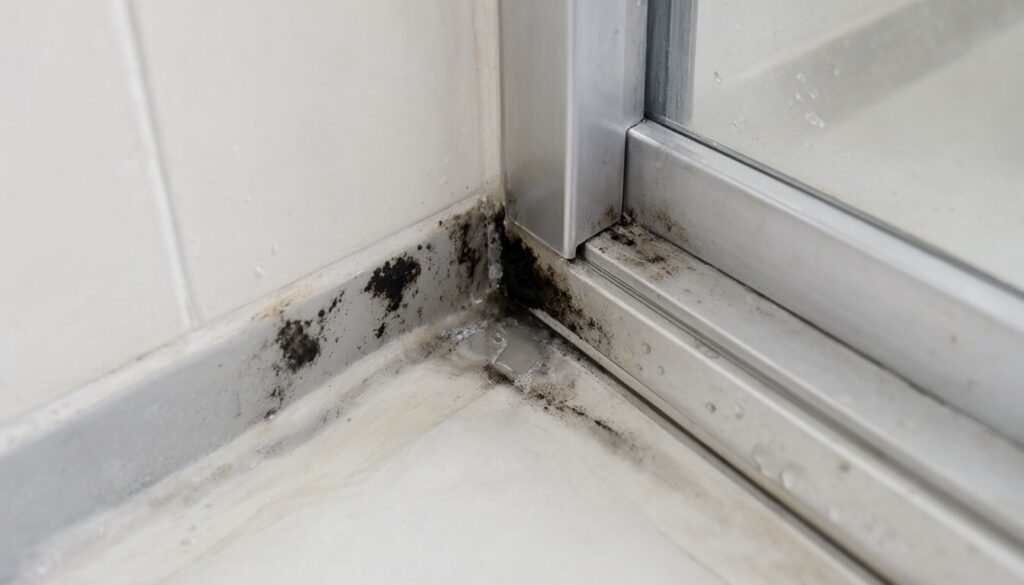
Why does the black gunk in my shower door track keep coming back?
If the track looks clean after you scrub but turns black again within a week or two, one of these is usually the reason:
| What you notice | Likely cause | What fixes it |
|---|---|---|
| Water still sits in the track an hour after a shower | Blocked or missing drain (weep) holes | Clear the holes (see below) |
| Track feels slippery again a few days after cleaning | Soap residue left behind, or the cleaner wasn’t rinsed off | Rinse well, dry, then wipe weekly |
| Black lines along the track edge that won’t scrub off | Mold growing in the caulk | Remove and recaulk |
| Track stays wet at one end only, even with clear drain holes | Track or curb may slope the wrong way | Check the slope with a small level or a cup of water; have a pro fix it if it’s off |
| Mirror stays fogged long after you shower | Poor ventilation, high humidity | Run the fan longer; leave the door open |
| Gunk returns no matter how often you clean, and the track feels loose or the grout or floor next to it is damp or stained | Water may be leaking under or behind the track | Reseal the track; call a pro if the track is loose or the grout underneath is soft or damaged |
The common thread is moisture. The U.S. Environmental Protection Agency puts it simply: the key to mold control is moisture control. A track that dries out between showers rarely turns black again.
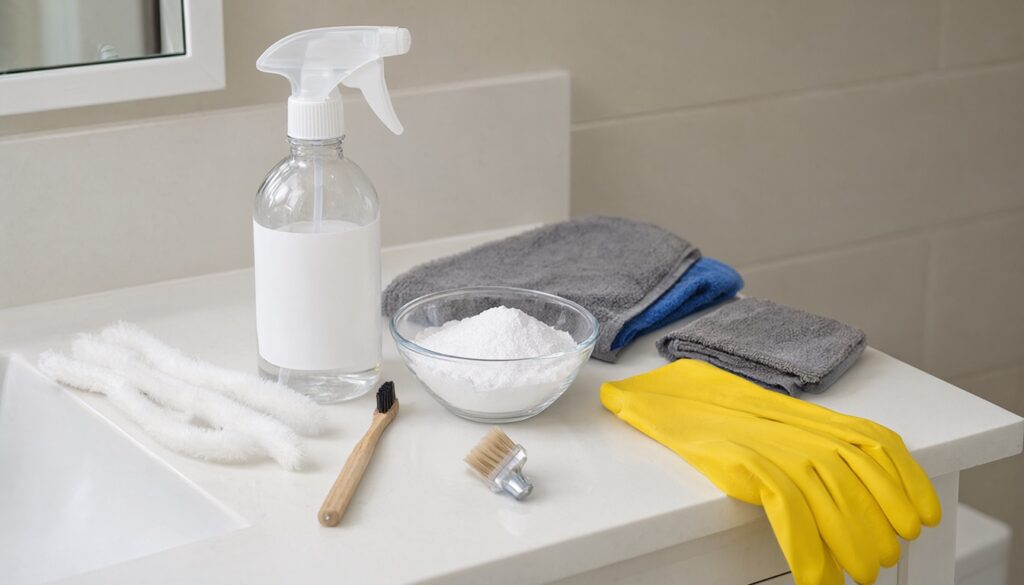
What you need to clean a shower door track
- Vacuum with a crevice tool, or a handful of paper towels
- Old toothbrush, small detail or grout brush, and a pipe cleaner or wooden skewer
- Undiluted white vinegar in a spray bottle (skip it on natural stone; see below)
- Baking soda
- A mildew remover labeled for bathrooms, or household bleach diluted with water
- Paper towels, a sponge or microfiber cloths, and a dry towel
- Rubber gloves and eye protection; open a window or run the fan
How to clean shower door tracks, step by step
Plan on 30–60 minutes for a badly neglected track, most of it waiting time. You can do every step without removing the door: slide it to one side, clean the open half, then slide it across and do the other half.
- Remove the loose debris dry. Vacuum the track with a crevice tool, or pull out hair and grit with a paper towel. Adding liquid first turns hair and grit into mud.
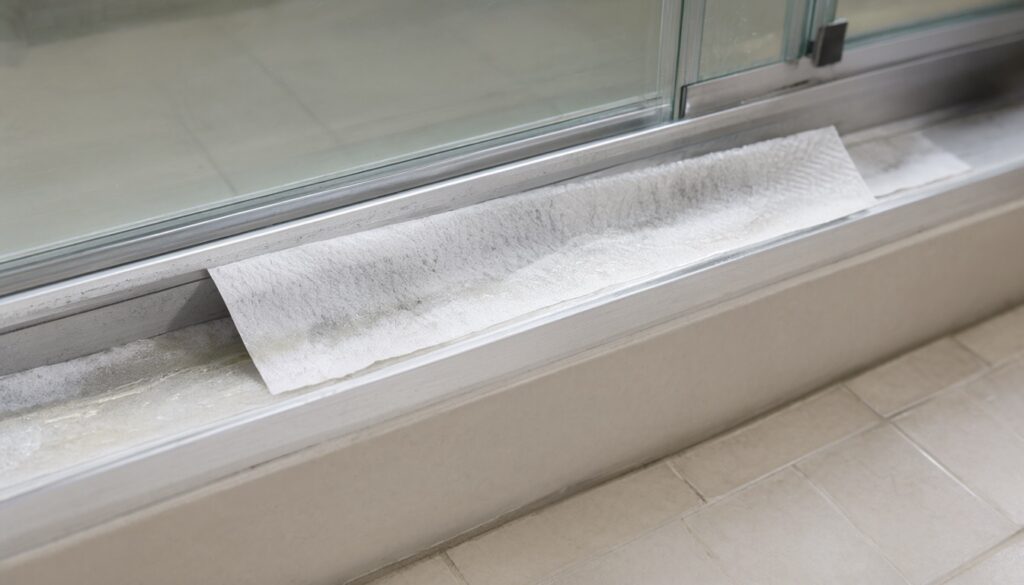
- Soak the soap scum with vinegar. Spray the track generously with white vinegar. Then fold paper towels into strips, lay them in the channel and soak them with more vinegar so it stays in contact with the sides and corners instead of draining away. Leave it for 15–30 minutes.
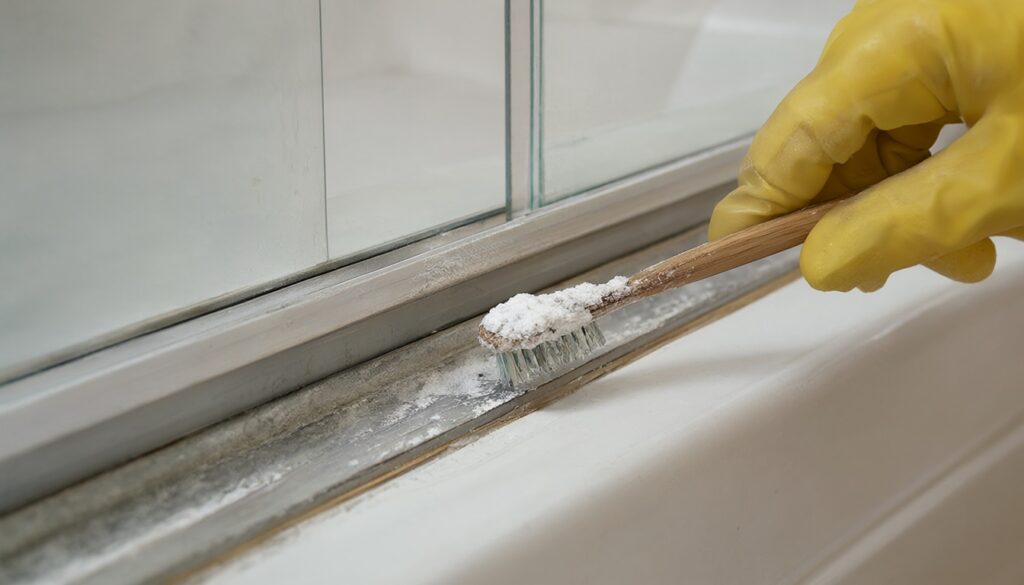
- Scrub with baking soda. Lift out the paper towels (they will pull some of the gunk with them). Sprinkle baking soda into the track, spray a little more vinegar so it fizzes, and scrub the corners, seams and track walls with the toothbrush. The baking soda works as a gentle scouring powder.
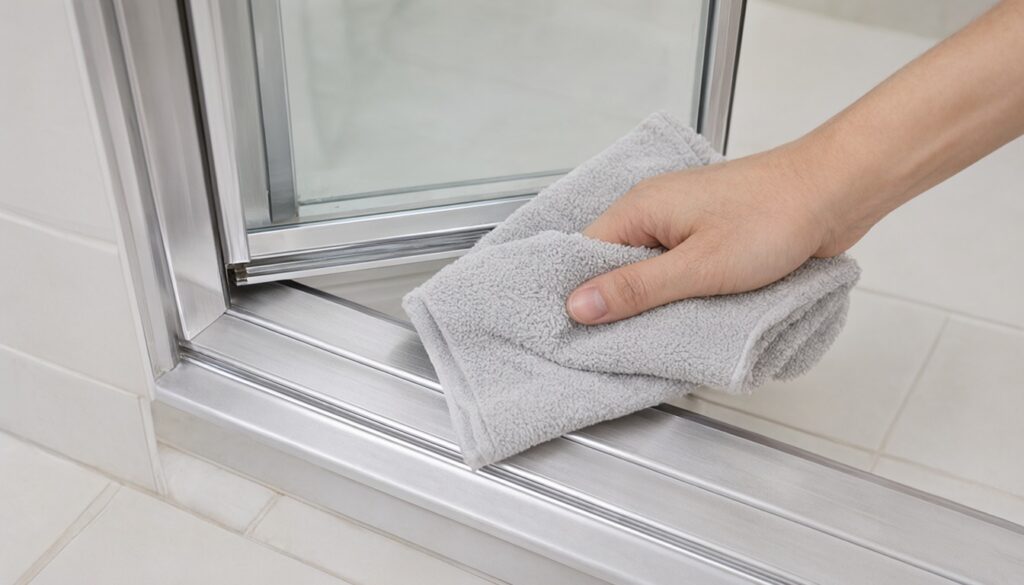
- Rinse and wipe. Rinse with a cup of warm water or a wet sponge, then wipe the track out with a microfiber cloth. Rinse the cloth often so you are not spreading grime around. Any soap or residue you leave behind will feed new mildew.
- Treat the mold that is left. If black spots remain, apply a bathroom mildew remover and follow its label, or use a bleach solution. The CDC says to use no more than 1 cup of household bleach per gallon of water. Work with the window open and gloves on, give it the contact time on the label, scrub, and rinse thoroughly.
- Dry it completely. Wipe the track dry with a towel, poke a paper towel into the corners, and leave the door open with the fan running until the track is fully dry. A hair dryer on a low, cool setting helps in tight corners. Keep it well away from the water and the outlet.
Important: never mix bleach with vinegar, ammonia or other cleaners, because the combination releases toxic gas. If you used vinegar in step 2, rinse the track thoroughly with plain water before any bleach goes in. Using a ready-made mildew remover is usually simpler than switching chemicals partway through.
How to clear shower door track drain holes
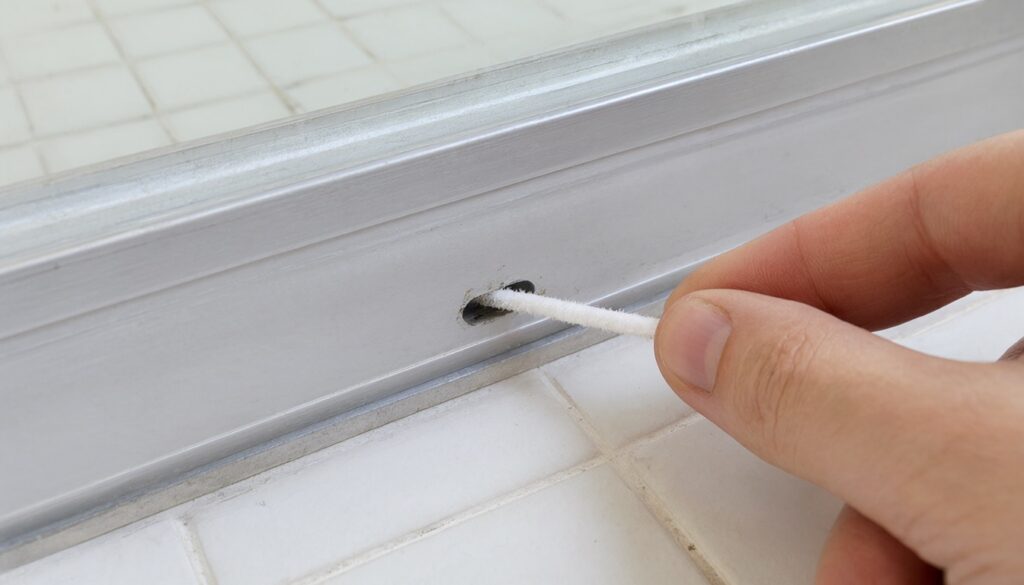
Most framed sliding doors have small drain holes or slots (often called weep holes) on the inside face of the bottom track. They let water that gets into the track run back into the shower. When hair and soap scum block them, the track holds a puddle after every shower, and that puddle is what keeps the mildew going.
- Find the holes. Look along the inside edge of the track, usually near each end and sometimes in the middle. Some tracks have a plastic flap or cover over them.
- Push a pipe cleaner, wooden skewer or thin plastic straw through each hole and work it back and forth. Avoid metal tools, which can scratch the finish and widen the opening.
- Pour a cup of water into the track and watch. It should drain back into the shower in a few seconds. If it doesn’t, repeat, or use a wet/dry vacuum on the outside of the hole.
Don’t drill new holes or enlarge the existing ones unless the door maker’s instructions say to. Holes in the wrong place can send water out onto your bathroom floor instead.
What if the black is in the caulk or under the track?
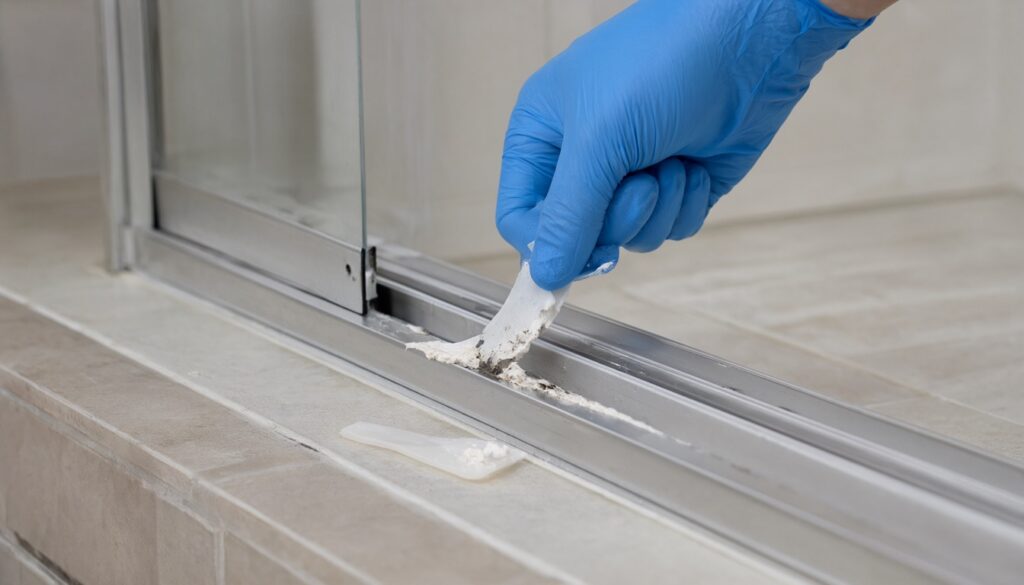
If thin black lines stay along the edge of the track after scrubbing and bleaching, the mold is most likely growing into the silicone caulk or behind it. Mold in silicone often can’t be cleaned out, because it grows into the material. The fix is to remove that caulk and replace it.
- Cut and peel out the old caulk with a plastic scraper or utility knife. Our guide on how to remove caulk from a wall covers clearing off the last thin film.
- Clean the gap with your mildew remover or bleach solution, rinse, and let it dry completely, ideally for a day with the fan running. The EPA advises against caulking over a moldy surface.
- Run a fresh bead of 100% silicone sealant labeled for kitchens and bathrooms or mildew-resistant. See choosing the best shower silicone sealant for what to look for.
- Leave the drain holes and the inside edge of the track uncaulked. Caulking the inside traps water in the track, which is the opposite of what you want.
- Wait for the full cure time on the tube before showering.
If the track itself is loose, water is leaking out at the ends, or you see soft or stained grout under it, the problem is bigger than cleaning. Have the door reset or the track resealed.
How to stop the black gunk from coming back
Once the track is clean and draining, a few minutes of upkeep keeps it that way:
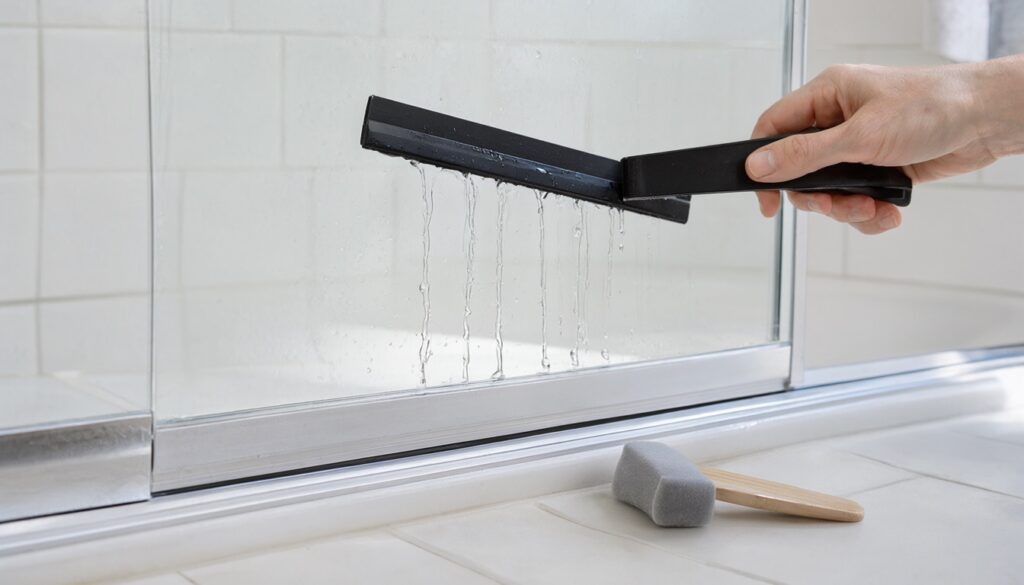
- Squeegee the glass after every shower. Less water runs down into the track, and you’ll get fewer hard-water spots on the glass too.
- Dry the track. A dry foam paint brush, a small sponge or a cloth swiped along the channel removes the leftover puddle in about 10 seconds. Keep it in the shower caddy so you actually use it.
- Run the exhaust fan during the shower and for 20–30 minutes after, or open a window. The EPA recommends keeping indoor humidity below 60%, ideally between 30% and 50%. A cheap hygrometer will tell you whether your bathroom gets there.
- Leave the door open after showering, so air can reach the track and the inside of the frame.
- Use liquid body wash instead of bar soap, and rinse soap and shampoo spray off the door. Bar soap and bath oils leave more scum than most liquid washes, and that scum is what the mildew feeds on.
- Use a daily shower spray on the glass and track if you don’t want to wipe every day. These sprays slow the buildup of scum.
- Wipe the track weekly and deep clean it monthly. A quick weekly pass with a damp cloth and the toothbrush stops a thin film from turning into black gunk.
The same habits keep the rest of the shower cleaner too. See how to clean shower tiles without scrubbing and how to clean tile grout in the shower.
What not to use on a shower door track
- Bleach mixed with anything else. Never combine it with vinegar, ammonia or other cleaners, and don’t use it in a closed room.
- Vinegar or other acids near natural stone. If your shower base, threshold or curb is marble, travertine or limestone, vinegar can etch it permanently. Use a stone-safe, pH-neutral cleaner there instead.
- Metal scrapers, steel wool and harsh scouring powders. They scratch aluminum and coated finishes (matte black, brushed nickel, bronze), and the scratches give grime more to grip.
- Oils and general-purpose penetrating sprays on rollers. They attract hair and dirt. If the rollers need lubricant, use the type the door maker recommends, and use it sparingly.
- Bleach on special finishes, left too long. Long contact can dull some metal finishes and seals. Rinse well and check the manufacturer’s care guide.
Should you remove the door or replace the track?
Most tracks can be cleaned well with the doors in place. Lift the door out of the track only if the maker’s instructions show how (usually by lifting it up and swinging the bottom outward). Glass panels are heavy and can shatter if they hit an edge, so have a second person help, and lay the panel on a towel.
Stop scrubbing and look at the hardware if the door still drags or jumps off its guide after the track is clean, if the bottom sweep is torn or stiff, or if rollers are cracked. Replacement rollers, guides and sweeps are usually inexpensive parts. If the track is corroded, pitted or separating from the base, replacing the track (or the door) is often less work than fighting the gunk. Some homeowners swap to a frameless door or a fixed glass panel partly to get rid of the bottom track altogether.
FAQ
Is the black stuff in my shower door track mold?
Usually, yes, at least partly. It is mostly mildew growing on a film of soap scum and body oil. Small amounts in a shower are common and can be cleaned with a household mildew remover. Wear gloves, ventilate, and get the area dry afterward. The EPA says you can usually handle mold yourself if it covers less than about 10 square feet.
Can I use vinegar and bleach together on a shower track?
No. Mixing them releases chlorine gas. Use them one at a time, rinse thoroughly with water in between, or just use a ready-made mildew remover on its own.
How often should I clean shower door tracks?
Wipe or dry the track after showers when you can, give it a quick scrub weekly, and do a full vinegar and baking soda clean about once a month. Showers used by several people a day, or in hard-water areas, may need it more often.
How do I clean a shower door track without removing the door?
Slide the door to one end and clean the exposed half: vacuum, soak with vinegar, scrub with baking soda, rinse and dry. Then slide the door across and repeat on the other half. A toothbrush and pipe cleaners reach under the edge of the door and into the drain holes.