
The most budget friendly home decor changes cost little or nothing: edit and rearrange what you own, paint one surface, swap textiles, fix the lighting and buy secondhand before you buy new. Below are 18 cheap home decor ideas sorted by approach, each with a rough cost range, plus the rules that stop a home decorated on a budget from looking cheap.
Which budget friendly home decor ideas give the most impact per dollar?
Start at the top of this table and work down. The free ideas often make the biggest difference, because clutter, poor layout and harsh light are what make most rooms look tired. Costs are rough US ranges for one room and vary a lot by region and by what you already own.
| Idea | Rough cost | Effort | Renter-friendly? |
|---|---|---|---|
| Declutter and edit surfaces | Free | An afternoon | Yes |
| Rearrange furniture | Free | 1–2 hours | Yes |
| Shop your own house | Free | 1–2 hours | Yes |
| Plant cuttings and cut branches | Free–$20 | Low | Yes |
| New pillow covers | $20–$100 | Low | Yes |
| Warm bulbs and an extra lamp | $20–$100 | Low | Yes |
| Thrifted frames and mirrors | $20–$100 | Low–medium | Yes |
| Accent wall or color-blocking | $30–$100 | A weekend | Ask first |
| Cabinet hardware and switch plates | $30–$150 | Low–medium | Yes, if you keep the originals |
| Curtains hung high and wide | $50–$200 | Medium | Usually (small screw holes) |
| Right-sized rug | $80–$300 | Low | Yes |
What home decor on a budget can you do for free?
Before you spend anything, spend an afternoon on these three. They cost nothing, and they show you what the room actually needs, so you don’t buy things it doesn’t.
1. Declutter and edit every surface
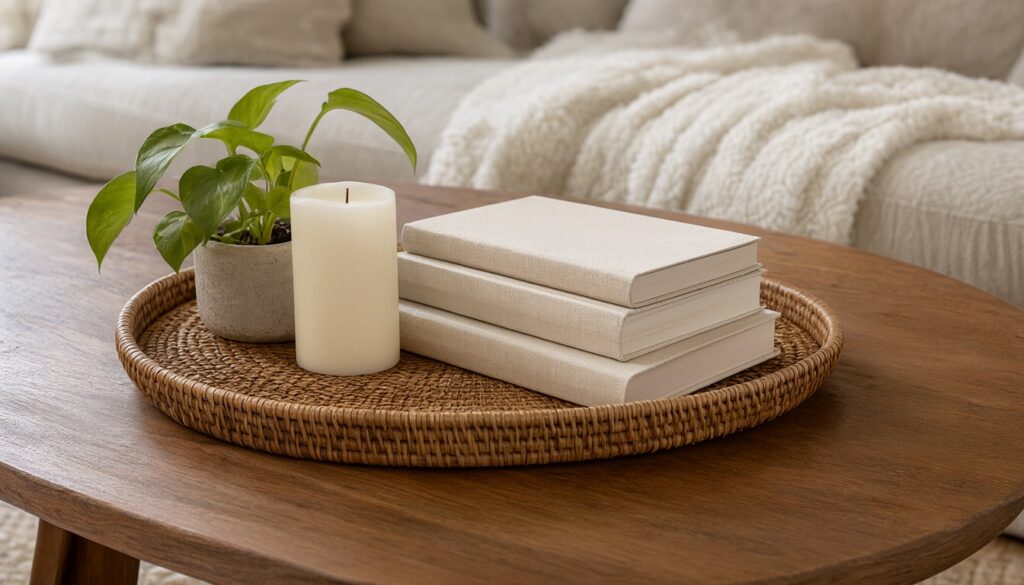
Clear every flat surface completely, then put back only what you use or love. Group what’s left into small clusters, often three objects of different heights, and leave some surface empty. A tray corrals small items so a coffee table or dresser top reads as one tidy arrangement instead of scattered pieces.
Cost: Free · Time: an afternoon per room
2. Rearrange the furniture
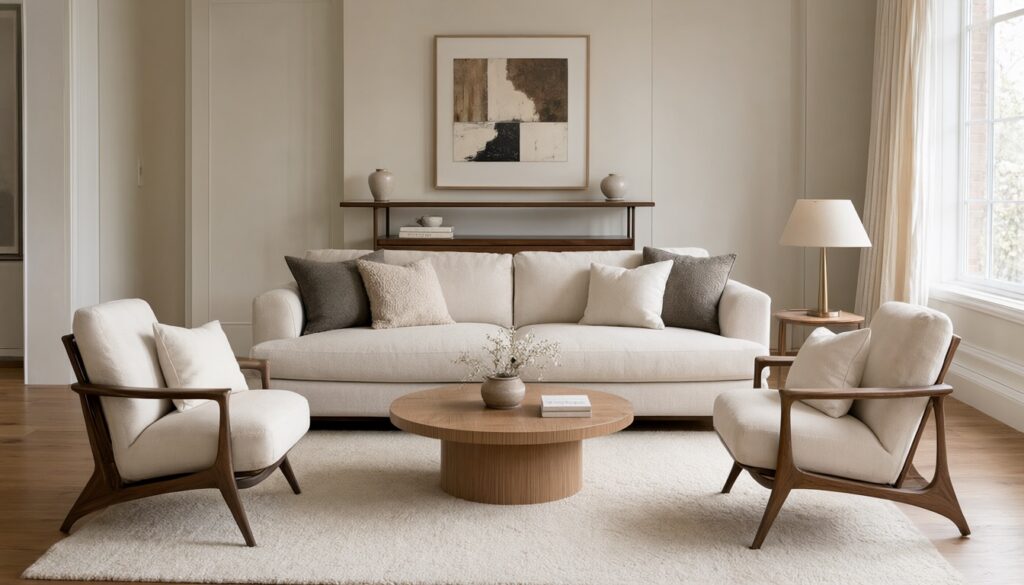
Pulling a sofa even a foot or two off the wall, or angling chairs toward each other, can make a room feel designed rather than lined up. Arrange seating around one focal point (a window, fireplace or the TV) and leave clear walkways of roughly 30 to 36 inches. Lift heavy pieces with a helper rather than dragging them across the floor.
Cost: Free · Time: 1–2 hours
3. Shop your own house
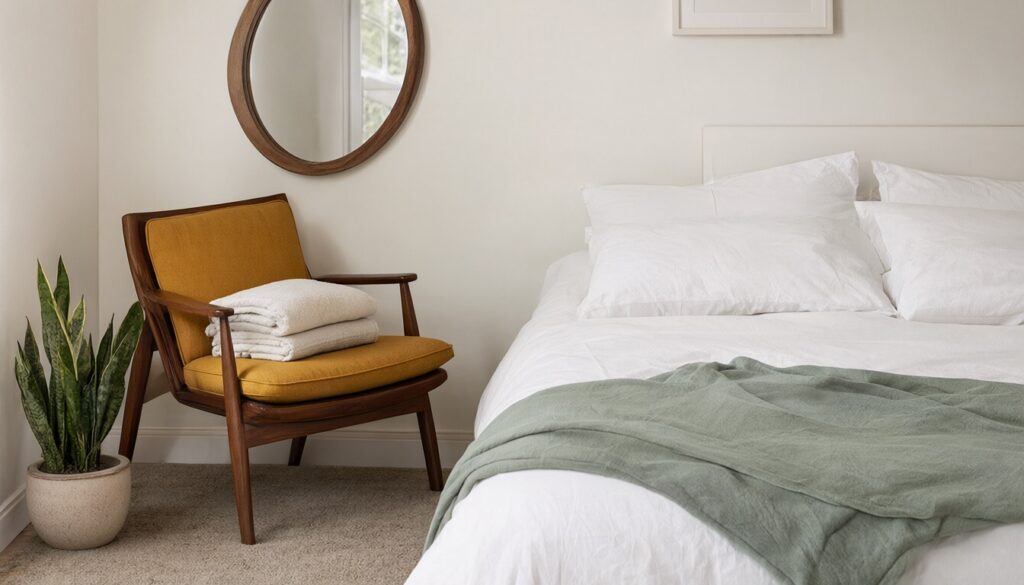
Walk through every room, closet and storage box and pull out lamps, mirrors, baskets, throws and side tables you’ve stopped noticing. A hallway mirror might suit the bedroom; a spare dining chair can become a nightstand. Moving pieces between rooms gives each one a fresh look for free.
Cost: Free · Time: 1–2 hours
How far does paint go when decorating on a budget?
Paint is the cheapest way to change a large area. A gallon typically covers around 350–400 square feet per coat (check the can), so a single wall or a set of doors often needs just one gallon. Good prep matters more than expensive paint; see our guide on how to prepare ceilings and walls for painting. If your home was built before 1978, older paint may contain lead, so don’t sand or scrape it without following the EPA’s lead-safe guidance.
4. Paint one accent wall or color-block half a wall
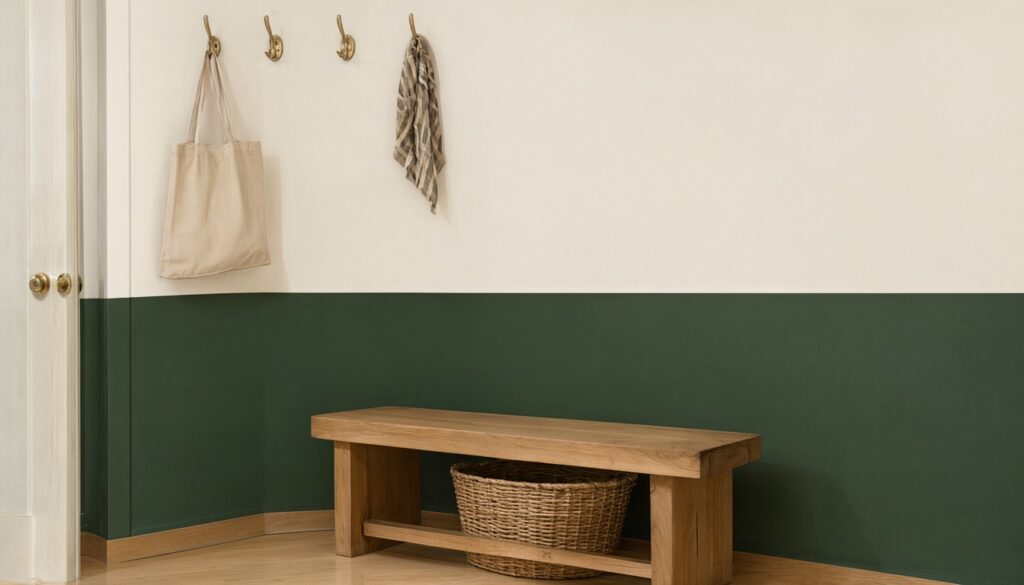
Pick the wall you see first when you walk in, or paint just the lower third or half of a wall in a deeper shade with painter’s tape marking a crisp line. Color-blocking works well in entryways, behind a bed or in a kids’ room, and uses less paint than a full room.
Cost: $30–$100 (paint, tape, a roller) · Time: a weekend
5. Paint interior doors or trim a deeper color
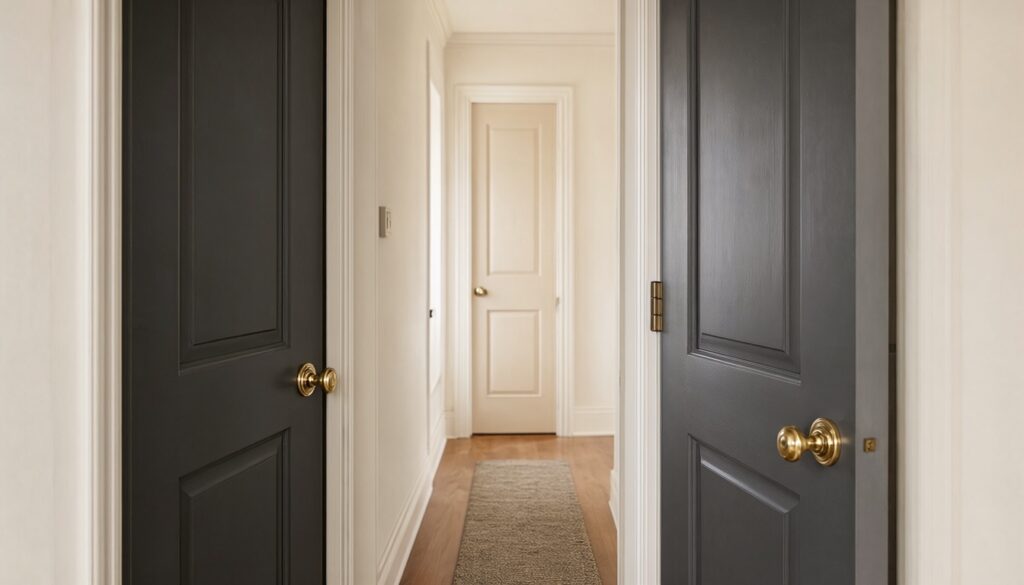
Builder-white doors and trim disappear. Painting doors charcoal, navy, deep green or warm black adds contrast and makes plain hallways look custom. Use a semi-gloss or satin finish so they wipe clean, and remove the door hardware first instead of taping around it.
Cost: $30–$80 per few doors · Time: a weekend
6. Repaint a tired or thrifted piece of furniture
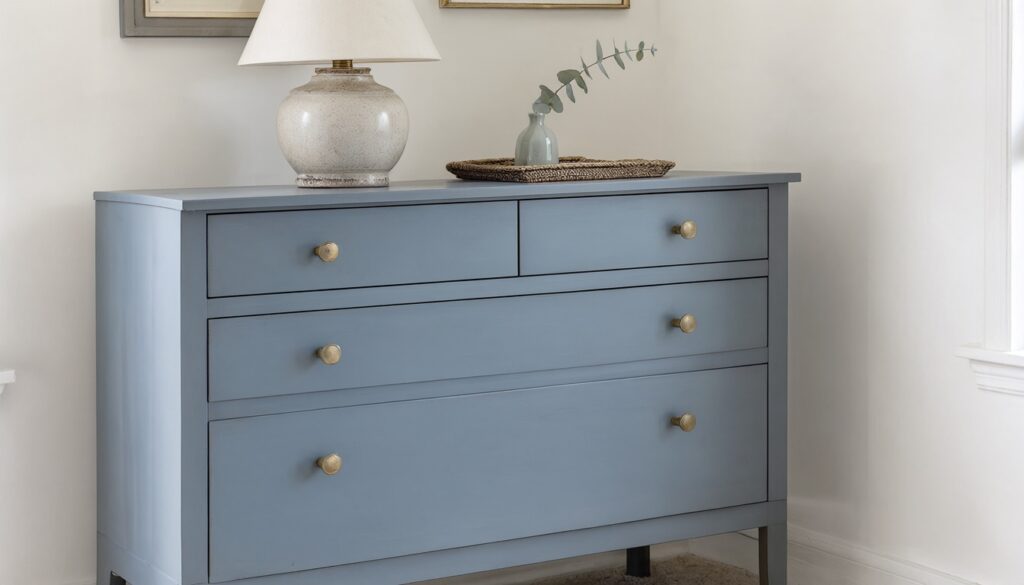
A solid wood dresser, side table or bookcase with a dated finish can look new with a light scuff-sand, a bonding primer and two thin coats of paint. Muted colors usually look more expensive than bright ones. For color ideas, see our paint colors for revamping wooden furniture. Vintage pieces can carry old lead paint too, so test before you sand.
Cost: $25–$75 for primer, paint and sandpaper · Time: a weekend, plus drying time
Which affordable home decor textiles make the biggest difference?
Fabrics soften a room, absorb echo and add color you can change later. Spend on size and fiber rather than quantity.
7. Hang curtains high and wide
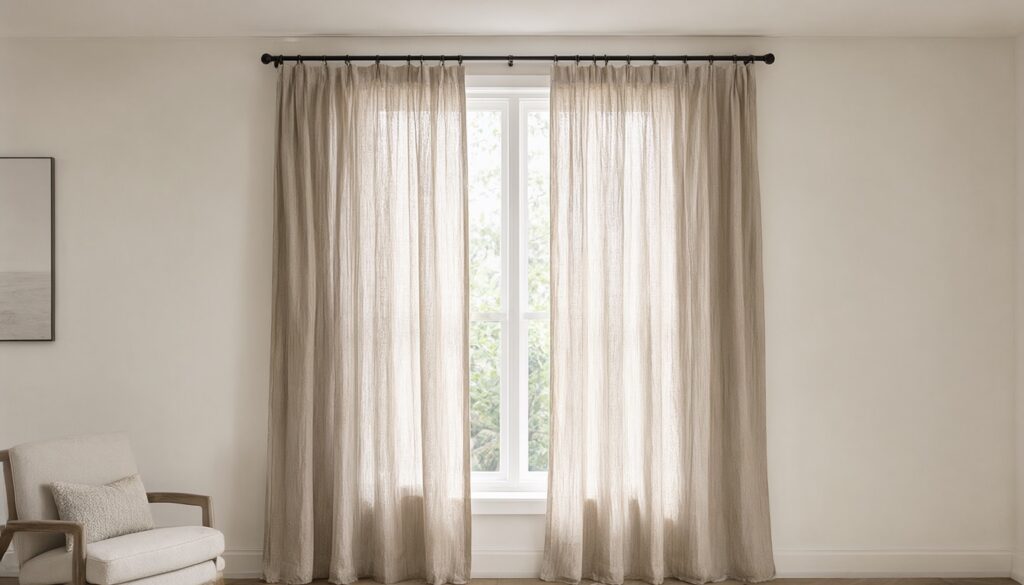
Mount the rod close to the ceiling (or at least halfway between the window frame and the ceiling) and extend it about 8 to 12 inches past each side of the frame. Choose panels long enough to just touch the floor, with a combined width of roughly one and a half to two times the window width. Windows look taller and the whole room looks higher. Use a sturdy step ladder, not a chair, when you drill.
Cost: $50–$200 for a rod and panels · Time: 1–2 hours per window
8. Swap pillow covers, not pillows
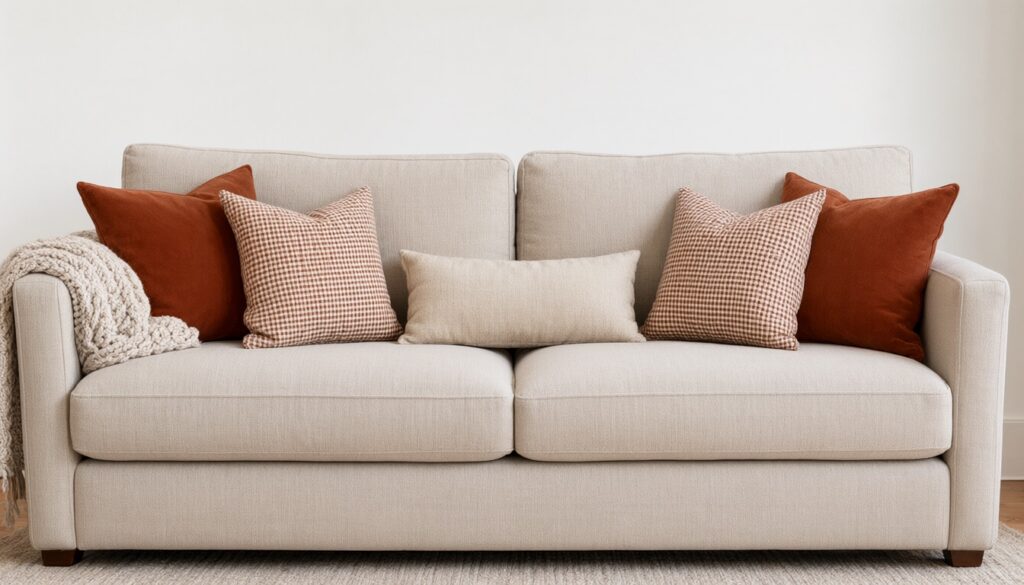
Keep your inserts and buy covers instead, which costs far less and stores flat. Stick to one color family and vary the texture and scale: a solid velvet, a small pattern and a plain linen work together. Feather-blend inserts one size larger than the cover (for example a 20-inch insert in an 18-inch cover) look fuller than tight foam ones.
Cost: $20–$100 for a set · Time: minutes
9. Buy a rug that’s big enough (or layer two)
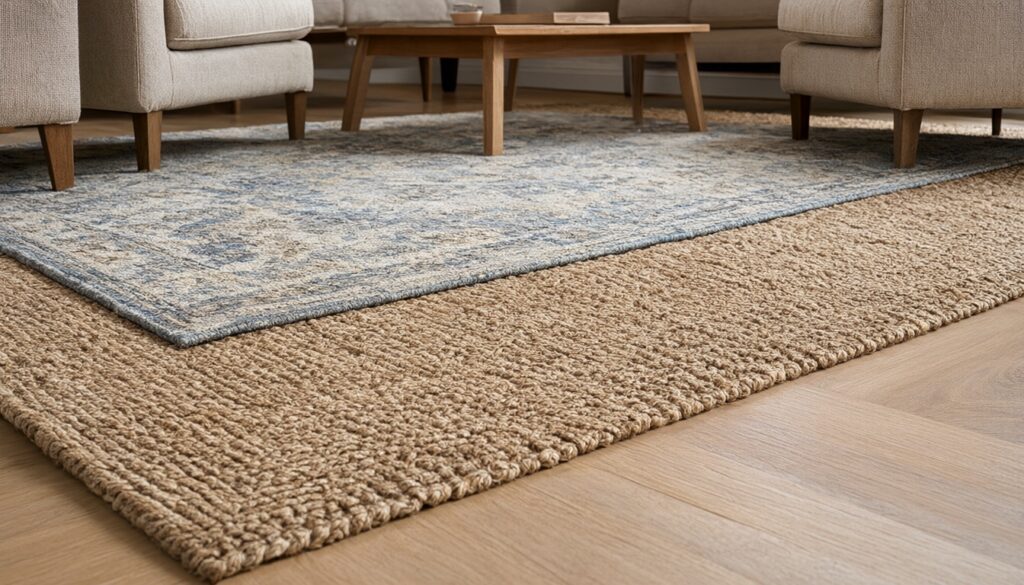
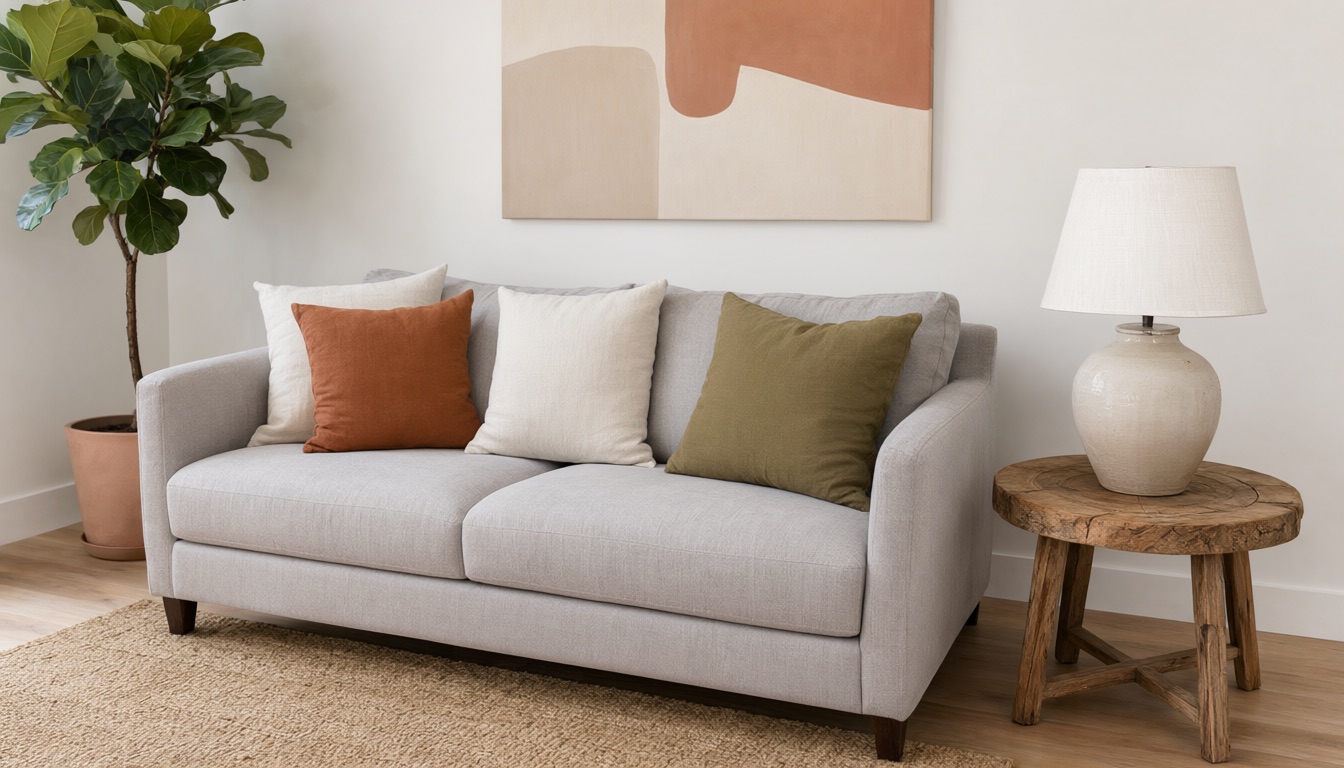
A small rug floating in the middle of the floor is one of the most common things that makes a room look cheap. In a living room, the front legs of the sofa and chairs should sit on the rug. If a large patterned rug is out of budget, lay a big plain jute or flatweave rug and put a smaller vintage or thrifted rug on top. Use a rug pad so nothing slips.
Cost: $80–$300 · Time: minutes
How can lighting make a cheap room look better?
One overhead fixture flattens a room. Several low, warm sources at different heights make it feel layered and calm, and it’s one of the cheapest ways to make your home look more finished in the evening.
10. Add lamps and switch to warm bulbs
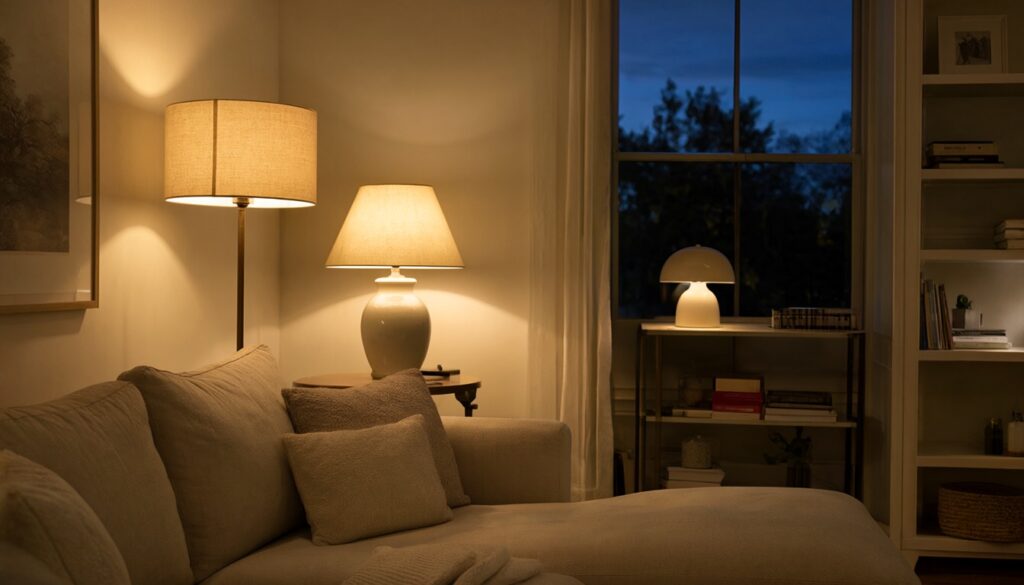
Aim for at least three light sources in a living room: a floor lamp, a table lamp and a small accent lamp on a shelf or console. Warm-white LED bulbs (around 2700K on the box) give a cozier light than cool daylight bulbs. Thrift stores and online marketplaces are full of solid lamp bases; a new shade is often all one needs.
Cost: $20–$100 · Time: minutes
11. Use plug-in sconces where you can’t add wiring
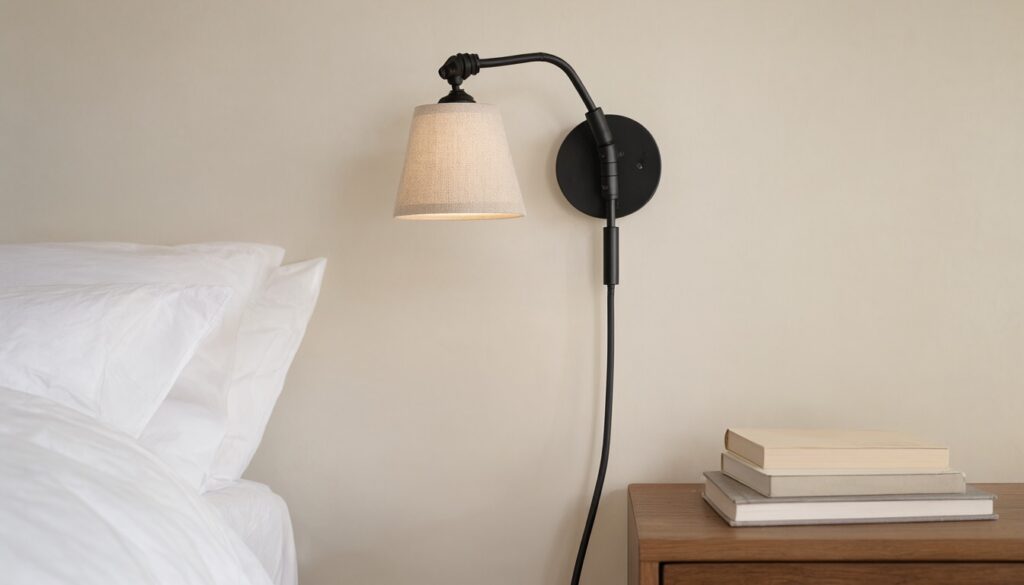
Plug-in wall sconces give the look of hardwired lights beside a bed, sofa or mirror. Hide the cord with a paintable cord cover painted to match the wall. Don’t run cords under rugs, where they can overheat or get damaged, and never overload an outlet with extension cords.
Cost: $30–$100 per sconce · Time: under an hour
What should you buy secondhand?
Thrift stores, estate sales, garage sales and online marketplaces are the best source of affordable home decor that doesn’t look mass-produced. Buy for material and shape, not finish, because finish is the easiest thing to change.
12. Thrifted frames and mirrors
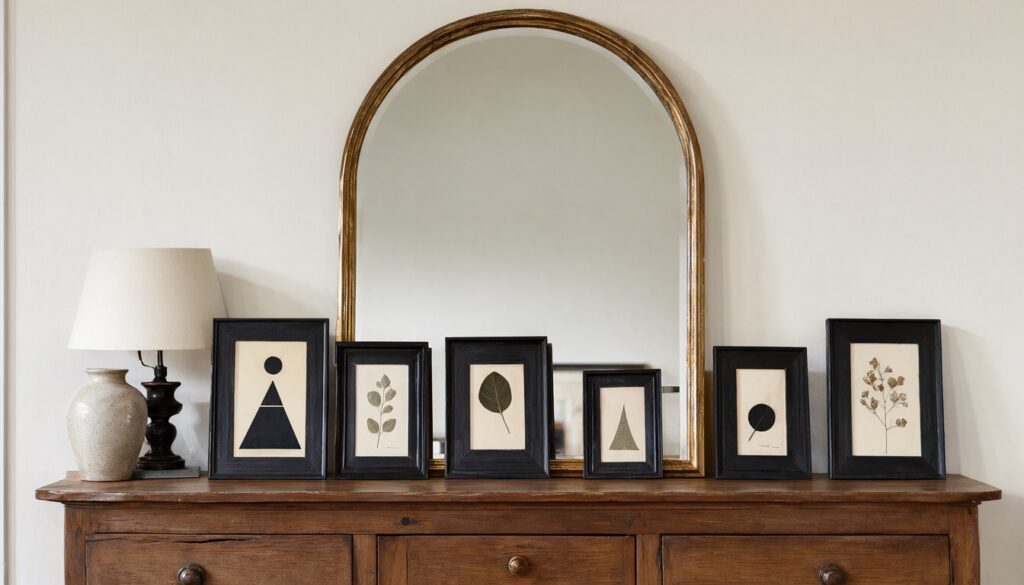
Mismatched secondhand frames look intentional once they’re painted one color and hung as a tight grid with even gaps. Large mirrors with good frames are often cheap secondhand and bounce light around a dark room. For more wall ideas, including gallery layouts for the living room, see our cheap decorating ideas for living room walls. Hang heavy mirrors with hardware rated for the weight, into studs or proper wall anchors.
Cost: $20–$100 · Time: an afternoon
13. Solid wood furniture
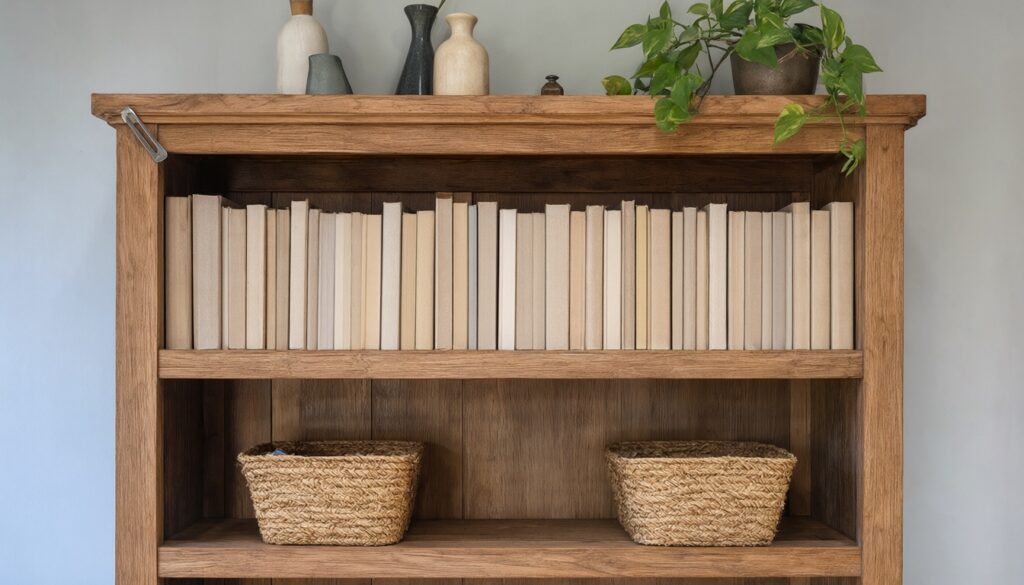
Older solid wood dressers, bookcases and side tables often cost less secondhand than new flat-pack pieces and last longer. Check that drawers run smoothly, joints don’t wobble and there’s no musty smell. Anchor any dresser, bookcase or TV stand to the wall with a tip-over kit, which the CPSC’s Anchor It campaign recommends for furniture with drawers, doors or shelves.
Cost: $30–$200 · Time: varies
What DIY home decor on a budget actually looks good?
The DIY projects that look best are simple ones done at a generous scale. Skip fussy crafts and focus on pieces that fill space well, plus plants, which are the easiest living decor to grow for free.
14. Paint a large abstract canvas
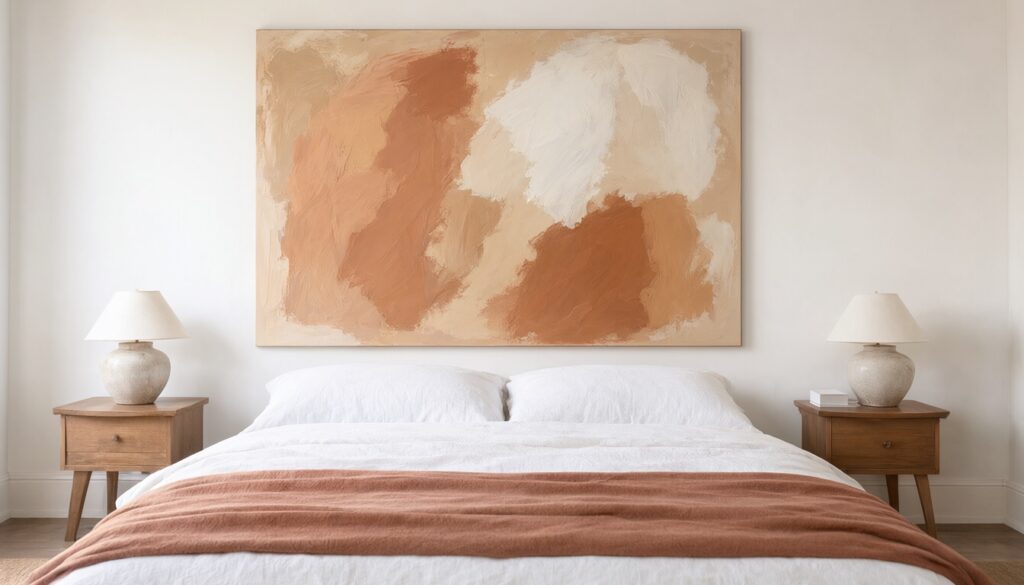
Large art is expensive to buy but cheap to make. Buy the biggest blank canvas you can afford, pick two or three colors from the room’s pillows or rug, and paint loose shapes or broad brushstrokes. As a rough guide, art above a sofa or bed looks right at about two-thirds the width of the furniture.
Cost: $30–$80 for a canvas and craft paint · Time: an afternoon
15. Frame fabric or wallpaper samples
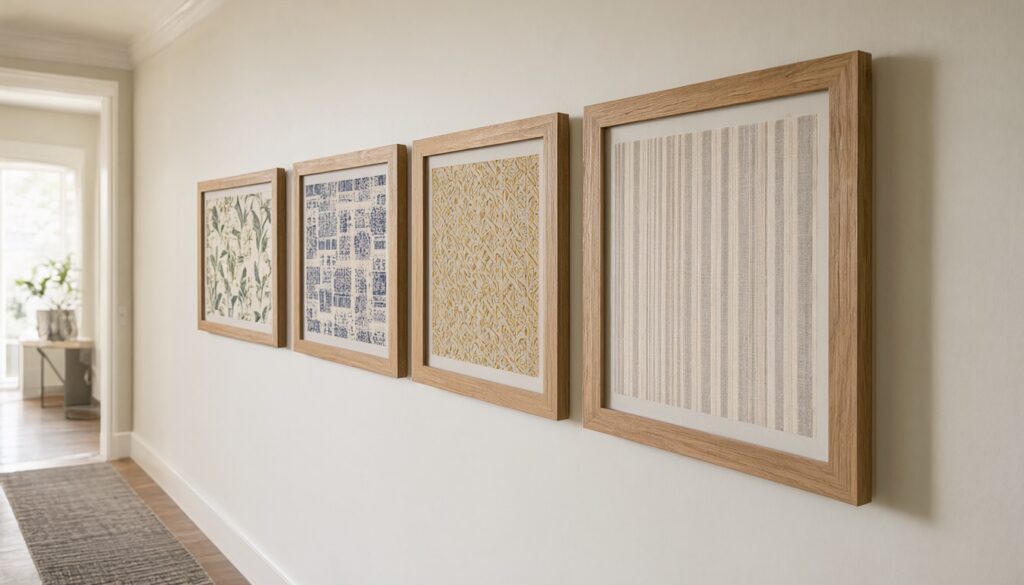
A remnant of patterned fabric, a wallpaper sample or a pressed leaf looks deliberate in a set of matching frames. Hang them as a grid of four or six with equal gaps, centered at roughly eye level (around 57 to 60 inches to the middle of the group).
Cost: $20–$60 · Time: 1–2 hours
16. Grow plants from cuttings and bring in branches
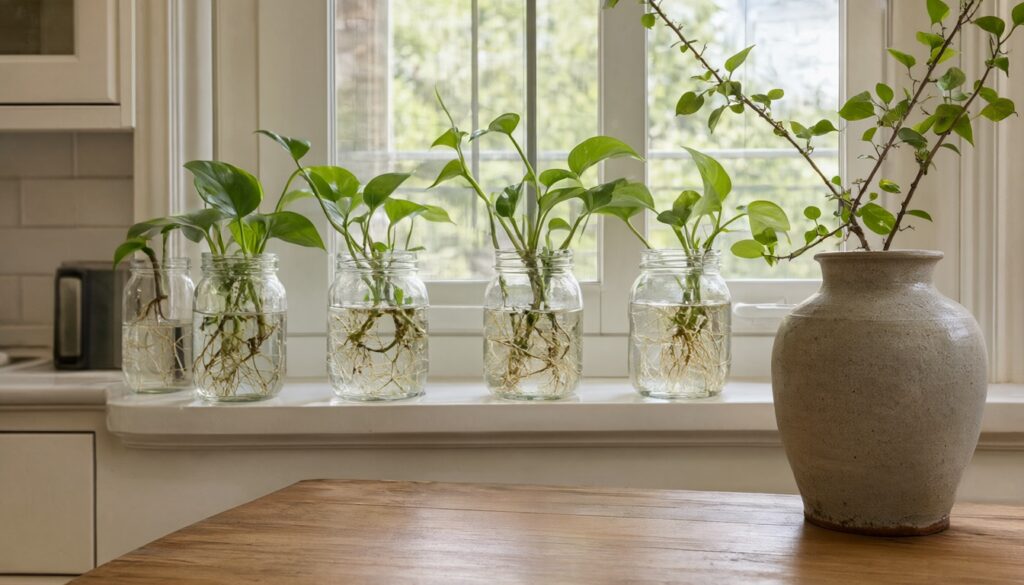
Plants add life and color for very little. Pothos, philodendron and spider plants root easily from cuttings in a jar of water, so ask a friend for a few. Cut branches from your own yard in a tall vase look striking and are free. For low-effort picks, see our list of indoor plants that thrive in apartments. If you have pets, check plants against the ASPCA’s toxic and non-toxic plant list first.
Cost: Free–$20 · Time: minutes (then patience)
Which small upgrades make your home look expensive on a budget, even in a rental?
17. Swap cabinet hardware and switch plates
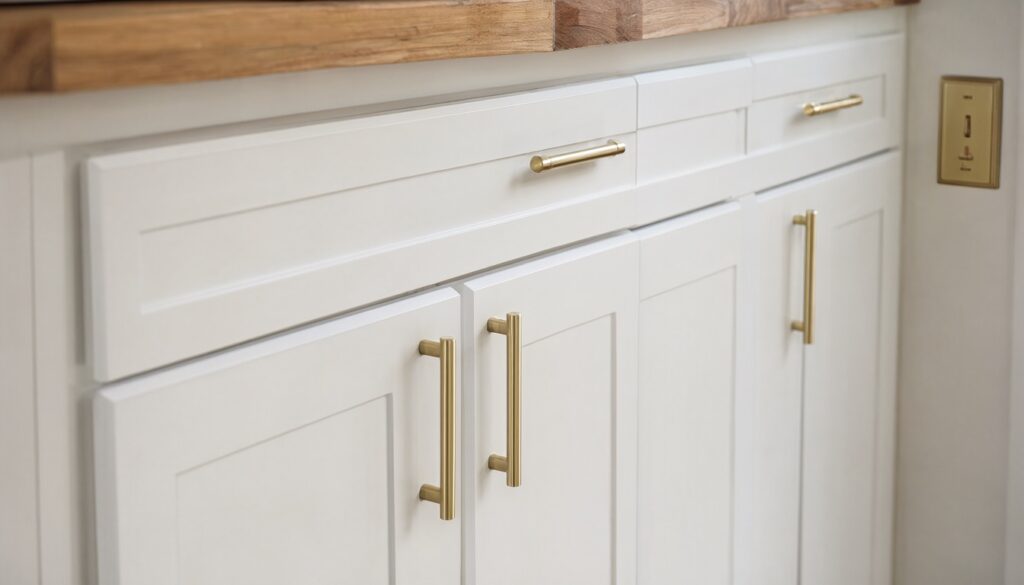
Knobs, pulls and switch plates are small, but you touch them every day, and dated hardware makes an entire kitchen or bathroom look tired. Measure the center-to-center distance of the existing holes before you buy new pulls so you don’t have to drill. Pick one metal finish per room and repeat it. Renters can bag and label the originals to put back before moving out.
Cost: $30–$150 depending on how many · Time: 1–2 hours
If you rent, most ideas above are still fair game: decluttering, rearranging, textiles, lamps, plug-in sconces, plants and thrifted pieces. For renter friendly decor on walls, use removable adhesive hooks and strips rated for the weight, and check your lease before painting or drilling.
18. Peel-and-stick wallpaper on one small surface
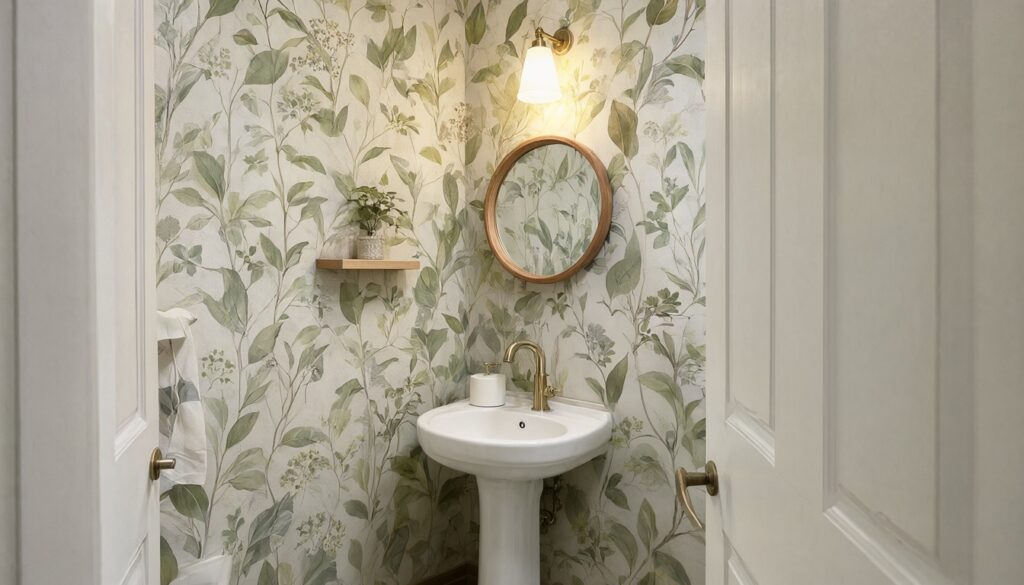
Peel-and-stick wallpaper is most affordable, and most forgiving, on a small area: a powder-room wall, the back of an open bookcase, stair risers or a closet interior. Test a piece somewhere hidden first, because some adhesives can lift paint when you remove them. Smooth it on slowly from the top with a plastic smoothing tool to avoid bubbles.
Cost: $30–$150 for a small wall · Time: an afternoon
How do you keep budget decor from looking cheap?
Inexpensive decorating ideas only look expensive when they’re held together by a few rules. Most of how to make your home look expensive on a budget comes down to these:
- Go bigger and fewer. One large piece of art, a big plant or a full-size rug looks more luxurious than many small items. Lots of tiny decor is what reads as cheap.
- Limit the palette. Choose two or three main colors plus one metal finish for the whole home, and repeat them from room to room.
- Favor real materials. Wood, linen, cotton, wool, stone, glass and ceramic age better than shiny plastic and glossy prints. Secondhand is often the cheapest way to get them.
- Finish what you start. A room with one completed corner looks better than a whole house of half-done projects.
- Save, then splurge on one thing. Put the money from the free ideas toward the piece you use most, such as a sofa, a mattress or a dining table.
Where should you start, room by room?
- Entryway: color-block the wall, add hooks, a mirror and a lamp. It sets the tone for the whole home.
- Living room: rearrange, fix the rug size and add lamps. Our guide to decorating a living room on a budget goes into the details.
- Bedroom: new bedding or pillow covers, plug-in sconces and curtains hung high.
- Kitchen: declutter the counters, swap the hardware and add a plant or cut branches.
- Bathroom: fresh towels in one color, a framed mirror and peel-and-stick wallpaper on one wall.
FAQ
How can I decorate my house with little money?
Start with what’s free: declutter, rearrange furniture and move pieces between rooms. Then spend small amounts where they show most: warm bulbs and an extra lamp, new pillow covers, a can of paint for one wall, and secondhand frames, mirrors or furniture.
What is the cheapest way to make a house look nicer?
A deep clean and a ruthless declutter cost nothing and make the biggest difference. After that, paint gives the most change per dollar, because one gallon can transform a wall, a set of doors or a piece of furniture.
Is it better to buy cheap decor or save for one good piece?
Usually save. A few larger, well-made pieces look more expensive than many small cheap ones, and they last. Use free and low-cost ideas to fill the gap while you save.
What makes a home look cheap?
Clutter, undersized rugs and art, curtains hung too low and too short, harsh overhead lighting, too many competing colors and lots of small plastic decor. Fixing those costs less than buying anything new.