
A black house interior works when black is used on purpose: on one wall, on cabinets, on window frames or on a whole room, then balanced with warm wood, texture, metal and good lighting. You don’t need to paint the whole house dark. Below are 16 black interior design ideas sorted by room, followed by how to pick a black paint, how to light a dark room and how to keep matte black looking clean.
What is a black house interior?
People searching for a black house interior usually want one of two things. Most want black interior design ideas for an ordinary home: black walls, black kitchens, black fixtures and moody, dark rooms. A smaller group has seen a modern black house (a home with black siding or cladding) and wants to know what the inside looks like.
The answer to the second question is often surprising: many modern black house interiors are light inside, with white or pale walls, pale oak or concrete floors and big windows. The black carries through in the details, such as black window frames, a black steel stair, black cabinetry or a single dark room. So whichever you’re after, the ideas below apply. Start small with black accents, or go all in with an all-black room.
How can you use black walls in a living room?
The living room is where most people try black first, because it’s used a lot in the evening, when dark walls look their best under lamplight.
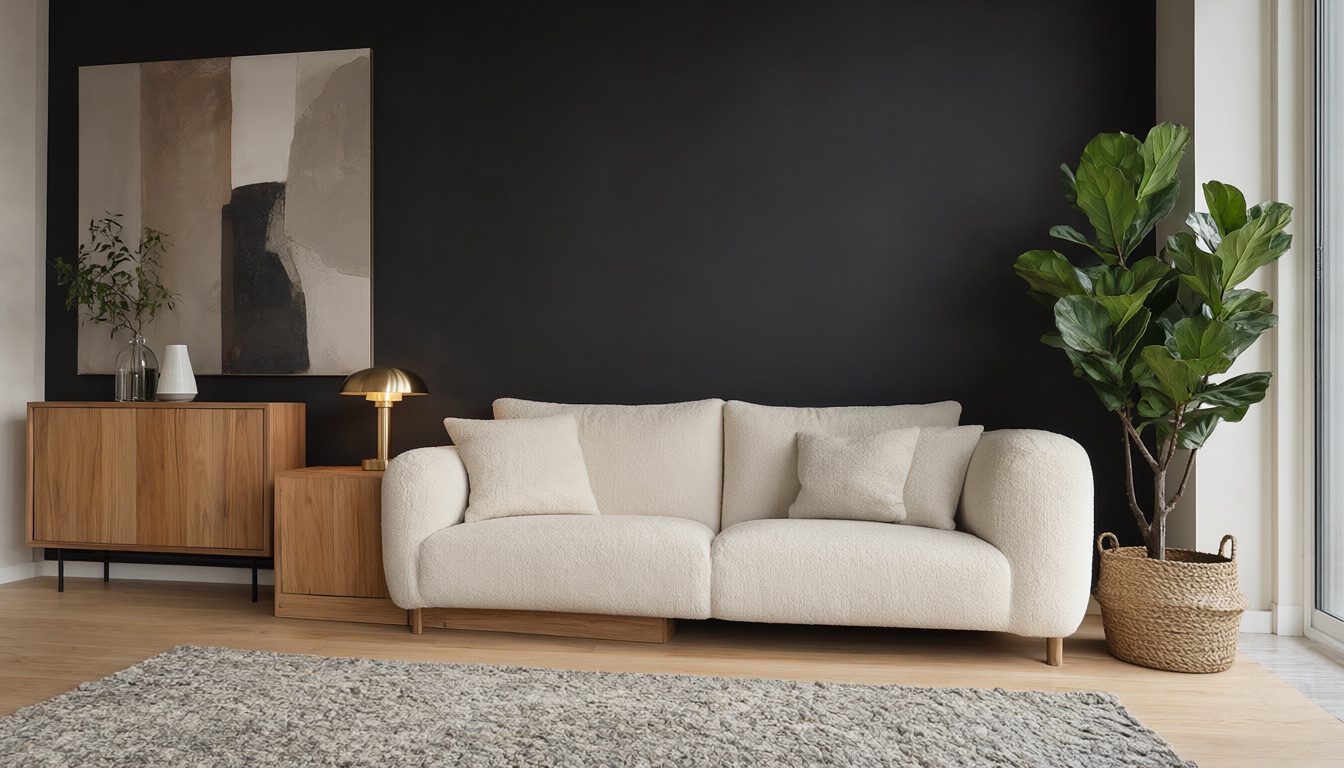
1. A black accent wall behind the sofa

A black accent wall is the lowest-risk way to test the look. Pick the wall your eye lands on first, usually the one behind the sofa or facing the door, and keep the other three walls a warm white or soft greige. Light upholstery, framed art and wall sconces stand out sharply against it.
Commitment: Low (one weekend) · You’ll need: 1 gallon of black paint for an average wall, tinted primer, roller, angled brush, painter’s tape
2. A black fireplace wall
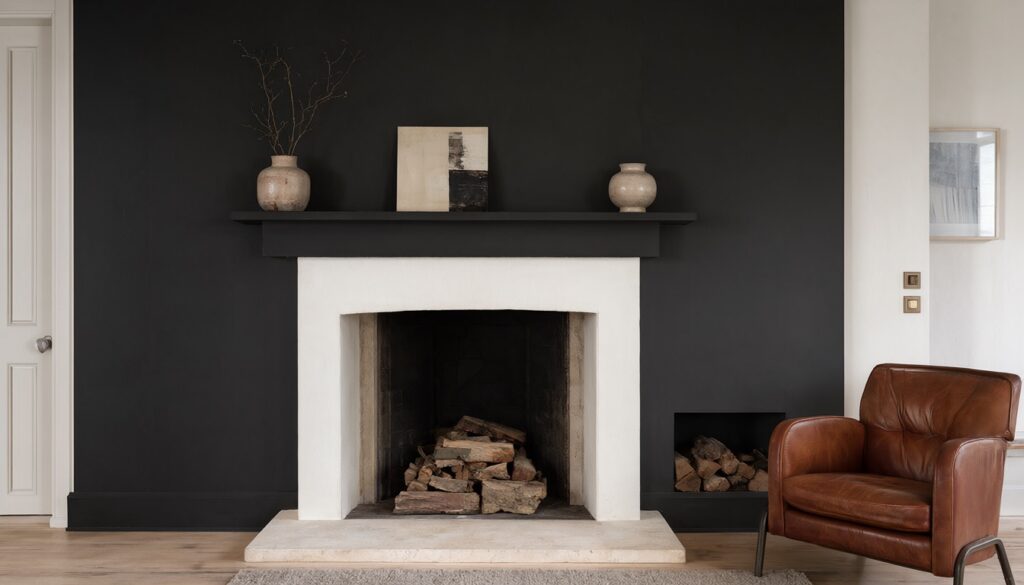
Painting the chimney breast or the whole fireplace wall black turns the fireplace into the focal point and hides soot marks around the opening. A light stone hearth or a white surround keeps it from disappearing at night. For more ways to build a room around the hearth, see these interior designs built around a modern fireplace.
Commitment: Low to medium · You’ll need: heat-resistant paint for the firebox itself (wall paint is fine for the surrounding wall)
3. An all-black, color-drenched living room
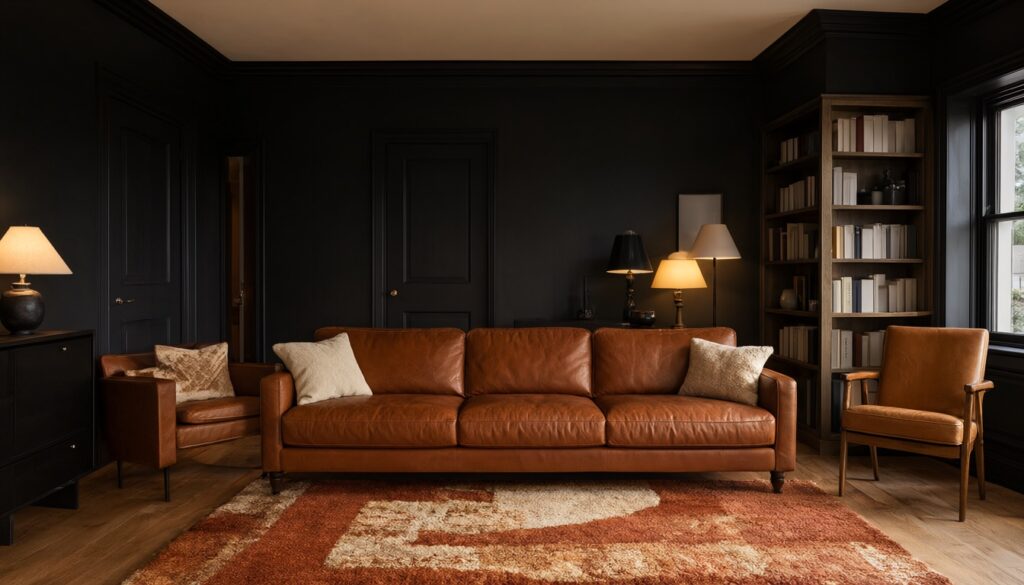
Color drenching means painting walls, trim, doors and sometimes the ceiling the same color. In black, it erases the edges of the room and feels cocooning, which suits a den or TV room you mostly use at night. Bring in warm materials, like leather, wool, wood and brass, so the room feels cozy rather than cold.
Commitment: High · You’ll need: about 2–3 gallons for a mid-size room, two coats, extra lamps
4. Black trim, doors and window casings with light walls
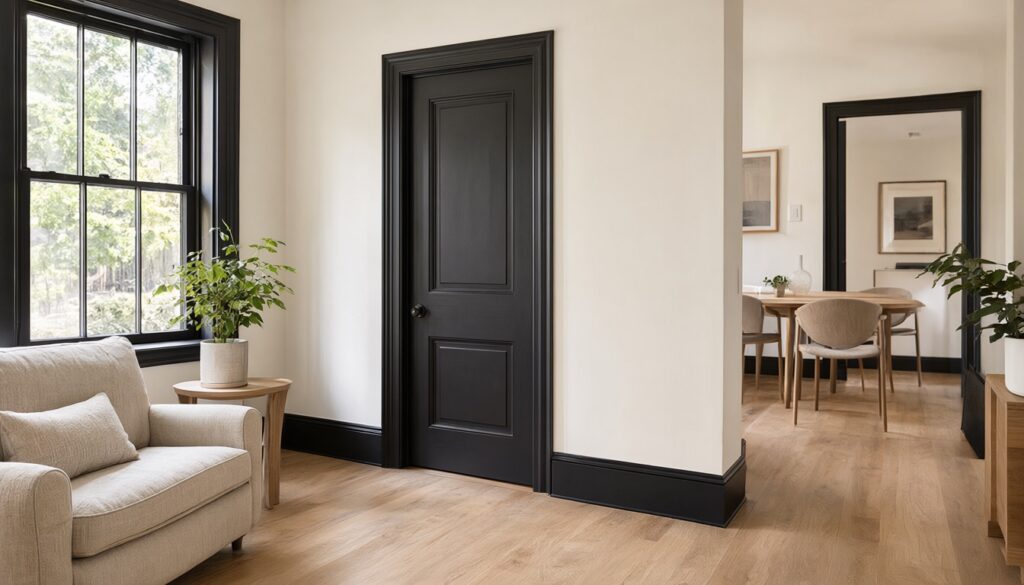
If black walls feel like too much, paint the woodwork instead. Black baseboards, casings and interior doors outline the room like a drawing and make plain builder-grade trim look deliberate. Use a satin or semi-gloss finish here: trim gets kicked and wiped more than walls do.
Commitment: Medium (lots of cutting in) · You’ll need: trim enamel in satin or semi-gloss, a good 2-inch angled brush, sanding sponge
Are black kitchen cabinets a good idea?
Yes, if the kitchen gets decent daylight or you plan the lighting well. Black kitchen cabinets hide stains better than white ones, but they show dust, fingerprints and water spots, so the finish matters (more on that below). For more palettes that pair with black, browse these kitchen color schemes.
5. Black kitchen cabinets with warm wood
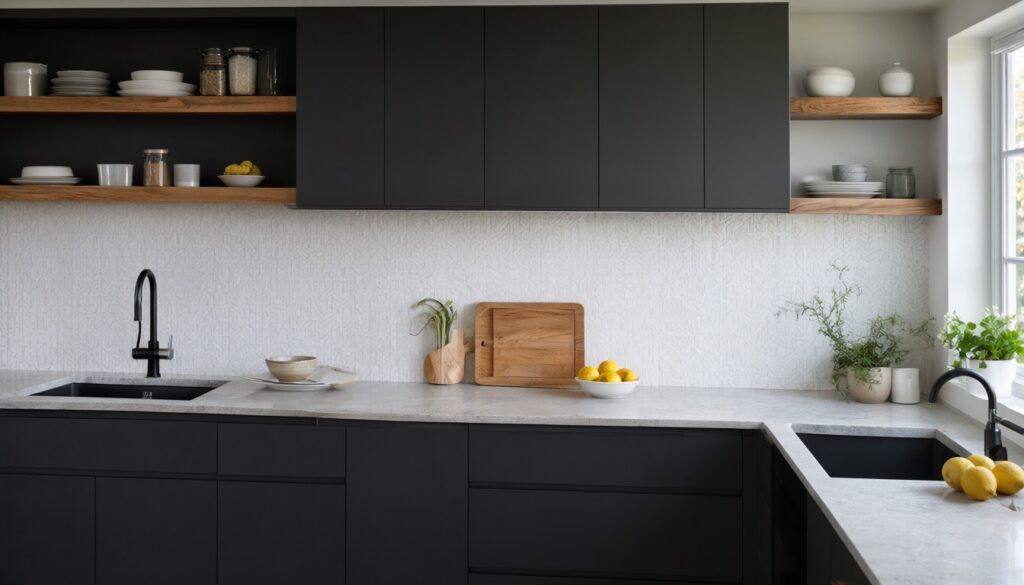
Black cabinets plus wood is one of the most livable black kitchen ideas. Oak or walnut on open shelves, the island top or the floor warms the black, and a light countertop and backsplash keep the work area bright.
Commitment: High (painting or replacing cabinet doors) · You’ll need: cabinet-grade paint or new doors, degreaser, bonding primer
6. A black kitchen island in a light kitchen
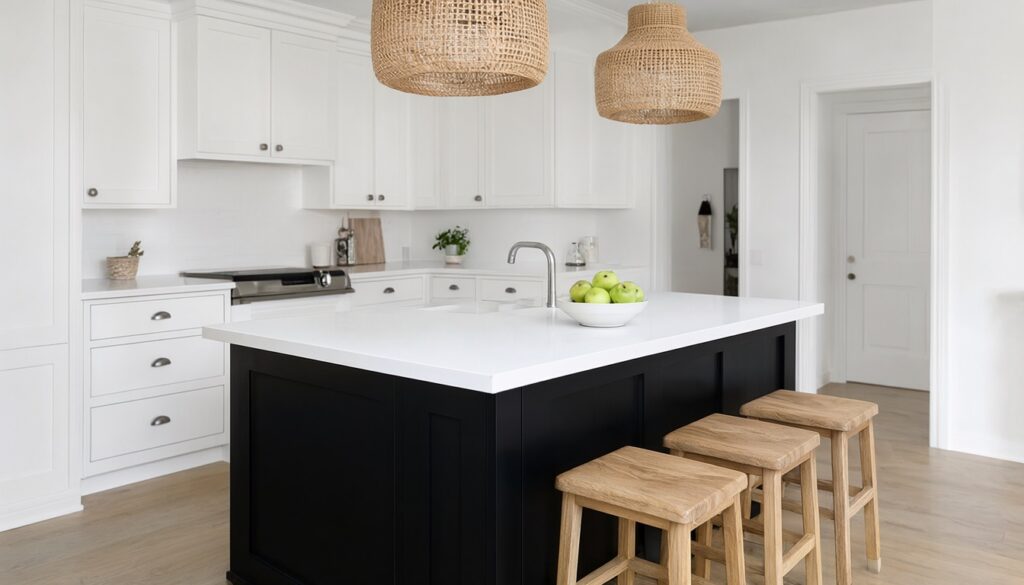
Painting just the island is a good middle ground. It anchors an all-white kitchen and gives the room a focal point without darkening the perimeter, where you need the most light for cooking.
Commitment: Medium · You’ll need: cabinet paint, a mini foam roller for smooth doors
7. Black hardware, faucet and pendants
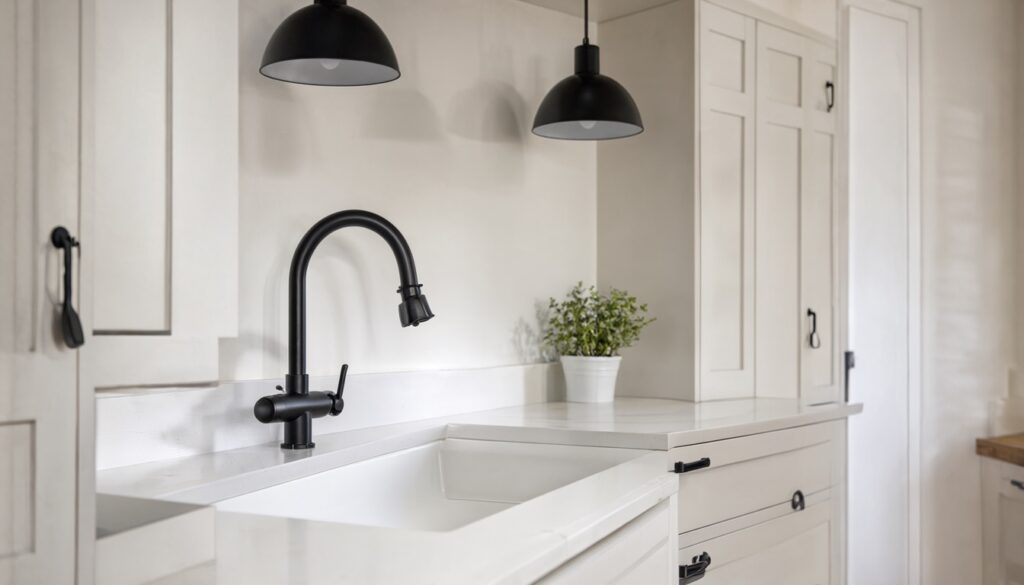
The cheapest way to add black to a kitchen is through the metal. Swap pulls, the faucet and the pendant shades for black and keep them consistent. Repeating black three or four times across the room looks intentional, while a single black item can look like an accident.
Commitment: Low · You’ll need: a screwdriver; a plumber or licensed electrician if you’re not comfortable swapping a faucet or light
How do you use black in a bathroom?
Bathrooms are small, so black goes a long way. Use it on fixtures, tile or a whole powder room, and keep good overhead and vanity lighting.
8. Black bathroom fixtures
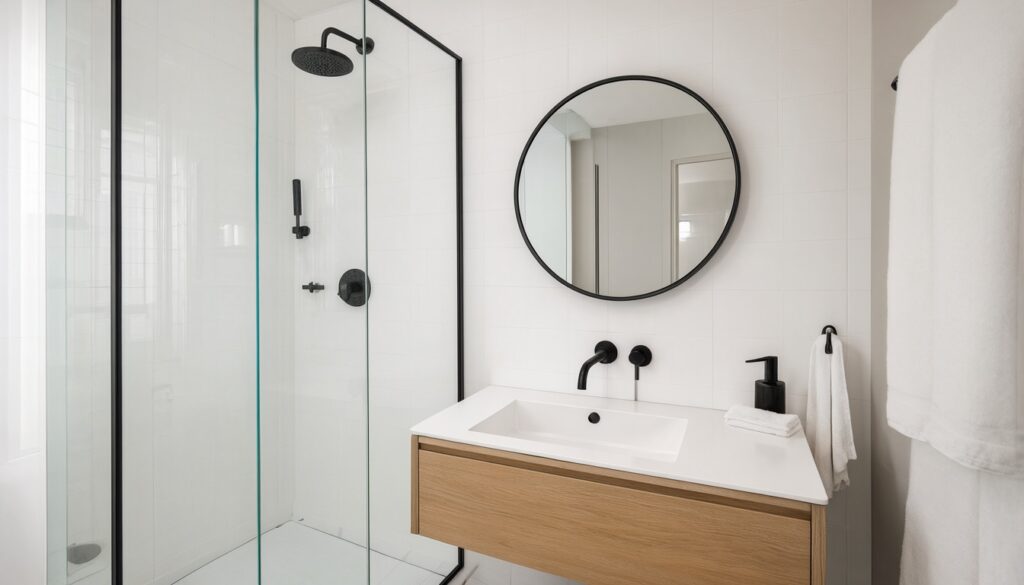
Black faucets, shower heads, towel bars and a black-framed shower screen give a white bathroom crisp lines. In hard-water areas, mineral spots show on black more than on chrome, so plan to wipe fixtures dry after showers.
Commitment: Low to medium · You’ll need: matching finishes from one product line so the blacks don’t clash
9. Black tile in the shower or on the floor
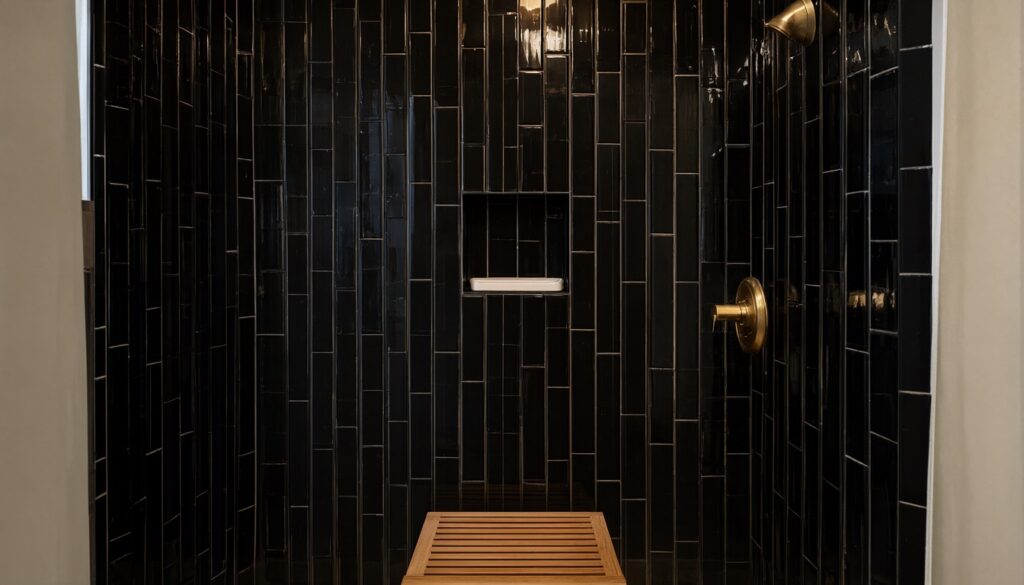
Glossy black tile reflects light, so it feels less heavy than matte black paint. Grout color changes the look: light grout makes the pattern graphic, while charcoal grout makes the wall read as one solid surface and hides dirt better on floors.
Commitment: High (tiling) · You’ll need: porcelain tile rated for floors if it’s going underfoot
10. A moody black powder room
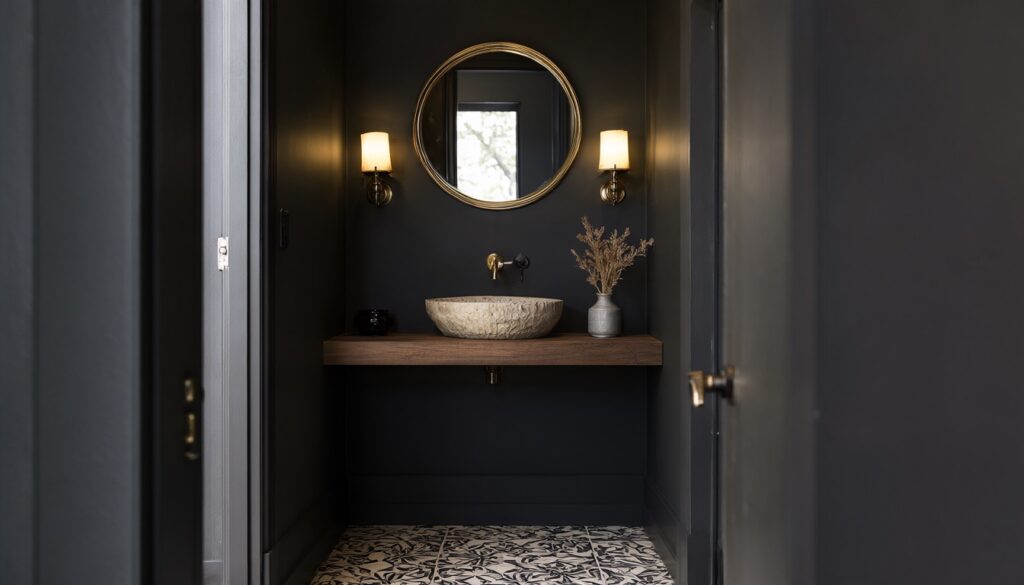
A windowless powder room is a perfect place for an all-black room, because there’s no daylight to lose. Guests only spend a minute there, so it can be as dramatic as you like. If you’re worried about it feeling cramped, these design illusions for small bathrooms (mirrors, wall-hung vanities, consistent flooring) work just as well in a dark scheme.
Commitment: Medium · You’ll need: a moisture-resistant bathroom paint, ideally eggshell or satin
What about black in bedrooms and home offices?
Rooms you use mostly at night are where dark interior design feels most natural.
11. A black wall behind the bed
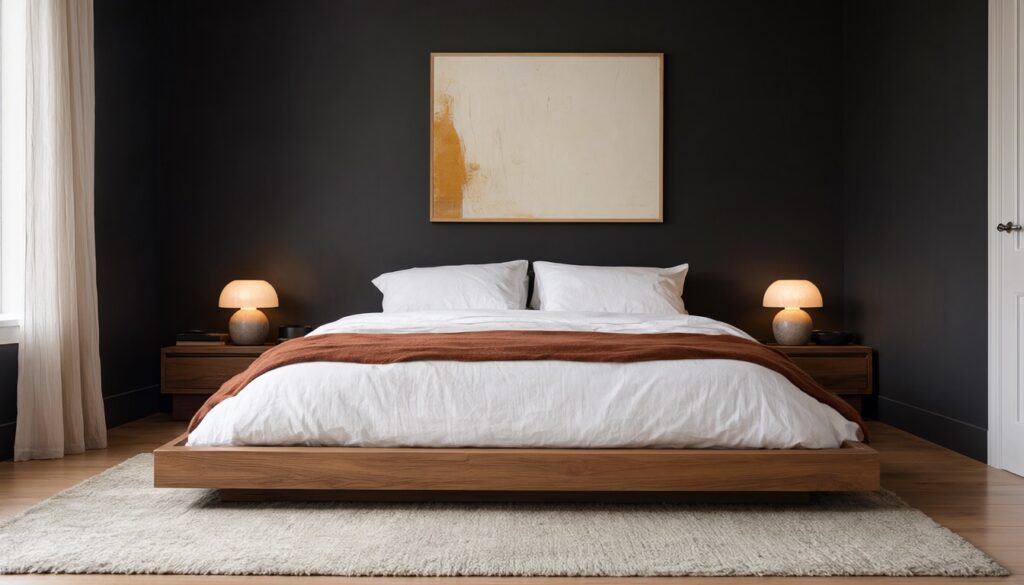
A dark wall behind the headboard makes the bed the focal point and feels restful when you wake up, because you’re facing the lighter walls. Crisp white bedding against black is classic; warm rust, ochre or olive textiles soften it.
Commitment: Low · You’ll need: eggshell finish so the wall can be wiped where the headboard rubs
12. Black built-in shelves in a home office or library
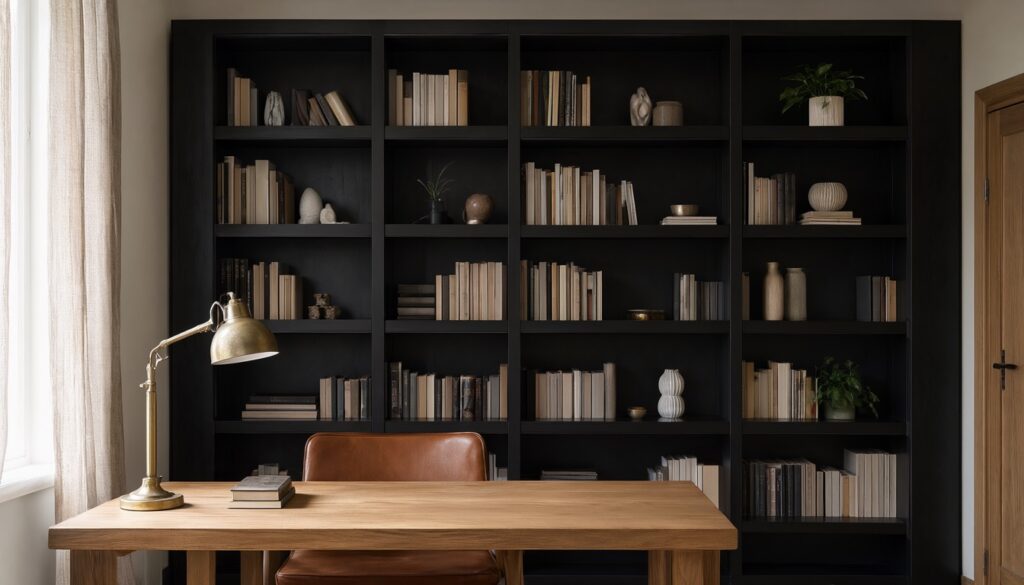
Black shelving makes books and objects pop and hides the clutter of cords and spines better than white shelves do. Add picture lights or LED strips under the shelves so the back corners don’t turn into black holes.
Commitment: Medium · You’ll need: satin or semi-gloss paint, LED shelf lighting
How do you add black to the architecture of a modern home?
These ideas are what give a modern black house interior its look, even when most walls are white.
13. Black window frames
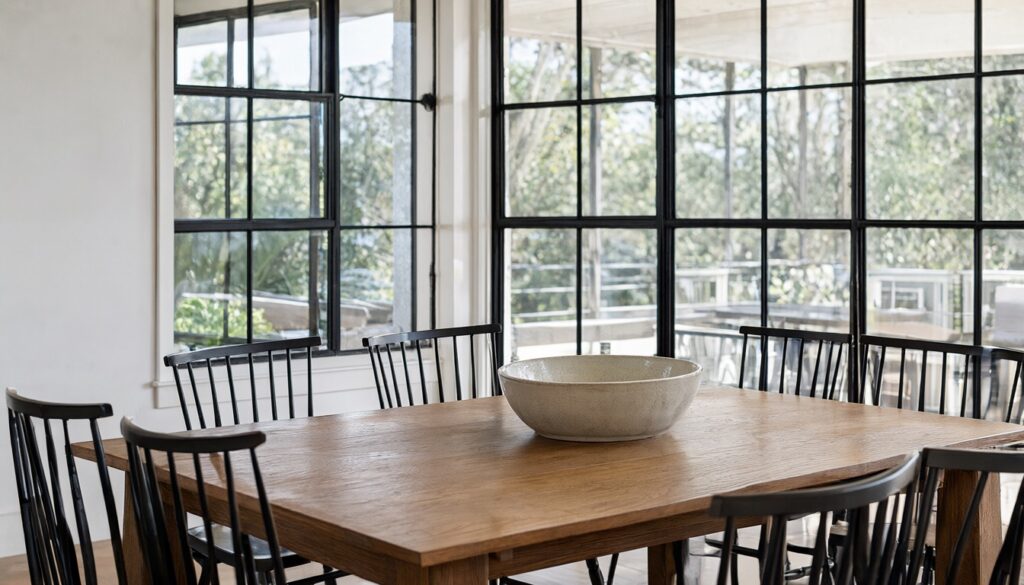
Black window frames act like picture frames for the view and tie the inside to a dark exterior. If you’re replacing windows, black frames are an option on many vinyl, aluminum and fiberglass lines. On existing wood frames, you can paint the interior side, but check your window maker’s guidance first, especially on vinyl, where dark paint can cause warping in direct sun.
Commitment: Medium to high · You’ll need: exterior-grade or window-specific paint, or new black-framed windows
14. A black ceiling
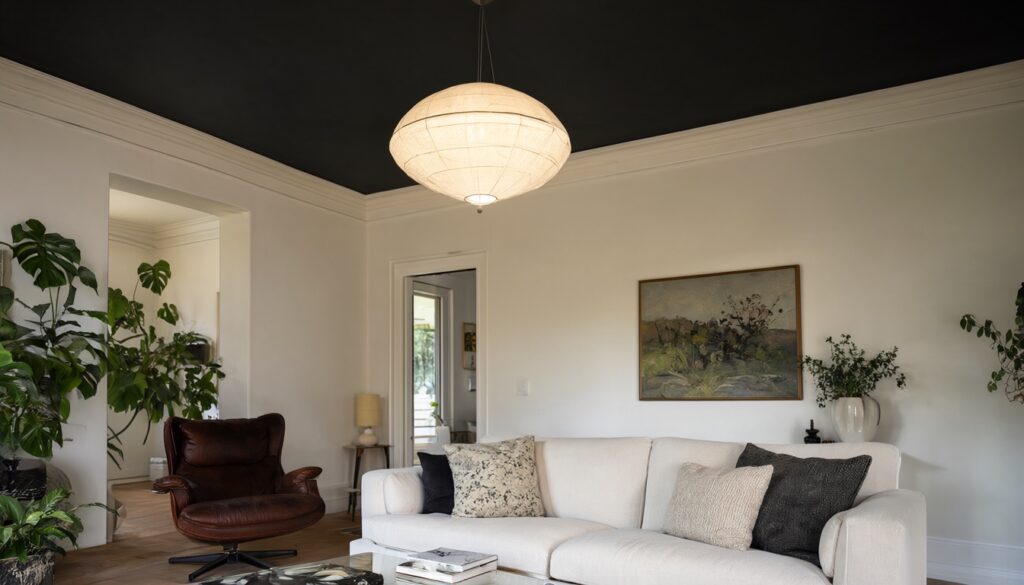
A black ceiling sounds risky but often works in rooms with high ceilings or ugly ceiling details, because the ceiling visually recedes and hides cracks, vents and wiring. In a low room, it can feel lower, so test a large sample board taped overhead first. Ceilings take flat paint best, since it hides roller marks.
Commitment: Medium (overhead painting is hard work) · You’ll need: flat ceiling paint, extension pole, a stable step ladder
15. A black staircase
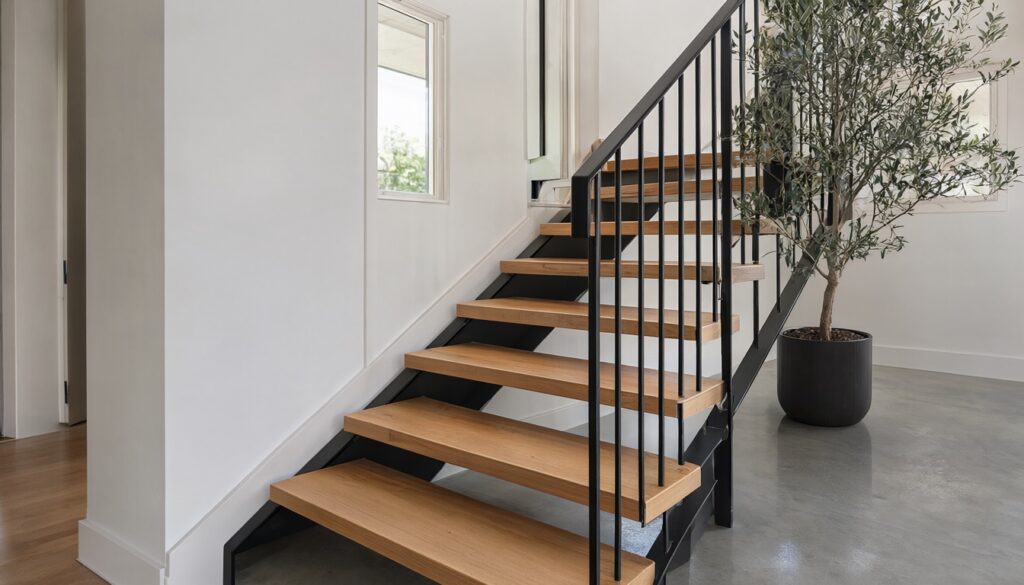
A black stair railing or black steel stringers with wood treads is a signature of modern black houses. On an existing stair, painting the balusters and handrail black is a manageable weekend project. For more inspiration, see these floating staircase designs for modern homes.
Commitment: Medium · You’ll need: sanding sponges, a deglosser, satin enamel
16. A black and white checkerboard floor
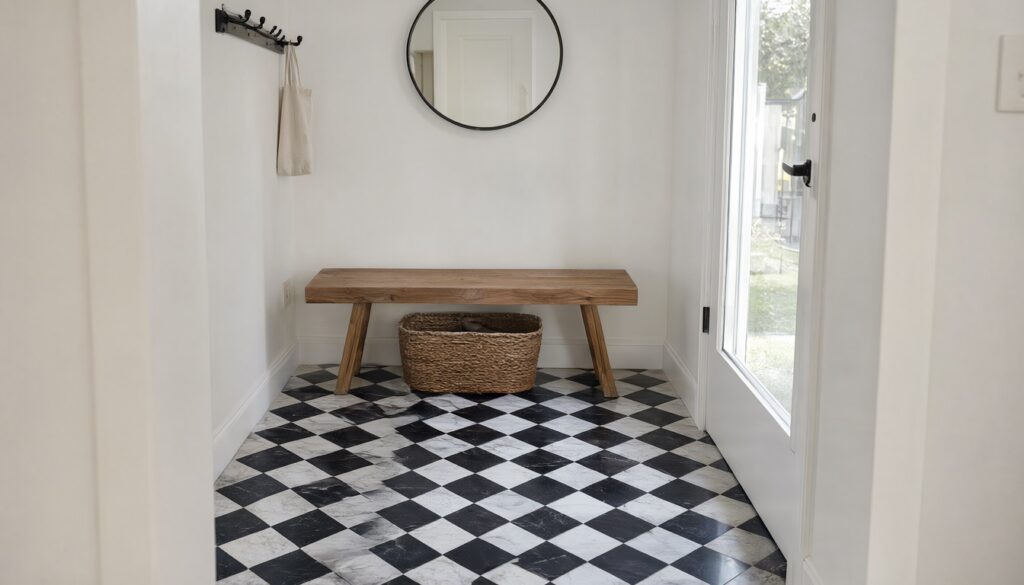
The classic black and white house interior starts at the floor. A checkerboard in an entry, kitchen or bathroom sets a graphic theme you can repeat with black frames, lamps and hardware in other rooms. A common rule is to keep the floor darker or busier than the walls so the room feels grounded.
Commitment: High (new flooring) · You’ll need: tile or luxury vinyl tiles; peel-and-stick vinyl for renters
How do you choose the right black paint?
Black paint isn’t one color. Every black has an undertone that shows up in daylight, and the sheen changes how dark and how
practical it is. Check the LRV (light reflectance value) on the paint chip or the maker’s website. It runs from
0 (absorbs all light) to 100 (reflects all light), and most blacks sit in the low single digits.
Sherwin-Williams notes that the higher the gloss, the more light a paint reflects.
| Undertone | How it looks | Good for |
|---|---|---|
| Neutral / true black | Crisp, graphic, can feel harsh in big doses | Trim, doors, window frames, black and white schemes |
| Blue-black | Cool, inky, reads navy in daylight | North-facing rooms, offices, rooms with chrome or nickel |
| Green-black | Earthy, softer, reads deep olive at the edges | Living rooms, bedrooms, rooms with lots of wood and plants |
| Brown- or red-black | Warm, soft, closer to espresso | Dens, dining rooms, rooms with brass and leather |
| Sheen | Look | Durability | Best use |
|---|---|---|---|
| Flat / matte | Deepest, velvety, hides wall flaws | Marks and scuffs easily (look for “scrubbable matte”) | Ceilings, low-traffic walls |
| Eggshell | Soft glow, still reads deep | Wipeable | Living rooms, bedrooms, hallways |
| Satin | Visible sheen, slightly less intense black | Good, washable | Trim, doors, bathrooms, built-ins |
| Semi-gloss / gloss | Lacquered, reflective, shows every dent | Very good | Doors, cabinets, railings, a dramatic feature wall |
To compare blacks, paint sample boards at least 2 feet square and move them around the room for a day. Look at them in
morning light, at midday and under your lamps at night, because undertones that hide in a store can show up strongly at home.
How to paint a black accent wall, step by step
What you need:
- Black paint (one gallon usually covers an average accent wall twice; most labels list roughly 350–400 square feet per gallon per coat, so check yours)
- Primer tinted gray (ask the paint counter to tint it toward your black)
- 9-inch roller with a 3/8-inch nap cover, tray, 2-inch angled brush
- Painter’s tape, drop cloth, spackle, sanding sponge
- A sturdy step ladder
- Prep the wall. Fill holes, sand them flush and wipe off dust. Dark paint, especially matte, shows every patch and ridge.
- Tape and protect. Tape the ceiling line, adjoining walls and baseboards and lay a drop cloth. Black drips are hard to hide on light floors.
- Prime. A gray-tinted primer helps black reach full depth in fewer coats and evens out patched areas.
- Cut in, then roll. Brush a 2–3 inch band along the edges, then roll the wall in overlapping sections while the edges are still wet to avoid lap marks.
- Second coat. Wait for the recoat time on the can, then apply a second coat. Some blacks need a third; check the wall in daylight before deciding.
- Remove tape and touch up. Pull the tape while the last coat is slightly soft, at a low angle. Keep leftover paint, labeled, for touch-ups.
Safety: open windows or run a fan while painting and drying, and choose a low-VOC paint if you can. On a ladder, keep
three points of contact, never stand on the top step and move the ladder rather than leaning out to reach.
How do you light a dark room?
Dark walls absorb light, so a black room usually needs more light sources than a white one, not just a brighter ceiling fixture.
Plan for layers:
- Ambient light from a ceiling fixture or recessed lights, ideally on a dimmer.
- Task light where you read, cook or put on makeup: floor lamps, under-cabinet strips, vanity sconces.
- Accent light that grazes the walls, such as picture lights, shelf strips or uplights, so the black has depth instead of looking like a void.
Shop by lumens, not watts, and pick warm color temperatures for living spaces. ENERGY STAR explains that
lower Kelvin numbers give warmer, yellowish light and higher numbers cooler, bluer light; warm white (around 2700–3000K) flatters
black, wood and brass, while very cool light can make black look gray and flat. Mirrors, glossy tile, glass and metallic finishes
bounce light back into the room. If the room gets good daylight, make the most of it with these
natural light design ideas.
How do you keep a dark interior design from feeling gloomy?
The difference between a moody room and a gloomy one is contrast and texture. A few guidelines:
- Add warm wood. Oak, walnut or teak floors, furniture and shelves are the classic partner for black.
- Layer texture. Boucle, linen, wool, leather, rattan and limewash stop a black room looking flat.
- Use metal sparingly. Brass, bronze or copper glows against black; one finish repeated two or three times looks cohesive.
- Bring in green. Plants look especially vivid against dark walls.
- Keep something light. A pale floor, rug, ceiling or sofa gives the eye a place to rest.
Black also pairs well with white, cream, warm grays, terracotta, ochre, olive and deep green. Colors that look loud on white
walls often look richer and calmer against black.
Do black walls make a small room look smaller?
Not necessarily. Painting one dark wall in a bright, white room can make that wall feel closer. But painting a whole small room
black, including trim and sometimes the ceiling, blurs the corners and edges, so it’s harder to judge the size of the room.
Designers often use this trick in powder rooms, small dens and hallways.
What matters more than size is light and use. A small room that’s mostly used at night, or one with little daylight anyway, is a
good candidate. A small room you rely on for bright daytime work, like a home office with one window, may feel heavy in black;
there, black trim, a black desk or black built-ins can be a better compromise.
Is black hard to keep clean?
Black hides stains well but shows dust, lint, pet hair, scuffs and water spots. Some practical tips:
- Walls: matte black can burnish (go shiny) if scrubbed. Dust with a dry microfiber cloth and spot-clean gently with mild soap and water. Choose eggshell or a scrubbable matte in hallways and kids’ rooms.
- Cabinets: wipe fronts with a damp microfiber cloth and dry them so water doesn’t leave marks. Satin cabinet paint is easier to clean than flat.
- Fixtures: clean matte black faucets and shower heads with mild soap and water and dry them; avoid abrasive pads and harsh cleaners, which can dull or scratch the coating. Check your fixture maker’s care instructions.
- Touch-ups: keep a small jar of each paint, labeled with room, color and sheen, and touch up with a small brush, feathering the edges.
FAQ
Is a black interior a good idea?
Yes, if you balance it. Black works best in rooms used in the evening, rooms with good lighting plans and rooms with warm
materials like wood and textiles. Start with an accent wall, trim or fixtures before committing to an all-black interior.
What colors go with black walls?
White and cream for contrast, warm wood tones, brass and gold, and earthy colors such as terracotta, ochre, olive and deep green.
Plants and abstract art in warm colors also stand out against black.
Do black walls make a room hotter?
Indoor walls out of direct sun don’t change the room temperature in any way you’d notice. A dark surface in strong direct sun,
such as a sunlit wall or window frame, does warm up more, which is why some vinyl window makers limit dark finishes.
What is the best finish for black walls?
Matte or flat gives the deepest black but marks easily, so it’s best on ceilings and low-traffic walls. Eggshell is the usual
compromise for living rooms and bedrooms, and satin or semi-gloss is better for trim, doors, cabinets and bathrooms.